Widest Plant Reliability Coverage: Why Partial Visibility Is the Most Expensive Kind
Why "Widest Plant Reliability Coverage" is the reliability conversation heavy industry needs to have
Read Time: 8–9 minutes | Author – Kalyan Meduri

- What plant reliability actually means
- Why this is urgent, not merely important
- Where traditional approaches fall short
- What comprehensive coverage actually looks like
- The four pillars of reliability in a modern plant
- MODERN PLANT RELIABILITY
- From reactive, to predictive, to prescriptive
- How Infinite Uptime delivers the widest coverage
- The competitive case for widest coverage
Ask a plant head which assets keep them awake at night, and they will name five without hesitating. The kiln. The rolling mill. The SAG mill. The main hoist crane. The compressor train. The paper machine.
Now ask them what caused their last unplanned shutdown.
It is rarely on that list.
It was a conveyor drive nobody had instrumented. A dust-collector fan that had been running rough for months. A dewatering pump at the far end of the site that finally seized and backed up the circuit. The failure did not begin on the asset register’s A-list. It began somewhere unwatched, and it travelled.
This is the central, uncomfortable truth of industrial reliability: failures do not respect your criticality ranking. And it is why the most important question in reliability today is no longer “how well are we monitoring our critical assets?” but “how much of this plant can we actually see?”
What plant reliability actually means
Most organisations still define reliability as a maintenance metric — MTBF, availability percentage, PM compliance. Useful numbers, but they describe the department, not the plant. A more honest definition, and the one asset-intensive industries are converging on, is this:
Plant reliability is the ability to deliver committed production outcomes — predictably, safely, and at planned cost.
Notice what that does. It moves reliability out of the maintenance shop and into the P&L. It makes reliability a production concept, owned as much by operations and finance as by the reliability engineer. A plant that hits its availability target while burning unplanned overtime, expedited freight and premium-priced emergency parts is not reliable. It is expensive.
Why this is urgent, not merely important
Three pressures have converged on heavy industry at once.
Assets are older and running harder. Equipment commissioned for one duty profile is being asked to deliver another, at higher throughput, with less slack in the schedule.
Crews are leaner and more junior. The engineer who could diagnose a gearbox by walking past it is retiring — and the tribal knowledge is leaving with them.
And the cost of an hour has gone up. In a large dry-process cement plant, an hour of unplanned rotary kiln outage carries roughly $120,000 in value at stake; a vertical raw mill around $80,000. In mining, SAG and ball mills run near $150,000 per hour, crushers around $90,000. These are not maintenance costs — they are production losses, increasingly written into customer contracts as uptime guarantees someone has to stand behind.
Where traditional approaches fall short
Most plants are not doing nothing. They have SCADA historians, condition-monitoring programmes, CMMS platforms, and increasingly some machine learning layered on top. And still the surprises keep coming. Three structural gaps explain why.
The criticality trap.
Conventional programmes concentrate instrumentation on a handful of A-class assets, because that is where the budget goes. But criticality is a statement about consequence, not about where failures start. A $5,000 bearing that fails undetected routinely takes the gearbox, motor and shaft with it — converting a minor part replacement into a six-figure rebuild. Coverage that stops at the A-list guarantees the C-list will eventually write the invoice.
The sampling gap.
Route-based monitoring and battery-powered sensors capture data a few times a day, on a clock. Equipment does not fail on a clock. It reveals its faults when it is loaded, hot and working — precisely the moments periodic sampling is least likely to catch. On assets that run in bursts, at ultra-slow speed, or in radiant heat, conventional sensing does not merely underperform. It goes blind.
The last-mile gap.
The most expensive gap, and the least discussed. Predictive maintenance outputs a probability — a risk score, a trend alert, a threshold breach. It does not identify which component, what fault mode, what evidence supports the conclusion, or what action to take by when. That diagnostic burden falls back on a team already stretched, which is exactly where alert fatigue is born and genuine warnings get lost.
What comprehensive coverage actually looks like
Here is where most reliability strategies go wrong: they equate “comprehensive” with “uniform.”
Instrument everything to the same depth and the business case collapses — nobody can justify deep-domain AI on a utility fan. Instrument only the crown jewels and you have bought a very good view of five machines in a plant that contains thousands.
True coverage is neither. It is matched intensity — monitoring depth calibrated to asset criticality, so that every asset is covered by something appropriate, and nothing is covered by nothing. The principle is simple to state and hard to execute:
From your most critical production assets to your most dispersed auxiliaries — full plant coverage, no over-spend.
The four pillars of reliability in a modern plant
Comprehensive coverage spans four dimensions, and a strategy that misses any one of them has a hole in it.
Rotating equipment — motors, gearboxes, pumps, fans, drives. The heartland of condition monitoring, and still the largest single population of failure modes.
Process-critical production assets — kilns, rolling mills, furnaces, reactors, mixers, extruders. These fail differently, because mechanical degradation and process conditions interact. A kiln girth-gear drive turning at 2 rpm under a 150°C shell is not a pump, and treating it like one is why so many programmes miss it.
Utilities and balance of plant — compressed air, cooling, dust collection, effluent, packing. Individually low-consequence, collectively the origin of a startling share of unplanned events, and almost universally uninstrumented.
The decision layer — the pillar most strategies forget entirely. Detection without prescription, and prescription without execution, produce no outcome. If a finding does not become a work order that someone completes and signs off, the programme has produced information, not reliability.
MODERN PLANT RELIABILITY
DECISION LAYER
ROTATING EQUIPMENT
- Motors
- Pumps
- Fans
- Gearboxes
- Drives
PROCESS-CRITICAL ASSETS
- Kilns
- Mills
- Furnaces
- Reactors
- Extruders
UTILITIES & BALANCE OF PLANT
- Compressed Air
- Cooling Systems
- Dust Collectors
- Utility Pumps
- Packing Systems
From reactive, to predictive, to prescriptive
Most plants can locate themselves on a three-stage maturity curve.
Reactive operations fix what breaks — and pay not just for the repair, but for the cascading damage, the expedited logistics, and the production never made up.
Predictive operations know something is degrading. This is where most digitalisation programmes plateau: better data, better models, and a maintenance team still deciding what to do about a dashboard full of probabilities.
Prescriptive operations close the loop. The system identifies the specific fault on the specific component, attaches the evidence supporting the diagnosis, recommends a specific corrective action within a specific timeframe, and tracks it through to execution and sign-off.
The difference is not academic.
Leading integrated steel producer — 36,108 hours of unplanned downtime eliminated across 139 plants, with 6,047 prescriptions executed at 99.75% prescription accuracy.
Southern Province Cement Company — 9X ROI in under six months, $175,105 in annual maintenance savings, 27,814 tons of production preserved, 100% prediction accuracy with zero missed faults.
Metals & mining portfolio — 17,965 hours of downtime eliminated and 4,089 breakdowns avoided across 85+ plants.
The pattern is consistent: value is not created when a fault is detected. It is created when the right action is taken in time.
How Infinite Uptime delivers the widest coverage
This is where architecture matters. The PlantOS™ platform delivers reliability through four purpose-built solutions, each matched to a different tier of asset criticality and, critically, all four feeding a single prescriptive AI brain.
Flagship
But the tiers are not the differentiator. The unified decision layer is. Every one of the four solutions writes into the same prescriptive AI engine, which produces evidence-backed prescriptions, routes them as executable work orders, and tracks them through completion — the 99% Trust Loop, validated by the operators themselves.
That is the difference between four monitoring products and one reliability ecosystem. Point solutions leave the integration problem — and the reliability gap it opens — on the customer’s side of the table.
The competitive case for widest coverage
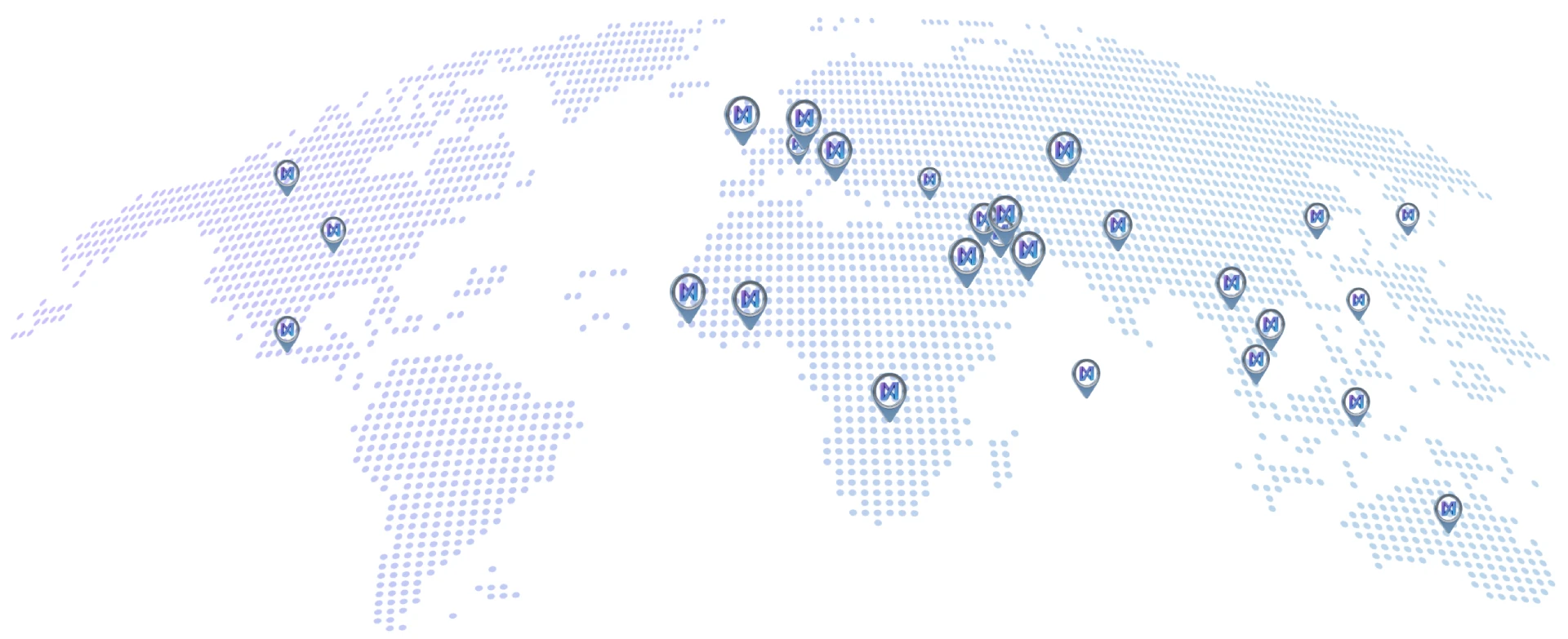
Across 946 plants in 26 countries, this approach has eliminated 157,115 hours of unplanned downtime, with 99% of prescriptions acted upon by plant teams.
The business impact compounds across every dimension leaders are measured on. Uptime, because failures are intercepted before they reach a shift. Productivity, because capacity lost to slow degradation is recovered. Safety, because catastrophic failures on cranes, furnaces and pressure systems are prevented rather than investigated. Maintenance optimisation, because scheduled intervention costs a fraction of emergency mobilisation. And profitability, because every one of the above lands in the same P&L.
Partial reliability coverage is not a smaller version of complete coverage. It is a different thing entirely — a plant with known blind spots, waiting for one of them to prove expensive.
Validated Production Outcome.
Frequently Asked Questions
Widest plant reliability coverage means ensuring every asset in the plant is monitored at an appropriate level based on its criticality, so that no equipment remains invisible to the reliability program.
Many unplanned shutdowns originate from non-critical or auxiliary equipment. While these assets may have lower individual importance, their failures can trigger larger production disruptions and costly downtime.
Traditional programs often suffer from three challenges: focusing only on critical assets, relying on periodic data collection that misses developing faults, and lacking actionable guidance for maintenance teams.
Predictive maintenance identifies that a problem may occur, whereas prescriptive maintenance identifies the likely fault, recommends corrective action, prioritizes urgency, and helps ensure execution.
A comprehensive strategy should cover rotating equipment, process-critical assets, utilities and balance-of-plant equipment, and the decision layer that converts insights into action.
Broader visibility helps detect failures earlier, reduce emergency repairs, avoid production losses, improve maintenance planning, and increase equipment availability.
Industries such as steel, metals and mining, cement, chemicals, power generation, paper, and food & beverage can significantly benefit from plant-wide reliability coverage.
Assets such as utility fans, dust collectors, dewatering pumps, and packing equipment are often overlooked but can become single points of failure that impact production continuity.