Prescriptive AI for Pharma and Personal Care Plants

Outcomes Delivered
Prescriptive AI for Pharma and Personal Care plants turns equipment and process data into a single actionable work order. A predictive alert tells a plant operator that a high-shear mixer motor is trending toward failure, and leaves the diagnosis to them. A PlantOS™ prescription tells them the fault, the fix, and the business outcomes – and arrives ready to convert into a work order. In a Pharma and Personal Care plant, that difference shows up on high-shear mixers, tablet presses, HVAC systems, process pumps: less unplanned downtime, more throughput, and lower conversion cost per batch.
The PlantOS™ Difference
fault signatures on every critical asset across pharma and personal care plants, then prescribes the fix for both.
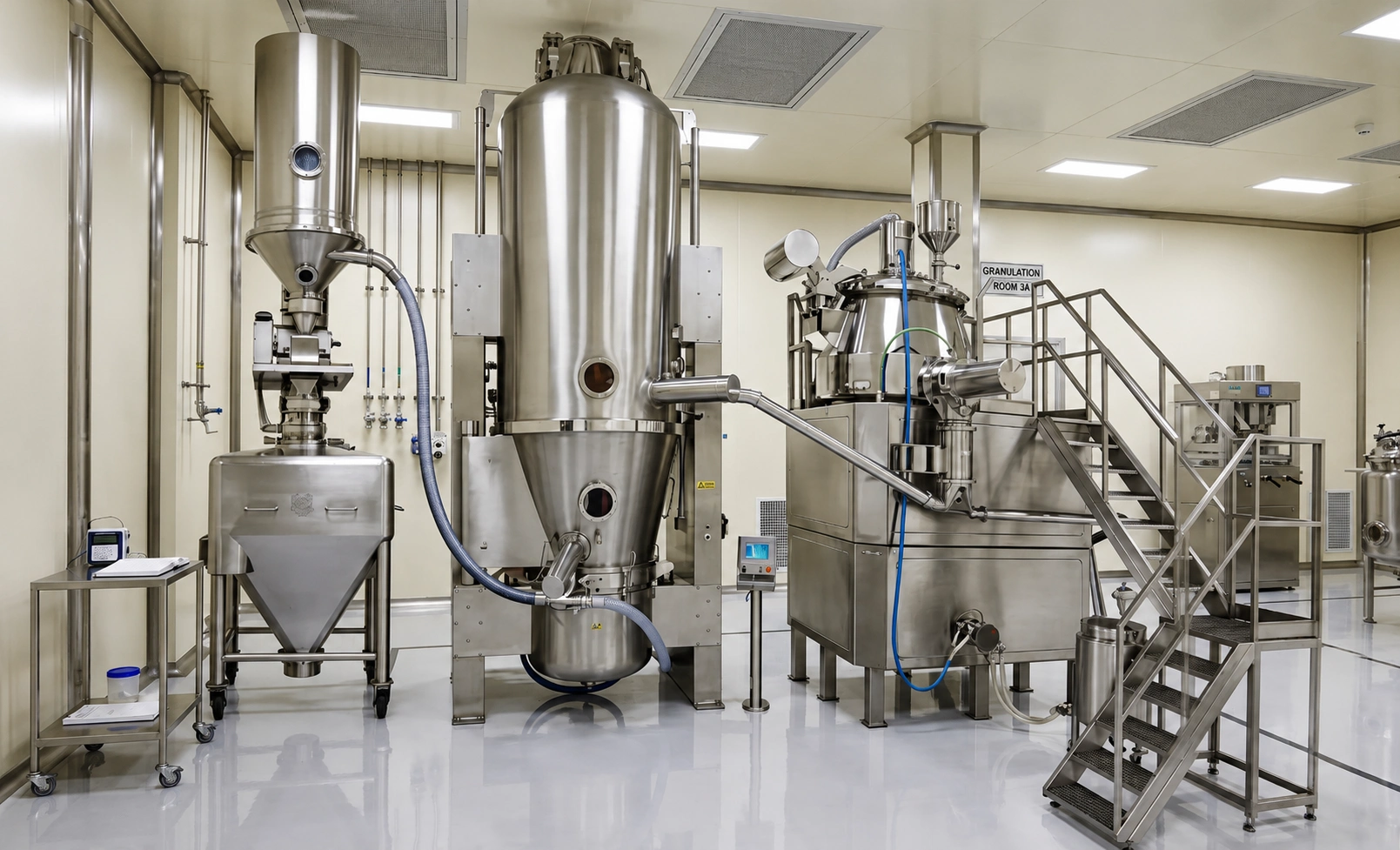

Let's start with your most critical line.
Prove the outcome on one asset, then scale across the plant.

| Process area | Assets covered | Mechanical fault signature | Process-induced fault signature | Outcome |
|---|---|---|---|---|
| Dispensing & Granulation | High-shear mixers, rapid mixer granulators, fluid bed dryers | Impeller, shaft, and fan bearing wear, gearbox faults | Changeover and CIP stress, airflow and moisture variation | Protects granulation quality and batch integrity |
| Compression & Coating | Rotary tablet presses, roller compactors, coating pans | Turret, cam, and main-drive bearing wear | Compression force and product flow variation driving load | Reduces tablet defects and unplanned stops |
| Liquids & Personal Care | Homogenizers, cream and ointment mixers, transfer pumps | Plunger, seal, and bearing wear, cavitation | Product viscosity and changeover variation raising load | Protects product consistency and yield |
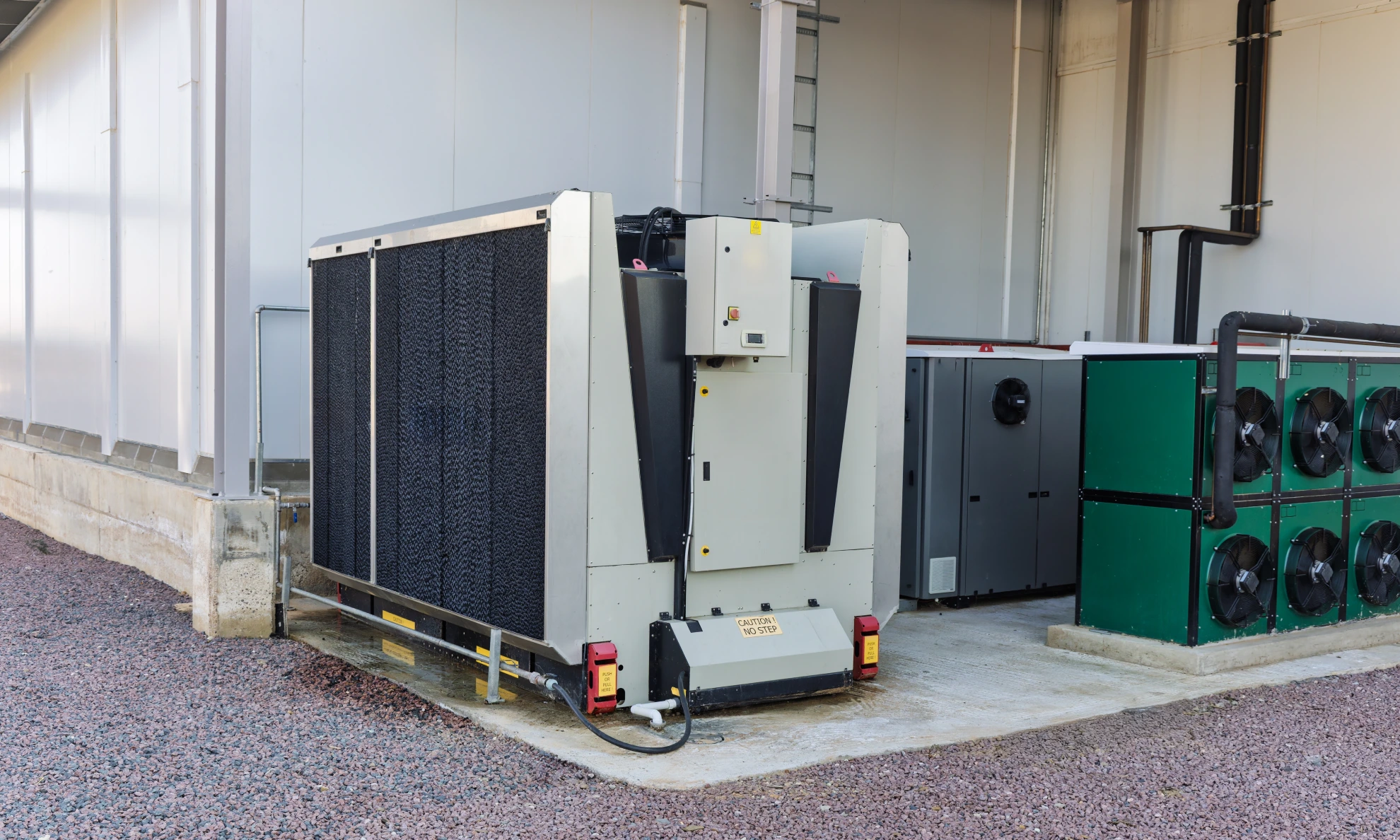
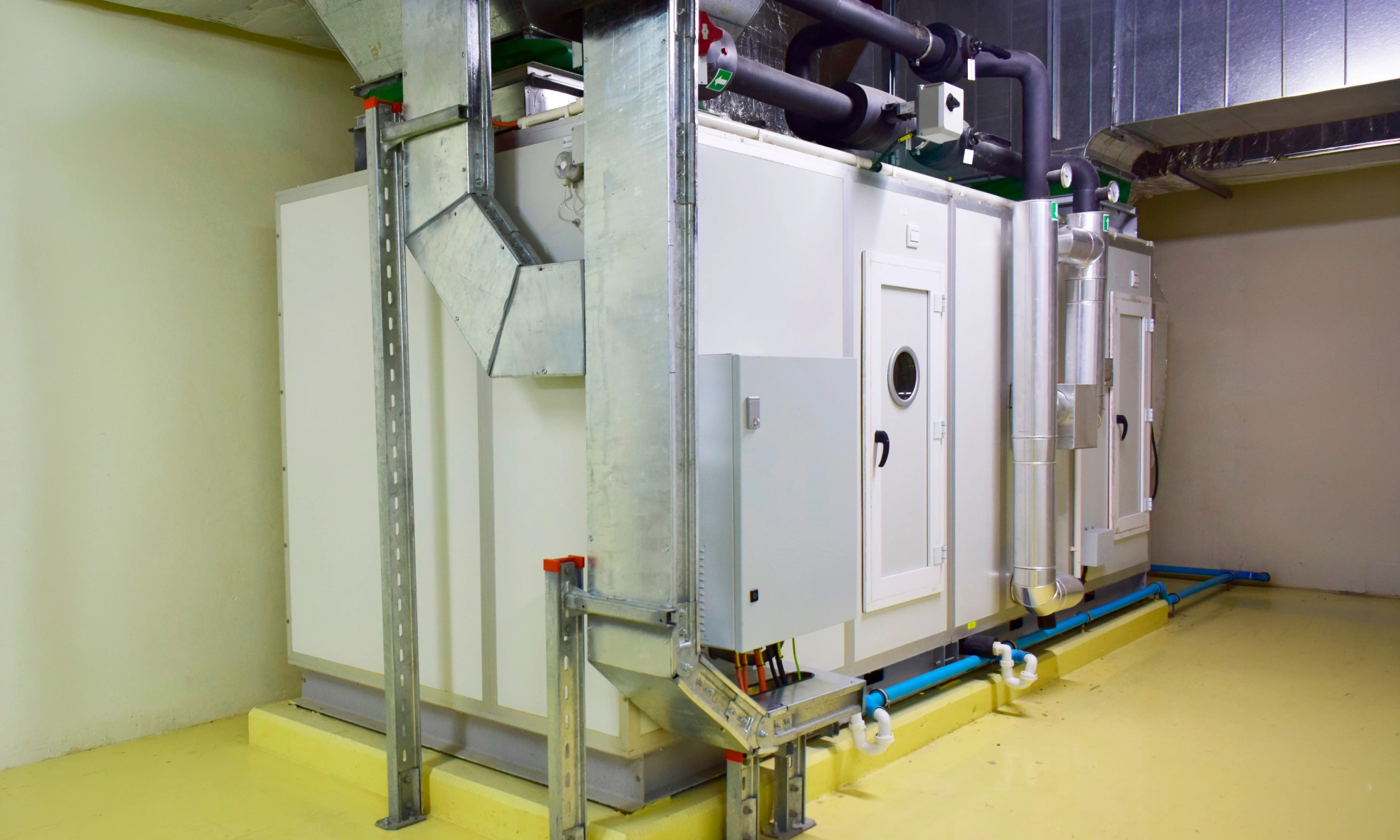
| Clean Utilities & HVAC | AHUs, chillers, WFI and purified water pumps, compressors | Fan and compressor bearing wear, rotor imbalance | Filter loading and cooling demand swings driving deviation | Prevents environmental excursions and contamination risk |
PlantOS™ reads both, across every stage of the line.
What PlantOS™ Prescribes in a Pharma and Personal Care Plant
Frequently Asked Questions
Common questions about prescriptive maintenance solutions in pharma and personal care operations.
01
Why do pharma line failures get missed by conventional condition monitoring?
Because most of them are not purely mechanical. A high-shear mixer does not fail from bearing wear alone, it fails because frequent changeover and clean-in-place cycles add stress that accelerates that wear. Conventional condition monitoring reads the vibration signature and misses the process condition driving it, so the alert arrives late and without a cause.
02
What is Vertical AI, and how does it differ from generic industrial AI?
Generic industrial AI applies one anomaly model across every asset in every industry. Vertical AI is built for the equipment and process conditions of a single sector. Infinite Uptime’s PlantOS™ applies pharma-specific failure logic through Dynamic FMEA, so a fault on a rotary tablet press is evaluated against how those presses actually fail under cyclic compression load, not against a generic deviation threshold.
03
How does PlantOS™ read process-induced faults as well as mechanical ones?
PlantOS™ analyses vibration, temperature, airflow, and process data from the same asset simultaneously, then correlates the two signature types. A rising vibration reading on a mixer is interpreted alongside batch load and CIP frequency, which separates a genuine developing fault from a normal response to a process change. The prescription names the mechanical fault and the process condition sustaining it.
04
What is the difference between predictive and prescriptive maintenance in pharma plants?
Predictive maintenance forecasts that an asset is likely to fail. Prescriptive maintenance states which asset, which fault, which corrective action, and by when. In practice the difference is workload: a predictive alert still needs a reliability engineer to diagnose and decide, whereas a PlantOS™ prescription arrives already diagnosed and ready to convert into a work order. Prediction accuracy is 99.97 percent.
05
Which pharma and personal care plant assets does PlantOS™ cover, and how?
PlantOS™ covers the full plant, matched to how critical each asset is. Your production-critical assets, the high-shear mixers, tablet presses, and HVAC systems where a failure fails a batch or breaches a cleanroom condition, are covered by AI Shields, the deep-domain models built for exactly those machines. Standard and critical rotating equipment across granulation, compression, filling, and clean utilities is covered through wired and wireless sensing, piezoelectric or MEMS, so you match coverage to the asset and the budget. And balance-of-plant equipment, the water and CIP pumps, compressors, and effluent systems, is covered by the self-powered, wireless InfiSense 3XT with no gateways or cabling.
06
What outcomes can a pharma or personal care plant expect from PlantOS™?
Three, delivered together: reduced unplanned downtime, higher throughput on the lines carrying output, and fewer batch losses through earlier detection of the faults that cause rejections and contamination. Across deployments, PlantOS™ has digitalised 226 plants, prevented 15,255 equipment breakdowns, and eliminated 53,208 hours of unplanned downtime as of June 2026, per the PlantOS™ Digital Reporting System.
07
How does a prescription reach the maintenance team?
Each prescription carries the asset, the fault, the recommended action, and the timeframe, and is delivered to the maintenance team on mobile for work order creation and digital sign-off. Execution and outcome are logged, and validated outcomes feed back into the models through the 99% Trust Loop™.
08
Does PlantOS™ require replacing existing systems or sensors?
No. PlantOS™ integrates with the infrastructure already in the plant, unifying data from PLCs, building management systems, and installed sensors alongside its own hardware where additional coverage is needed. Prescriptions are delivered into the existing maintenance workflow, so the plant gains process context on its critical assets without a rip and replace programme.
09
How does PlantOS™ support GMP and FDA compliance?
By reducing unplanned equipment failures and environmental deviations, PlantOS™ reduces the process upsets that carry the highest contamination and compliance risk. Prescriptions are validated by domain experts before reaching the plant floor, and every action is logged with a digital audit trail, which supports GMP documentation, FDA audit readiness, and traceability across validated processes.
10
How quickly does PlantOS™ deliver ROI in a pharma plant?
Deployments typically reach validated ROI within 6 to 12 months through reduced downtime, lower batch rejection rates, and improved compliance. Preventing even a single failed batch or compliance event generally covers the cost of the platform. PlantOS™ is delivered as Production Outcomes as a Service, so plants scale without capital expenditure risk.