Prescriptive Maintenance Solutions
for Plant
Reliability.
One Vertical AI platform. A purpose-built AI solution for every equipment class in your plant, organised by industry and deployed in weeks.
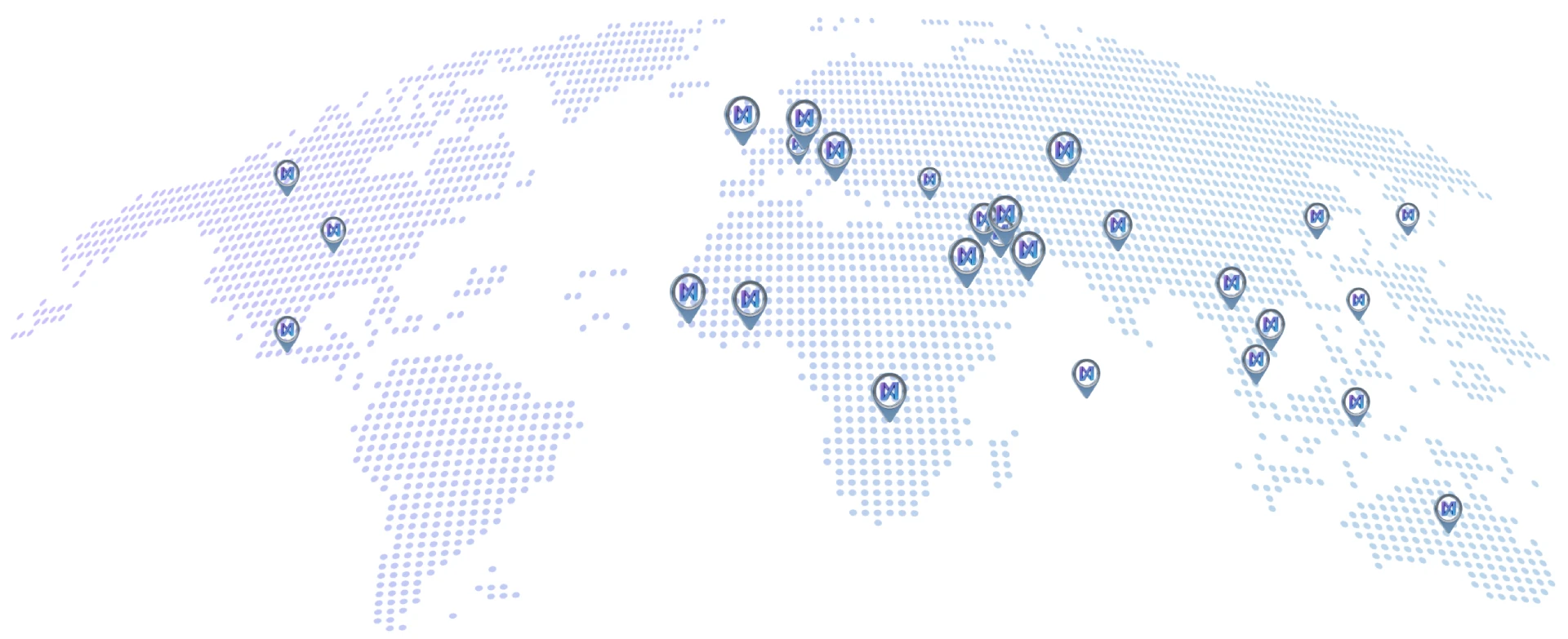
PlantOS™ delivers prescriptive maintenance as three solutions, for all equipment in a heavy manufacturing plant. Where generic tools raise alerts, PlantOS™ issues a prescription: the specific component at fault, the corrective action, and the outcomes to be achieved. Operators validate every prescription, so the AI learns from real outcomes across 1000 plants.
The PlantOS™ Advantage
What are the three PlantOS™ prescriptive maintenance solutions?
One platform, three solutions, sized to what each asset is worth.
Infinite Uptime's PlantOS™ covers the full criticality spectrum, from the flagship equipment that defines your output to the balance of plant that has never been monitored at all.
Equipment-specific AI protects the machines that can stop production. Wired and wireless coverage scales across everything else. A single risk model underneath turns all of it into maintenance, spares and CAPEX decisions.
Where generic tools raise alerts, PlantOS™ issues a prescription: the component at fault, the corrective action, and the outcome to be achieved.
01 · The Active Defense
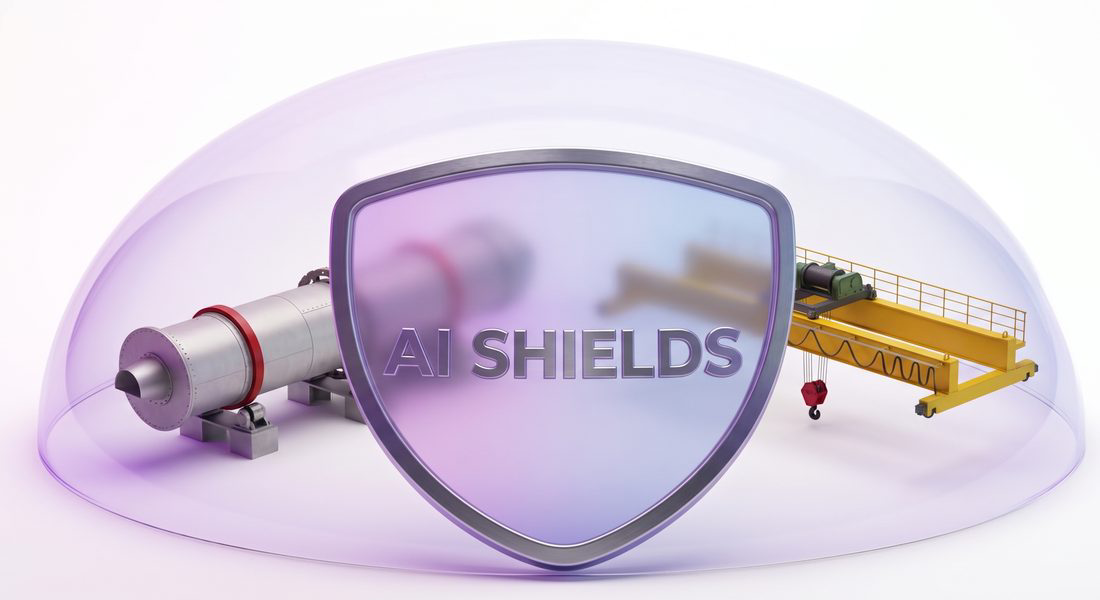
AI Shields
Equipment-specific AI for the machines that can stop production.
Each AI Shield is trained on a single class of production-critical equipment, so it tells a mechanical fault apart from a process upset instead of flagging both as noise. Dynamic FMEA correlates live mechanical signals with real process conditions, which surfaces failure modes that appear only when heat, load or chemistry change.
Shields in service
- Steel
- Cement
- Tire & Rubber
- Pulp & Paper
- Metals & Mining
02 · The Foundation
Flex Reliability
Coverage for the rest of the plant, sized to what each asset is worth.
Not every machine justifies the same sensing. Flex Reliability lets you match the technology to the consequence of a stoppage, from wired piezoelectric on assets that halt a line to self-powered wireless tags on equipment that has never carried a monitoring budget. Existing third-party sensor data is ingested as it is, so there is no rip and replace.
Three coverage tiers
- Critical Equipment Reliability Wired piezoelectric, continuous. 150 °C surface, down to 2 RPM.
- Standard Equipment Reliability MEMS, wired or wireless. Pumps, fans, motors, gearboxes, compressors.
- Non-Critical Equipment Monitoring Self-powered wireless InfiSense 3XT, periodic. No gateways or cabling.

03 · The Orchestration Layer
Plant Fusion
One risk model behind every maintenance, spares and CAPEX decision.
Asset signals roll up through equipment, process, plant and fleet into one risk foundation of failure probability, consequence and MTBF, ranked by RBI, RCM and FMEA. Open API and MCP carry each prescription into the systems that execute the work, and every job an operator closes returns as a label that sharpens the next decision.
Three decisions, one foundation
- MaintainA dynamic, ISO-aligned PM programme driven by failure mode, not by calendar date.
- StockRisk-aligned min and max levels with ordering triggers, safety-critical items always human-gated.
- InvestCAPEX backed by failure-probability forecasts and remaining-life estimates.
An AI Shield for every production-critical asset
Ten Shields across five verticals, each trained on one class of equipment. Select a vertical, then open a Shield to see what it watches, the faults it detects and what it has protected.
Hoist motors, rope drum, end-carriage bearings and ladle transfer sequences, preventing catastrophic failures in live zones.
Faults detected
- Hoist motor bearing failure
- Rope drum and sheave wear
- End-carriage wheel and rail wear
- Brake and gearbox degradation
The roller table drive line between the finishing stand and the coiler, reading roll, coupling and motor condition alongside the laminar cooling zone.
Faults detected
- Roll and bearing degradation across the table
- Coupling and drive motor faults
- Roll surface wear and scale build-up
- Gearbox and drive-line misalignment
Built for the section of the mill you cannot afford to stop
- Sealed wired sensing to 120 °C, no batteries
- RPM-gated capture inside the stable band
- Zero PLC dependency
- Early detection through cross-correlation
Mill stands, work rolls and backup rolls, catching bearing faults, roll surface defects and chock misalignment before they cause strip breaks or quality rejects.
Faults detected
- Work roll and backup roll bearing faults
- Chock alignment drift
- Gearbox and spindle vibration
- Lubrication system anomalies
Turbo-blowers and axial compressors feeding blast furnaces, tracking surge margins, bearing health, blade condition and inter-cooler performance.
Faults detected
- Impeller and blade wear
- Bearing degradation
- Surge and stall events
- Inter-cooler fouling and seal leaks
Bearing temperatures, tyre and roller wear, shell deformation and combustion anomalies across the kiln line, with two to three weeks of actionable lead time.
Faults detected
- Bearing degradation and overheating
- Tyre and roller misalignment
- Shell ovality and hot spots
- Burner and combustion drift
End-to-end VRM health covering grinding pressure, vibration signatures, separator performance and gearbox condition.
Faults detected
- Gearbox mesh and lubrication faults
- Roller and table wear
- Fan imbalance and bearing failure
- Separator drive anomalies
Rotor health, gearbox condition, ram and door seals, and batch-to-batch process consistency, protecting compound quality.
Faults detected
- Rotor imbalance and bearing wear
- Gearbox helical and bevel faults
- Ram cylinder seal degradation
- Motor harmonics and thermal drift
Rubber extrusion lines, tracking screw and barrel wear, die pressure consistency, drive faults and temperature uniformity.
Faults detected
- Screw and barrel wear profiles
- Drive motor and gearbox faults
- Die pressure and temperature anomalies
- Feed roll bearing degradation
Paper machine dryer sections, covering cylinder and felt roll bearings, drive train integrity, thermal stress and roll surface condition.
Faults detected
- Cylinder and felt roll bearing failure
- Drive shaft shear and connecting gear damage
- Roll shell wear and thermal fatigue
- Cylinder imbalance and oil contamination
Bearing and drive condition, structural and weld integrity, vibration dynamics and screen surface wear.
Faults detected
- Bearing failure and shaft shear
- Structural integrity and weld cracks
- Side plate failure and thermal fatigue
- Weight unbalance, resonance and screen tear
*Production protected is calculated on the customer's own stated hourly value of output for the affected line.
No blind spots, no orphan assets.
Deep domain AI on the equipment that defines your output, flexible coverage across everything that supports it, and one risk model that turns all of it into decisions your board can read.
Why does the outcome gap widen instead of closing?
Zero Guesswork. Compounding Intelligence. Starts Day 1.
The Structural Cause
Compounding intelligence through the 99% Trust Loop
PlantOS™ - the Prescriptive Al that learns continually across the entire installed base. Operator validation turns every correction into shared intelligence, so each asset teaches every other. Horizontal platforms rely on static local models that drift over time. Because PlantOS™ retrains across 1000 plants, drift is caught before it compounds, and accuracy improves the longer the system runs.
How long does it take to
deploy PlantOS™ Prescriptive AI?
The Path to Reliability Outcomes Your Operators Trust - in 90 Days
No rip-and-replace works with your
existing systems.
First prescription in 2
weeks. Scale with confidence.
Week 1-2
Solution Deployment
- 100% equipment coverage Day 1
- Rotating + static equipment + process context
- Baseline assessment complete
Week 3-4
First Prescription
- Operator validation workshop
- Digital signoff trained
- First fault prescribed
Month 2
Scale & Optimize
- Additional equipment lines
- Process efficiency modules
- KPI baseline established
Month 3
Plant-Wide
- Board-ready ROI report
- Expansion planning
- 99% Trust Loop complete