Categories
SI blog
Six Places Your Customer’s Plant Can’t See

Six Places Your Customer’s Plant Can’t See
Read Time: 4 minutes | Author – Chaiitanya Bulusu & Priyanka Gupta
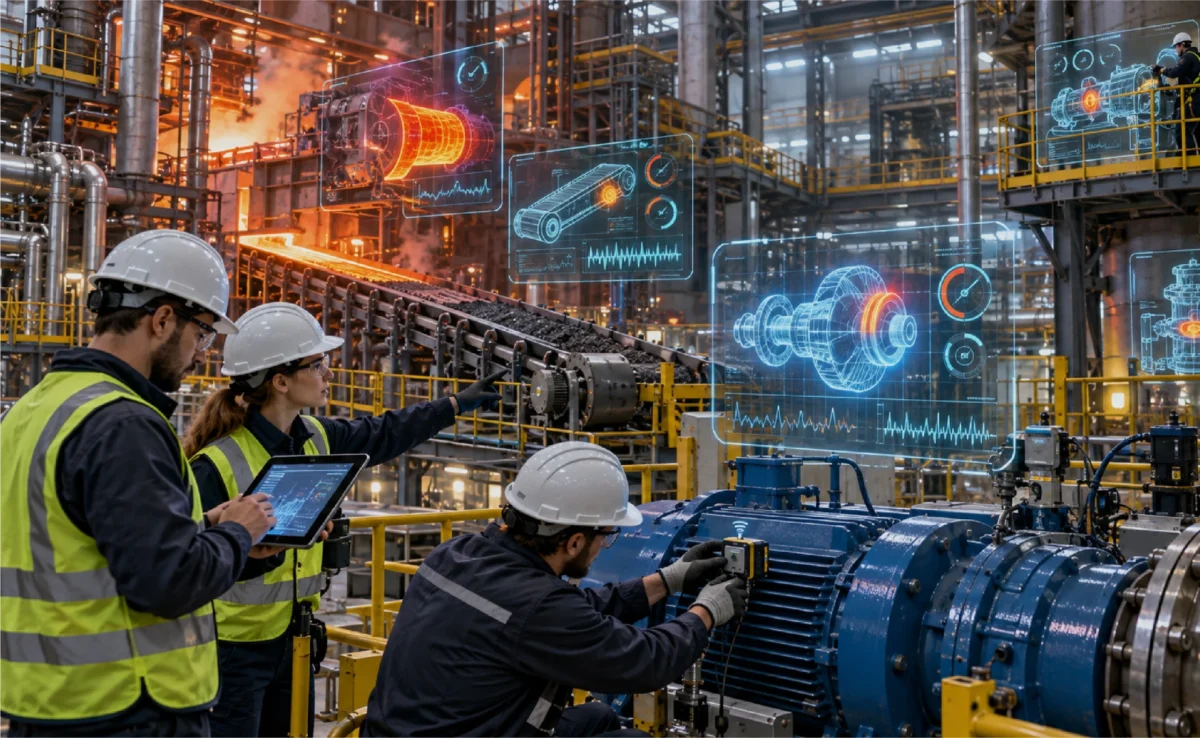
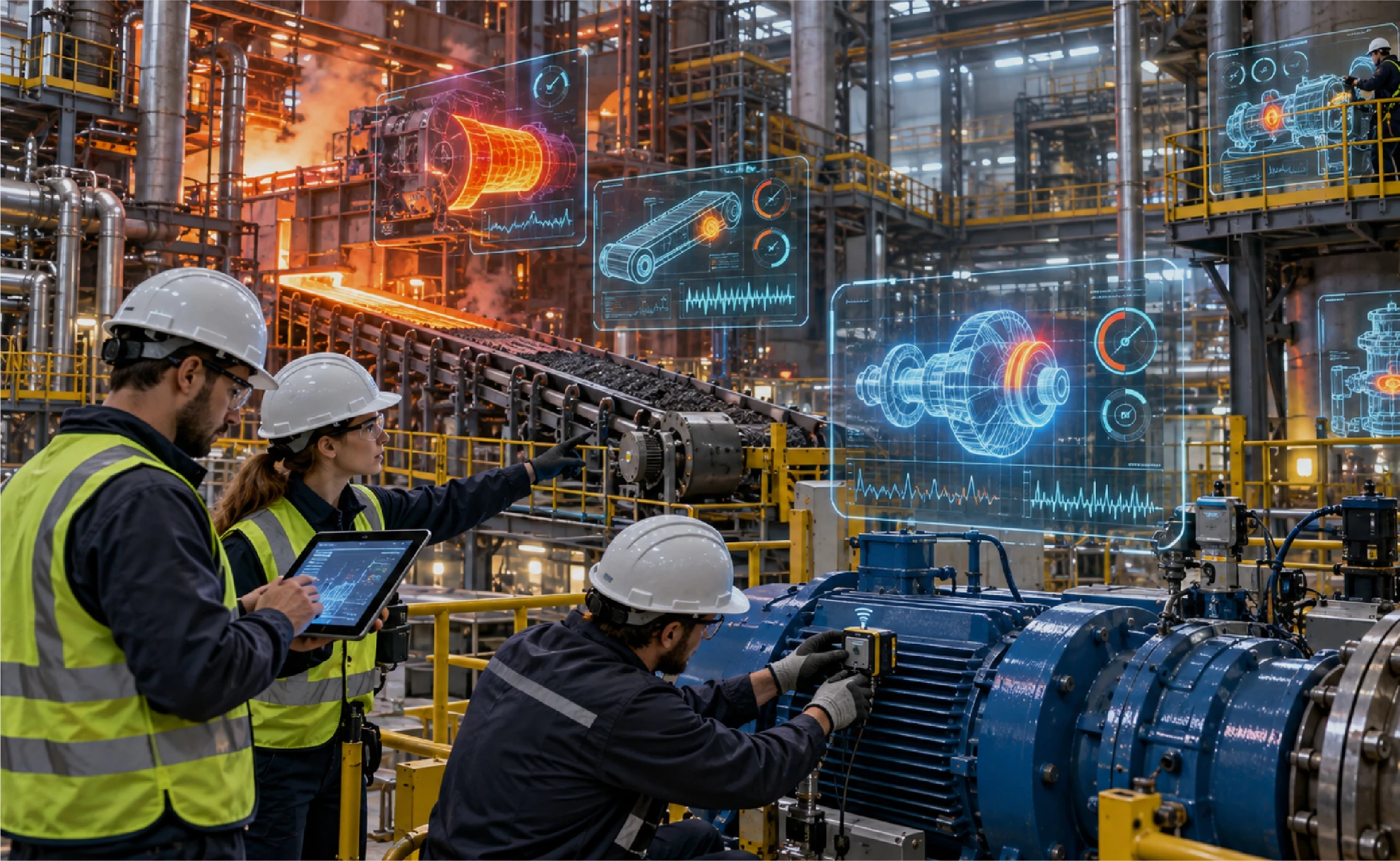
Industrial maintenance engineers using AI-powered equipment monitoring to identify hidden machinery faults, improve plant reliability, and prevent unplanned downtime across heavy manufacturing industries.
Every plant with a monitoring program still gets surprised, and usually by the same six kinds of asset. Here’s why routes and general purpose sensors miss them, and why they make the easiest conversation an integrator can start on site.

Walk into a plant that already runs a condition monitoring program and ask the reliability engineer which failures caught them out last year. The answer is rarely an asset on the route. It’s the kiln drive nobody could get a clean reading from, the crane that only works in bursts, the fan behind a barrier that can’t be approached while the line is running.

Those gaps aren’t random. They fall into six patterns, and once you can name them, you can walk a plant with your customer and point at them. That conversation tends to go a lot further than asking whether they’ve thought about AI.

01. THE SIX BLINDSPOTS

Where Conventional Monitoring Runs Out

01

Too slow

Kiln girth gears, ladle turrets, slew drives, agitators and stackers turn at speeds where bearing and gear defect energy sits at very low frequencies. General purpose sensors and short handheld captures struggle to resolve it, so an early defect looks like noise until it’s a crack.

02

Too fast

Compressors, blowers, mill drive trains and other high speed machines put their useful diagnostic content well above the range a quick route measurement captures. Sample too slowly and the early signs of a developing fault never make it into the data at all.

03

Too hot

Around furnaces, kilns, casters and hot rolling lines, the mounting location itself can sit above 100 degrees Celsius, with steam, spray and scale on top of that. Standard sensors and cabling either drift or fail, so the assets closest to the heat tend to be the least instrumented in the plant.

04

Intermittent duty

Cranes, charging cars, presses and anything else that works in bursts spends most of the day idle. A timer based measurement mostly records that idling. The fault only shows itself under load, which is the exact window a fixed schedule is most likely to miss.

05

Hazardous or unreachable areas

Some assets can’t be approached safely while the line runs, or sit in a classified area, or need a permit and a shutdown to reach. The route quietly stops there. The gap doesn’t show up as a missing asset on a report, it shows up as a failure nobody saw coming.

06

Frequent changeovers

Paint shops, mixers, extruders and packing lines change speed, load and product all day. A baseline set on one condition raises false alarms on the next. After a few weeks of nuisance alerts, the plant stops trusting the system, which is worse than not having one.

02. WHAT THE SIX HAVE IN COMMON

The Measurement Has To Understand The Machine

None of these are gaps in willingness. Plants know these assets matter. The problem is that a general purpose sensor and a fixed capture schedule don’t know anything about the machine they’re attached to, so they apply the same measurement to a 3 rpm drive and a variable speed extruder.


Closing the gaps means the capture itself has to be aware of what the asset is doing: measuring when the crane is actually lifting rather than parked, resolving low frequencies on a slow turning gear, surviving the temperature at the mounting point, and holding a baseline that shifts as the line changes product. That’s what physics aware and vertical aware means in practice, and it’s the part of the job most teams underestimate.


Then comes the second half. A flagged fault still has to reach the plant as something a planner can act on. PlantOS™, the Industrial Outcome Intelligence Engine behind the AI Shield family, has every flagged fault checked by a CAT III or CAT IV vibration analyst before it goes out, and what reaches the plant is a prescription: which asset, what’s wrong, how urgent, and what to do about it. Prediction on its own doesn’t protect a single hour of production.

A Proven Engine Behind You

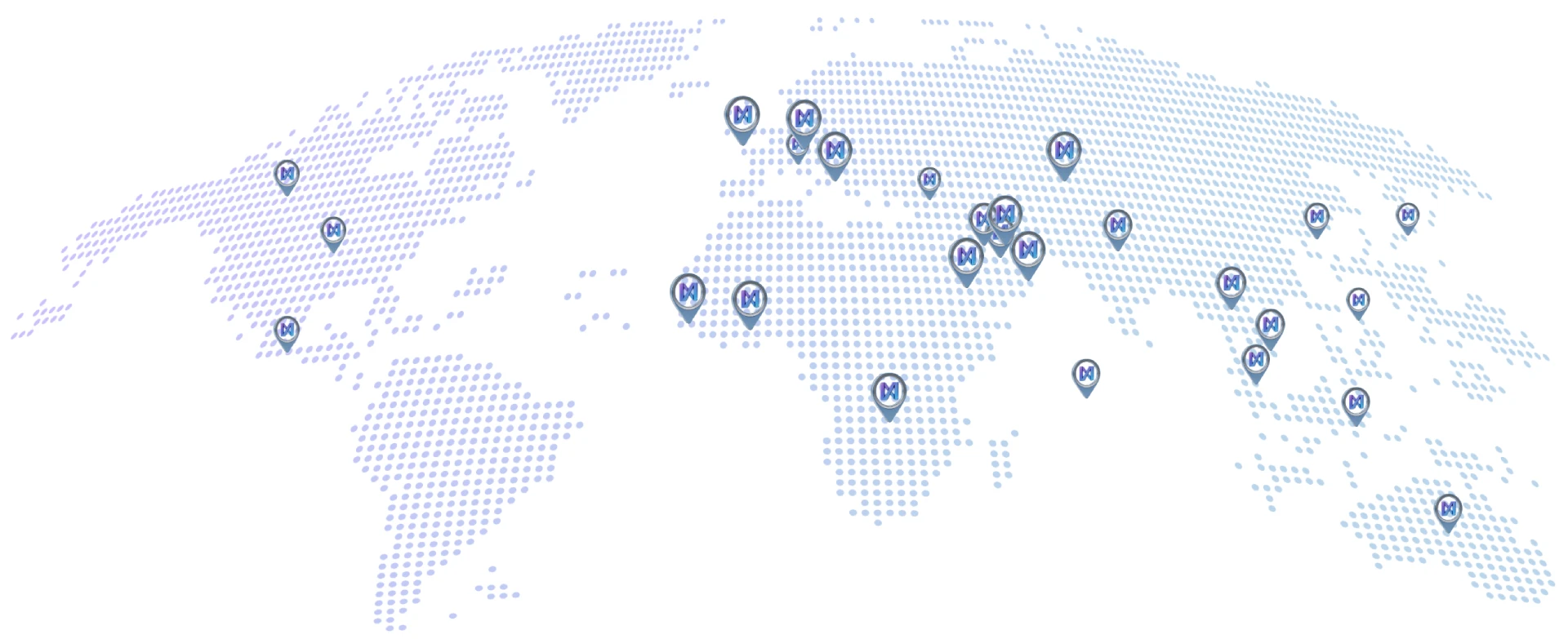
PlantOS™ has unlocked operator validated outcomes across 1,000+ plants in 28 countries and nine heavy-industry verticals, covering exactly these awkward assets: kilns, mills, cranes, furnaces, mixers, extruders and dryers.

03. HOW TO USE THIS ON SITE

Three Questions On Your Next Plant Walk

You don’t need a pitch for this. On your next visit, ask the maintenance manager three things:

  • Which assets aren’t on the route, and why not? The answer is usually one of the six above.
  • What surprised you in the last twelve months? Then check whether that asset was slow, fast, hot, intermittent, hard to reach or constantly changing.
  • What does your team do with an alert today? If the honest answer is a walk-down and a shrug, the gap isn’t sensing. It’s what happens after the alert.

Those three answers give you the shape of a first project, and they come from your customer rather than from a vendor deck. If you want a second pair of eyes on it, Infinite Uptime will walk one of your plants with you and put the findings into a Reliability Blindspot Audit at no cost, with your team leading the conversation and ours in the room alongside you.

Stronger Outcomes, Delivered Under Your Name

Pick one plant where you already know the maintenance manager, and one asset on it that nobody has been able to measure properly. That’s the conversation to bring to the Infinite Uptime partnerships team.

Frequently Asked Questions

It’s an asset a plant cares about but can’t measure properly with the monitoring it has. In practice these fall into six groups: machines that turn too slowly, machines that turn too fast, assets in high temperature areas, equipment that runs intermittently, assets in hazardous or unreachable locations, and lines with frequent changeovers. They are the failures that surprise a plant that already runs a monitoring program.

Because the defect energy on a slow turning gear or bearing sits at very low frequencies, and a short handheld capture with a general purpose sensor struggles to resolve it. The reading looks normal for months. By the time the signal is obvious on a route, the damage is usually well advanced.

Yes, but only with hardware rated for the mounting location rather than the ambient air. Around casters, kilns and hot rolling lines the mounting point can sit above 100 degrees Celsius, with steam, spray and scale as well. Hardware that isn’t built for that either drifts or fails, which is why the hottest assets are often the least instrumented in the plant.

By triggering the measurement on load or speed instead of on a timer. A crane, charging car or press spends most of the day idle, so a fixed schedule mostly records idling. Capturing the moment the asset is actually working is what puts the fault window in the data.

By judging the machine against its current operating condition rather than one fixed baseline. On paint shops, mixers, extruders and packing lines, speed, load and product change all day, so a single threshold set on one condition raises nuisance alerts on the next. A few weeks of those and the plant stops trusting the system.

Nothing. Infinite Uptime provides the hardware, the AI models and the 24/7 diagnostics. Your team scopes, installs, commissions and services the deployment, keeps the customer relationship, and gets first call on the work the diagnostics generate. Every deal is co-sold, with our team in the room alongside yours.

It’s a plant walk we run with you at no cost. We go through the site with your customer’s team, identify which assets fall into the six blindspots, and write up what we find. Your team leads the conversation and ours supports it, which usually gives you the shape of a first project in a single visit.

Exact Sources

1. “Revised positioning frameworks: six plant reliability blindspots and six-layer plant reliability trust scorecard,” Infinite Uptime, 23 September 2026. Source for the six blindspots and reliability sequence in Sections 01–02. (Internal document.)

2. “IU Official Boiler Plate.docx,” Infinite Uptime, September 2026. Source for PlantOS™ positioning, key messaging, operator-validated outcomes, and figures of 1,000+ plants, 28 countries and nine heavy-industry verticals. (Internal document.)

3. “01 - AI Shield Partner System (Deck),” Infinite Uptime, September 2026. Source for partner responsibilities, hardware and AI delivery, 24/7 diagnostics, co-selling and customer ownership. (Internal document.)

4. Infinite Uptime, Critical Equipment Reliability, verified 30 September 2026. Confirms AI Shield applications across critical heavy-industry equipment.

5. Infinite Uptime, How System Integrators Can Deliver Prescriptive Maintenance Without Building It From Scratch, September 2026. Source for load-gated capture, temperature-rated mounting and CAT III/CAT IV analyst validation of flagged faults.

6. “ROT AI Shield Technical Module v1.1,” Infinite Uptime internal documentation. Source for RPM-gated acquisition and the 120°C mounting rating, described as “above 100°C” without naming the product line. (Internal document.)
Categories
SI blog
The Install Was Yours. The Annuity Never Was.

The Install Was Yours. The Annuity Never Was.

Read Time: 6 minutes | Author – Chaiitanya Bulusu
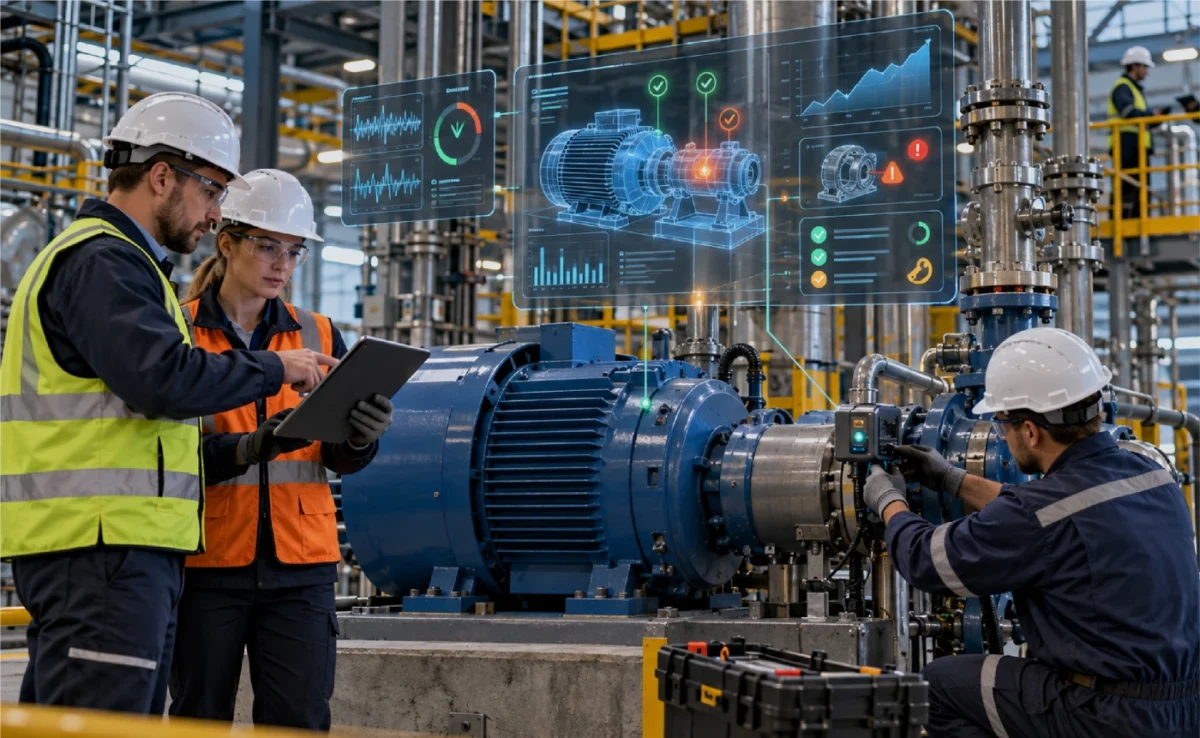
Industrial system integrators use AI-powered equipment diagnostics to identify machinery faults, generate actionable maintenance work orders, and build recurring service revenue through long-term industrial maintenance partnerships.
Plants want production outcomes now: more uptime, more throughput, lower conversion cost. Integrators install the technology that delivers them, then watch the recurring value go to someone else. Here’s how your next install keeps it on your book.
Executive Summary
  • Most of the value in a plant technology deployment arrives after commissioning: the subscription, the diagnostics, the service work the findings create, and a renewal every year after that. Integrators usually do the install and get paid once. Everything after it goes to whoever holds the customer’s contract.
  • The AI Shield partner model from Infinite Uptime, the Production Outcomes Partner for Heavy Industries, changes who holds that contract. The customer orders through you. Infinite Uptime provides the hardware, the AI and the 24/7 diagnostics, and every deal is co-sold. You keep a share of the subscription on the order, bill commissioning at your rates, get first call on the work orders the diagnostics produce, and invoice the renewal yourself.
  • Your crews do the same install they always have. The difference is that the plant’s outcomes are delivered under your name, and what comes after the install stays with you.

It’s 2 a.m. on the third night of a planned shutdown. Your crew is on the mill floor mounting sensors, pulling cable through tray nobody has opened in years, and working through loop checks while the maintenance manager keeps one eye on the clock. By morning the system is live. You close out the punch list, send the invoice and move on to the next bid.

Over the next ten years, that system will earn money every month. Just not for you.

Try a quick exercise. Pull up the last ten commissioning jobs your team completed and count how many still pay you anything today. For most integrators the number is zero, or close to it. The software subscription renews with the vendor. The service contract sits with the OEM. The diagnostics, if anyone is doing them, belong to whoever owns the platform. You were the one on the ladder, and you got paid for the ladder.

01. FOLLOW THE MONEY AFTER GO-LIVE

Where The Value Actually Sits

Commissioning happens once. What a typical monitoring system produces after that keeps coming: a subscription the plant pays every year, a stream of findings about what’s going wrong with its equipment, and the maintenance work those findings create. Then there’s the renewal. A plant that has seen a system catch a failure early rarely switches it off, so the renewal ends up as the most valuable line in the deal for whoever holds it.

Nobody hid this from integrators. Most technology deals have been put together the same way for years. The vendor holds the contract with the end customer, and the integrator comes in as a subcontractor to get hardware onto the asset and data flowing. Once the job is signed off, the integrator’s part is over, even though the integrator is usually the firm the plant trusts most and calls first when something breaks.

The Question That Decides It

Who keeps the recurring value comes down to one thing: whose paper the order is written on. Change that, and everything that follows the install changes hands with it.

02. THE INVERSION

Same Install, Different Owner Of Everything After It

The AI Shield partner model starts from that question. The customer places the order through you. You contract with the plant directly, the way you already do for controls work, and Infinite Uptime sits behind you as the intelligence layer. What the plant is buying is protected production: critical assets that keep running, and throughput and conversion cost that hold where they should.

On site, very little changes. You scope it, install it, commission it and support it, the way you would any project on a critical asset. The difference is what you hold when your crew packs up. Four things come with every deployment:

  • A share of the subscription itself, retained on the order you place rather than paid out to you afterwards, with the terms set down together in writing once the first deal has closed.
  • Commissioning labor, billed at your own rates.
  • Service pull-through. When the diagnostics find a fault, it becomes a work order, and your team gets first call to carry it out.
  • The renewal. You invoice it, and it keeps carrying your share for as long as the subscription stays active.

The last one matters most. A project book has no memory, but a renewal does. Every deployment you add is still on your book next year and the year after, for as long as the customer keeps running the asset.

“Every install you’ve ever done became someone’s annuity. Never yours. This is the first install that becomes yours.”

AI Shield Partner System, Partner Kit, September 2026

03. WHERE THE WORK ORDERS COME FROM

Prediction Isn’t An Outcome

Most monitoring systems generate very little follow-on work for integrators, because they stop at the alert. A value turns red, someone gets an email, and the plant’s own team has to work out what it means. Usually that ends in a walk-down, a shrug and a note to check again next week.

A prediction on its own doesn’t protect a single hour of production. PlantOS™, the Industrial Outcome Intelligence Engine behind the AI Shield family, carries each finding further. Every flagged fault is checked by a CAT III or CAT IV vibration analyst before it goes out, and what reaches the plant is a prescription: which asset, what’s wrong with it, how urgent it is and what should be done. Each one is aimed at keeping uptime and throughput where the plant needs them. A planner can turn it straight into a work order, and a work order means labor.

The service reports tell the story better than a pitch can. A steel plant on the US Gulf Coast got 23 days of warning on a developing fault and avoided 72 hours of unplanned downtime. A chemical plant in Alabama had four months’ notice and saved 12 hours. At a steel plant in the Middle East, a single prescription turned into five separate work orders. Each of those jobs is paid work, and under this model the first call goes to you.

So service pull-through isn’t something your team has to go out and sell. The diagnostics bring the work to you with the reasoning already attached.

A Proven Engine Behind You

PlantOS™ has unlocked operator validated outcomes across 1,000+ plants in 28 countries and nine heavy-industry verticals. Your customer won’t be the first site it has been tested on.

04. HOW THE WORK RUNS

Co-Sold, Every Deal

A fair question at this point is who does the selling. You both do. Every deal is co-sold, with Infinite Uptime’s team in the room with yours. Your firm gets a named sales contact plus a backup, and leads you register are picked up within 48 hours. If you can’t make a customer meeting, it gets moved rather than going ahead without you.

The agreement puts it in three plain lines: we never go around you on your accounts, we never discount your customer, and labor never moves to us. Account protection is earned rather than handed out, so each named account is expected to reach a first order within six months. That keeps the protected list short enough to mean something.

Getting started is deliberately small: a two page memorandum of understanding with a 30 day exit on either side, and deals already in progress carry on if either side walks away. The first project is chosen against five filters, and the one that matters most is that you already hold the relationship. Skip the biggest plant and the hardest asset. Pick the site where the maintenance manager already takes your calls. The first renewal conversation comes around month 10 to 12, when you both sit down with real numbers.

05. The Point

Next Time You’re On The Ladder

The install was always yours. You have the crews, the site access, the safety record and the trust of the people who run the plant. What you haven’t had is anything that keeps paying once the punch list is closed.

So the next time your team is on a mill floor at 2 a.m., ask a slightly different question. Whether the job goes well still matters. But ask who will still be delivering outcomes to that plant, and earning from it, five years from now. With the right structure, that can be the people who did the work.

Stronger Outcomes, Delivered Under Your Name

Go back to that list of your last ten commissioning jobs and pick the three plants you’d most like to still be earning from. Bring those three to a first conversation with the Infinite Uptime partnerships team.

New to the model? Start with our earlier piece, How System Integrators Can Deliver Prescriptive Maintenance Without Building It From Scratch

Categories
SI blog
How System Integrators Can Deliver Prescriptive Maintenance Without Building It From Scratch

How System Integrators Can Deliver Prescriptive Maintenance Without Building It From Scratch

Read Time: 11–13 minutes | Author – Chaiitanya Bulusu
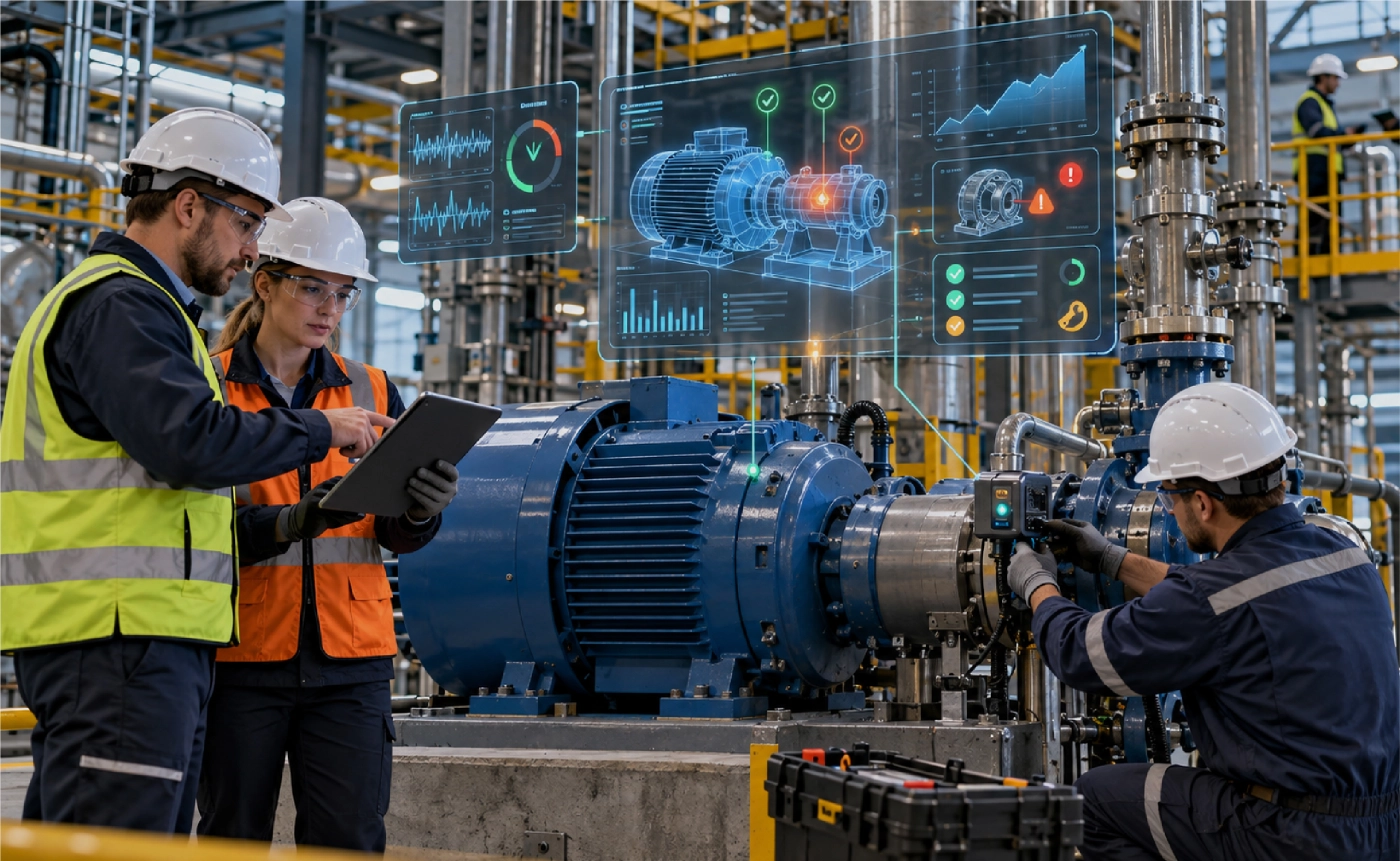
Industrial engineers review AI-powered machinery diagnostics while a technician inspects a large electric motor, illustrating how system integrators can deliver prescriptive maintenance solutions without developing their own monitoring technology.

The plants you already serve are asking for AI on their critical equipment. This is the version of that offer that keeps the account, the install, and the renewal on your book, without asking you to build a diagnostics practice from zero.

Executive Summary
  • Your customers are asking for AI on their critical equipment, and a dashboard is not an answer. Getting from a threshold alert to a work order a technician will act on takes ruggedized hardware, load gated capture, a fault model trained across plants, and a 24/7 analyst bench — four fixed costs that sit outside what an integration house is built to do.
  • The AI Shield SI partner program splits that cleanly. Infinite Uptime owns the hardware, the AI and the diagnostics; every deal is co-sold; and the account, 100% of the field and service labor, and the renewal stay on your book, contractually.
  • It starts small and reversible: a two page, non binding memorandum of understanding with a 30 day exit, a first project chosen against five filters, and four ways to earn on a single deployment — none of which resets in January.

Every January, a lot of system integrators start from zero. The project book empties out over the holidays and fills back in one bid at a time: a PLC upgrade here, an MES rollout there, maybe a SCADA migration if you’re lucky. It’s steady work, but it rarely compounds. Meanwhile, the plants you already serve are asking a version of the same question. Can you do something with AI on our critical equipment? Too often the honest answer stalls at a dashboard. Vibration data streams in, a threshold turns red, an alert fires, and a maintenance team still has to work out whether to trust it and what to do next. That gap, between having data and knowing what to fix and when, is where prescriptive maintenance is supposed to live. It’s also where most SIs stall, not for lack of will, but because building it properly is a different business than the one you run.

01. The Build Problem

What “Prescriptive” Actually Requires

Predictive maintenance and prescriptive maintenance get used interchangeably, and they shouldn’t be. Predictive tells a technician a bearing is trending toward failure. Prescriptive tells them which bearing, what’s wrong with it, how confident the system is, and what the work order should say, validated by a human before it reaches the floor. The difference between the two is most of the engineering effort, and almost none of it plays to a typical integration house’s strengths. 

THE DIFFERENCE THAT MATTERS

Where Predictive Stops And Prescriptive Keeps Going

Same sensor data. Six steps to a work order a technician will actually act on.

PREDICTIVE Stops at Step 02 (Alert only)
PRESCRIPTIVE Goes all six steps through to verified work order
01
Signal
Vibration captured under load
02
Alert
A threshold is crossed
03
Diagnosis
Which bearing, what is wrong
04
Confidence
How sure the model is
05
Validation
CAT III / IV analyst checks it
06
Work order
Named action, named window
PREDICTIVE  STOPS  HERE
PRESCRIPTIVE  GOES  ALL  SIX

Steps 03 to 06 are the engineering — and almost none of it plays to an integration house's strengths.

Consider what a rotating equipment asset in a hot, wet, continuously loaded environment (a hot strip mill run out table, for example) actually needs to be watched properly. Vibration has to be captured at the exact moment the asset is under load, not on a fixed timer that mostly samples idle running. The hardware has to survive water spray, steam and scale, and be rated to 120°C at the mounting location, without a battery quietly dying six months in. The model behind it needs to be trained on a large cross plant dataset to tell a structural looseness signature apart from a hundred other things that also show up as “vibration went up.” And every flagged fault still needs a human who actually knows rotating equipment, a CAT III or CAT IV vibration analyst, to check it before it becomes a work order. A false positive costs trust you don’t get back. 


None of that is a weekend project, and it isn’t what a control systems integrator is built to do. The usual workaround, buying some wireless sensors and wiring up a generic anomaly detection package and hoping it’s close enough, burns capital and engineering hours on a capability outside your core business. It still leaves the hardest part unsolved. Nobody wants to staff a night shift of vibration analysts just to validate alerts for one customer’s two cranes. 

The Honest Tradeoff

Building a prescriptive maintenance practice in house means carrying hardware R&D, a trained ML pipeline, and a 24/7 analyst bench as fixed costs against uncertain, lumpy project revenue. Partnering means none of those become your fixed costs at all.

BUILD VS. PARTNER

What It Takes To Run This In House, Next To What A Partner Already Brings

Same outcome — a validated work order on a critical asset — reached two different ways.

BUILD IT YOURSELF

Everything becomes your fixed cost

  • Ruggedized sensor hardware.
    Sourced, qualified and stocked for 24/7 duty in high heat, high vibration zones.
  • A fault classification model.
    Built and continually retrained across enough assets to be trusted.
  • Load or RPM gated acquisition.
    Engineered so faults aren't missed between idle time samples.
  • A 24/7/365 analyst bench.
    Staffed and rostered to validate every flagged fault before the floor sees it.
  • All of it as overhead.
    Carried against one customer's subscription, with no cross plant data to lean on.
PARTNER FOR THE PRODUCT

You keep the relationship and the labor

  • Hardware, AI and diagnostics.
    Arrive proven, running today across 1,000+ plants in 28 countries.
  • Every deal is co-sold.
    Their team in the room with yours — you never carry the sales motion alone.
  • Account, order, install and commissioning.
    100% of field and service labor stays yours, every time.
  • Findings become work orders.
    You're the first call executor, not the vendor.
  • Free training and enablement.
    For your engineers and sellers, instead of a hiring problem.
  • The contract renews annually.
    On your book, not the vendor's.

02. The Model

A Partnership Structured To Keep The Account On Your Side Of The Table

The version of this worth doing isn’t reselling a black box with your logo stapled on it. It’s a straightforward product and service split. The vendor owns the hardware, the AI, and the 24/7 diagnostics. You own the customer relationship, the order, and installation and commissioning: all of the field and service labor, in the agreement, without exception. You stay the single point of contact your customer already trusts. And you never carry the vendor’s sales motion alone: every deal is co-sold, their team in the room with yours. The vendor’s engine runs underneath, but the work order lands with your name on it.


What makes this credible, rather than another vendor promise, is that the hard engineering is already solved and running. For high frequency protection on critical rotating assets such as cranes, roll lines, and mill drive trains, that’s an AI Shield: purpose built sensor hardware and an always on model tuned to that asset class, with RPM or load gated capture so the fault window actually gets recorded instead of guessed at. And the footprint grows the way an SI’s book grows. You start on one asset class in one plant, extend across the rest of that class as the evidence accumulates, then carry the same construct to the next plant on the same account. You are not betting the relationship on a single trophy asset.


It also isn’t a first customer’s worth of trust you’re extending. PlantOS™, the platform behind the AI Shield family, is live across more than 1,000 plants in 28 countries, has eliminated over 167,000 hours of unplanned downtime, and holds a 99.97% accuracy rate, user validated. Infinite Uptime’s partner program materials point to throughput gains of up to 2.5% on top of that. Your customer isn’t the pilot.

Pricing is set case by case, so the thing worth looking at is not a list price but the shape of the return. One deployment pays four ways. The first of them is a share of the subscription itself, retained on the order you place rather than paid out to you afterwards, and the terms of it are set down together, in writing, once the first deal has closed.

SI ECONOMICS

Four Ways You Earn On One Deployment

Pricing is set case by case. What does not change is the shape of the return.

01

Subscription share

A share of the subscription itself, retained on the order you place.

SHARE OF SUBSCRIPTION
02

Commissioning labor

Installation and commissioning is entirely yours, billed at your own rates.

YOUR RATE CARD
03

Service pull-through

Every validated finding becomes a work order. You are the first call executor.

PER FINDING
04

Renewal annuity

The subscription renews annually, and it renews on your book.

RECURRING
WHAT RESETS TO ZERO IN JANUARY, ON THIS ACCOUNT
Nothing

03. The Guardrails

What Keeps This Safe To Actually Try

The reason this is worth a real look, rather than filing it under “vendor pitch,” is that the terms are written to protect the thing you’re actually worried about losing: the account. Three commitments carry it, and they are the same three sentences you will hear in the meeting.
GUARDRAIL 1

We never go around you on your accounts.

Every touchpoint runs through your relationship.

GUARDRAIL 2

We never discount your customer.

Pricing integrity stays with you.

GUARDRAIL 3

Labor never moves to us.

Installation, commissioning and service stay yours, contractually.

The commercial commitment starts as a two page, non binding memorandum of understanding with a 30 day exit notice. That’s a real test, not a lock in. And the arrangement cuts both ways. If the vendor’s diagnostics quality or co-sell responsiveness falls short of what was promised, you exit clean. 

04. The First 90 Days

What Actually Happens After You Sign

The program deliberately avoids starting with the biggest plant or the hardest asset. A trophy first project tends to fail quietly and expensively. Instead, the first deployment is chosen against five filters: you already hold the relationship, it’s a critical rotating asset, there’s been a known pain point in the last 12 months, the shutdown window is 90 days or less, and there’s a visible, provable win available. If you can name three candidate plants against that list in a first conversation, the next step is obvious. If you can’t name one, the honest answer is to wait. 


Account protection is earned rather than granted. Each named account is expected to reach a first order within six months, which keeps the protected list short enough to mean something. 

THE FIRST YEAR

Day 0 To Month 12, And What Each Step Commits You To

A two page memorandum of understanding, a 30 day exit notice, and a first project chosen on purpose.

DAY 0
DAY 0

Sign the MoU

Two pages, non binding, 30 day exit notice, scoped to the first deals only.

DAYS 1–30
DAYS 1–30

Enable and select

Your team is trained. You name the first three candidate projects against the five filters.

DAYS 30–90
DAYS 30–90

First deployment

Ordered through you, at list price, on an account you already hold.

DAYS 90–180
DAYS 90–180

Expand

Grow the footprint across the asset class, then to the next plant on the account.

MONTHS 10–12
MONTHS 10–12

Renew and review

Lands with the MoU review. Converts to a full agreement, or both part — accounts stay with you.

ACCOUNT PROTECTION IS EARNED

Each named account is expected to reach first order within six months.

“Your customers are asking about AI. A dashboard is not an answer.”

AI Shield Partner System, Partner Kit, September 2026

05. The Point

Why This Actually Fixes The January Problem

The reset isn’t really about the calendar. It’s that a project based book has no memory. Commission a job, invoice it, and the relationship goes quiet until the next bid comes up. A subscription backed deployment behaves differently. The install is a one time event, but the diagnostics, the service pull-through, and the renewal keep the account active on your book for as long as the customer runs the asset. Start with one plant and two cranes chosen because you already had the trust, and a year from now you’re not rebuilding a pipeline from zero. You’re renewing one. 

Bring Three Candidate Plants To The First Conversation

“Infinite Uptime partners don’t just resell technology — they deliver measurable business outcomes using world-class diagnostics and our proven 99% Trust Loop methodology.” System Integrators are named as one of four formal tracks in Infinite Uptime's partner program, alongside Regional Strategic, OEM, and Operations and Maintenance partners.

Exact Sources

1. “01 – AI Shield Partner System (Deck),” Infinite Uptime, September 2026. Internal source for the SI delivery model, co-selling, revenue streams, contractual guardrails, MoU, exit notice, project selection criteria, first-order timeline and partner positioning.

2. Infinite Uptime, Partners, verified 25 August 2026. Source for the partner outcomes statement, 99% Trust Loop methodology and sales, marketing and technical enablement pillars.

3. Infinite Uptime, Global Partnership Program and company website. The partnership brochure confirms four partner tracks and throughput gains of up to 2.5%.

4. Infinite Uptime, About, verified 25 August 2026. Source for company scale, downtime savings and user-validated accuracy figures. Publication check: reconcile conflicting plant, country and downtime figures across the live page, internal content standards and partner materials; verify whether 99.97% refers to accuracy or equipment availability.

5. “ROT AI Shield Technical Module v1.1” and commercial deck v20, Infinite Uptime. Internal sources for RPM-gated FFT acquisition and the 120°C mounting-location rating. No dedicated public ROT AI Shield page was identified in the supplied source notes; confirm the product name before publication or link to the official website.

6. Infinite Uptime, Critical Equipment Reliability, verified 25 August 2026. Source for the AI Shield product family and its applications across kilns, mills, cranes, furnaces, mixers, extruders and dryers, including the Crane AI Shield offering.

Trademark note: Use PlantOS™ with the trademark symbol. AI Shield, ROT AI Shield and Crane AI Shield follow the supplied brand style without it. Verify benchmark figures and the ROT AI Shield product name before publication.