
How System Integrators Can Deliver Prescriptive Maintenance Without Building It From Scratch

- What “Prescriptive” Actually Requires
- Where Predictive Stops And Prescriptive Keeps Going
- What It Takes To Run This In House, Next To What A Partner Already Brings
- A Partnership Structured To Keep The Account On Your Side Of The Table
- Four Ways You Earn On One Deployment
- What Keeps This Safe To Actually Try
- What Actually Happens After You Sign
- Day 0 To Month 12, And What Each Step Commits You To
- Why This Actually Fixes The January Problem
The plants you already serve are asking for AI on their critical equipment. This is the version of that offer that keeps the account, the install, and the renewal on your book, without asking you to build a diagnostics practice from zero.
- Your customers are asking for AI on their critical equipment, and a dashboard is not an answer. Getting from a threshold alert to a work order a technician will act on takes ruggedized hardware, load gated capture, a fault model trained across plants, and a 24/7 analyst bench — four fixed costs that sit outside what an integration house is built to do.
- The AI Shield SI partner program splits that cleanly. Infinite Uptime owns the hardware, the AI and the diagnostics; every deal is co-sold; and the account, 100% of the field and service labor, and the renewal stay on your book, contractually.
- It starts small and reversible: a two page, non binding memorandum of understanding with a 30 day exit, a first project chosen against five filters, and four ways to earn on a single deployment — none of which resets in January.
01. The Build Problem
What “Prescriptive” Actually Requires
Predictive maintenance and prescriptive maintenance get used interchangeably, and they shouldn’t be. Predictive tells a technician a bearing is trending toward failure. Prescriptive tells them which bearing, what’s wrong with it, how confident the system is, and what the work order should say, validated by a human before it reaches the floor. The difference between the two is most of the engineering effort, and almost none of it plays to a typical integration house’s strengths.
Where Predictive Stops And Prescriptive Keeps Going
Same sensor data. Six steps to a work order a technician will actually act on.
Steps 03 to 06 are the engineering — and almost none of it plays to an integration house's strengths.
Consider what a rotating equipment asset in a hot, wet, continuously loaded environment (a hot strip mill run out table, for example) actually needs to be watched properly. Vibration has to be captured at the exact moment the asset is under load, not on a fixed timer that mostly samples idle running. The hardware has to survive water spray, steam and scale, and be rated to 120°C at the mounting location, without a battery quietly dying six months in. The model behind it needs to be trained on a large cross plant dataset to tell a structural looseness signature apart from a hundred other things that also show up as “vibration went up.” And every flagged fault still needs a human who actually knows rotating equipment, a CAT III or CAT IV vibration analyst, to check it before it becomes a work order. A false positive costs trust you don’t get back.
None of that is a weekend project, and it isn’t what a control systems integrator is built to do. The usual workaround, buying some wireless sensors and wiring up a generic anomaly detection package and hoping it’s close enough, burns capital and engineering hours on a capability outside your core business. It still leaves the hardest part unsolved. Nobody wants to staff a night shift of vibration analysts just to validate alerts for one customer’s two cranes.
Building a prescriptive maintenance practice in house means carrying hardware R&D, a trained ML pipeline, and a 24/7 analyst bench as fixed costs against uncertain, lumpy project revenue. Partnering means none of those become your fixed costs at all.
What It Takes To Run This In House, Next To What A Partner Already Brings
Same outcome — a validated work order on a critical asset — reached two different ways.
Everything becomes your fixed cost
-
Ruggedized sensor hardware.Sourced, qualified and stocked for 24/7 duty in high heat, high vibration zones.
-
A fault classification model.Built and continually retrained across enough assets to be trusted.
-
Load or RPM gated acquisition.Engineered so faults aren't missed between idle time samples.
-
A 24/7/365 analyst bench.Staffed and rostered to validate every flagged fault before the floor sees it.
-
All of it as overhead.Carried against one customer's subscription, with no cross plant data to lean on.
You keep the relationship and the labor
-
Hardware, AI and diagnostics.Arrive proven, running today across 1,000+ plants in 28 countries.
-
Every deal is co-sold.Their team in the room with yours — you never carry the sales motion alone.
-
Account, order, install and commissioning.100% of field and service labor stays yours, every time.
-
Findings become work orders.You're the first call executor, not the vendor.
-
Free training and enablement.For your engineers and sellers, instead of a hiring problem.
-
The contract renews annually.On your book, not the vendor's.
02. The Model
A Partnership Structured To Keep The Account On Your Side Of The Table
The version of this worth doing isn’t reselling a black box with your logo stapled on it. It’s a straightforward product and service split. The vendor owns the hardware, the AI, and the 24/7 diagnostics. You own the customer relationship, the order, and installation and commissioning: all of the field and service labor, in the agreement, without exception. You stay the single point of contact your customer already trusts. And you never carry the vendor’s sales motion alone: every deal is co-sold, their team in the room with yours. The vendor’s engine runs underneath, but the work order lands with your name on it.
What makes this credible, rather than another vendor promise, is that the hard engineering is already solved and running. For high frequency protection on critical rotating assets such as cranes, roll lines, and mill drive trains, that’s an AI Shield: purpose built sensor hardware and an always on model tuned to that asset class, with RPM or load gated capture so the fault window actually gets recorded instead of guessed at. And the footprint grows the way an SI’s book grows. You start on one asset class in one plant, extend across the rest of that class as the evidence accumulates, then carry the same construct to the next plant on the same account. You are not betting the relationship on a single trophy asset.
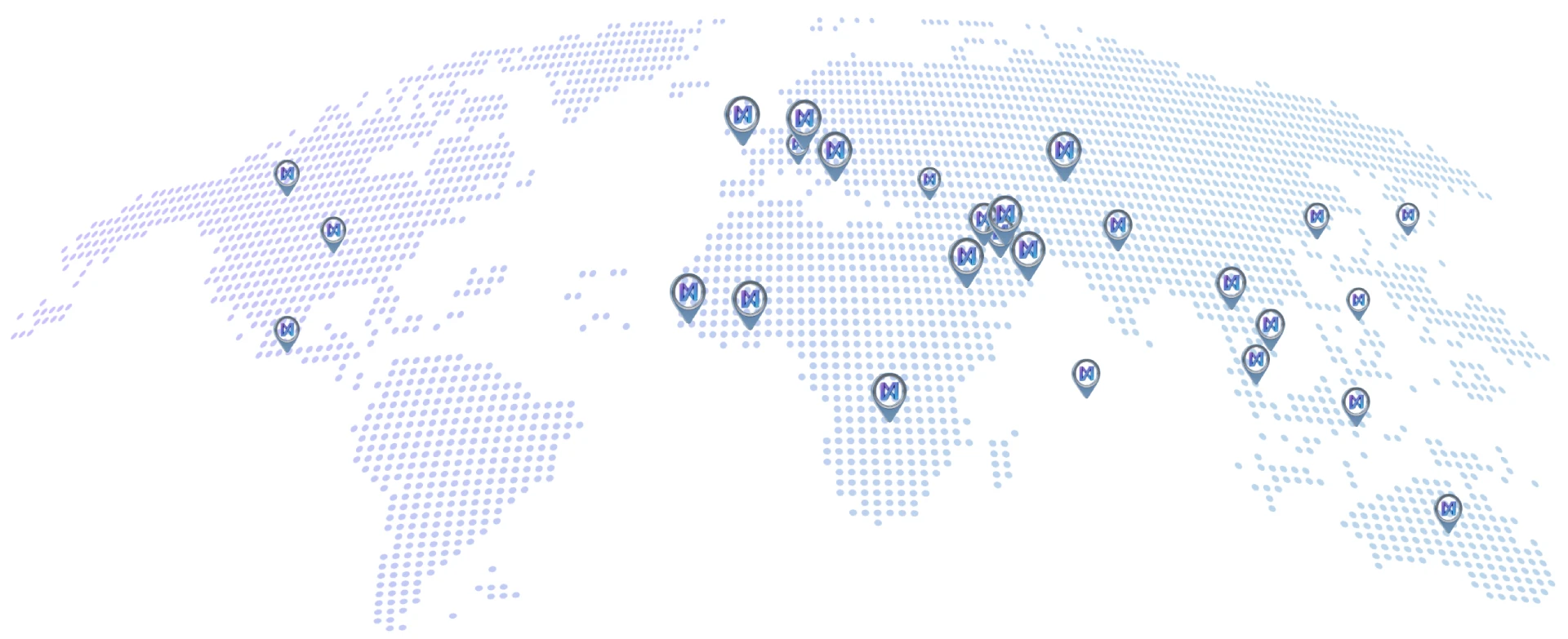
It also isn’t a first customer’s worth of trust you’re extending. PlantOS™, the platform behind the AI Shield family, is live across more than 1,000 plants in 28 countries, has eliminated over 167,000 hours of unplanned downtime, and holds a 99.97% accuracy rate, user validated. Infinite Uptime’s partner program materials point to throughput gains of up to 2.5% on top of that. Your customer isn’t the pilot.
Pricing is set case by case, so the thing worth looking at is not a list price but the shape of the return. One deployment pays four ways. The first of them is a share of the subscription itself, retained on the order you place rather than paid out to you afterwards, and the terms of it are set down together, in writing, once the first deal has closed.
Four Ways You Earn On One Deployment
Pricing is set case by case. What does not change is the shape of the return.
Subscription share
A share of the subscription itself, retained on the order you place.
Commissioning labor
Installation and commissioning is entirely yours, billed at your own rates.
Service pull-through
Every validated finding becomes a work order. You are the first call executor.
Renewal annuity
The subscription renews annually, and it renews on your book.
03. The Guardrails
What Keeps This Safe To Actually Try
We never go around you on your accounts.
Every touchpoint runs through your relationship.
We never discount your customer.
Pricing integrity stays with you.
Labor never moves to us.
Installation, commissioning and service stay yours, contractually.
The commercial commitment starts as a two page, non binding memorandum of understanding with a 30 day exit notice. That’s a real test, not a lock in. And the arrangement cuts both ways. If the vendor’s diagnostics quality or co-sell responsiveness falls short of what was promised, you exit clean.
04. The First 90 Days
What Actually Happens After You Sign
The program deliberately avoids starting with the biggest plant or the hardest asset. A trophy first project tends to fail quietly and expensively. Instead, the first deployment is chosen against five filters: you already hold the relationship, it’s a critical rotating asset, there’s been a known pain point in the last 12 months, the shutdown window is 90 days or less, and there’s a visible, provable win available. If you can name three candidate plants against that list in a first conversation, the next step is obvious. If you can’t name one, the honest answer is to wait.
Account protection is earned rather than granted. Each named account is expected to reach a first order within six months, which keeps the protected list short enough to mean something.
Day 0 To Month 12, And What Each Step Commits You To
A two page memorandum of understanding, a 30 day exit notice, and a first project chosen on purpose.
Sign the MoU
Two pages, non binding, 30 day exit notice, scoped to the first deals only.
Enable and select
Your team is trained. You name the first three candidate projects against the five filters.
First deployment
Ordered through you, at list price, on an account you already hold.
Expand
Grow the footprint across the asset class, then to the next plant on the account.
Renew and review
Lands with the MoU review. Converts to a full agreement, or both part — accounts stay with you.
Each named account is expected to reach first order within six months.
“Your customers are asking about AI. A dashboard is not an answer.”
AI Shield Partner System, Partner Kit, September 2026
05. The Point
Why This Actually Fixes The January Problem
The reset isn’t really about the calendar. It’s that a project based book has no memory. Commission a job, invoice it, and the relationship goes quiet until the next bid comes up. A subscription backed deployment behaves differently. The install is a one time event, but the diagnostics, the service pull-through, and the renewal keep the account active on your book for as long as the customer runs the asset. Start with one plant and two cranes chosen because you already had the trust, and a year from now you’re not rebuilding a pipeline from zero. You’re renewing one.
Bring Three Candidate Plants To The First Conversation
“Infinite Uptime partners don’t just resell technology — they deliver measurable business outcomes using world-class diagnostics and our proven 99% Trust Loop methodology.” System Integrators are named as one of four formal tracks in Infinite Uptime's partner program, alongside Regional Strategic, OEM, and Operations and Maintenance partners.
Exact Sources
1. “01 – AI Shield Partner System (Deck)”, AI Shield SI Partner Kit, Infinite Uptime, September 2026. Source for the SI delivery model split, the co-sell commitment, the four SI revenue lines and the subscription share retained on the order, the three contractual guardrails, the MoU and 30 day exit notice, the five first project selection filters, the six month first order expectation, the Day 0 to Month 12 timeline, and the positioning line quoted above.
2. Infinite Uptime, Partners page. Re-verified 25 August 2026. Source for the direct quote about partners delivering measurable business outcomes and the 99% Trust Loop methodology, and for the three support pillars (sales and go-to-market, marketing enablement, technical and certification guidance).
3. Infinite Uptime, Global Partnership Program Brochure (PDF). Re-verified 25 August 2026. Confirms four named partner tracks (Regional Strategic, OEM, Global System Integrators, and Operations and Maintenance) and cites throughput gains of up to 2.5%.
4. Infinite Uptime, About page. Re-verified 25 August 2026. Source for the company scale figures used here: more than 1,000 plants across 28 countries, 167,837 hours of unplanned downtime saved, and a 99.97% accuracy rate, user validated. Note for the approver: an older FAQ line on the same page still reads 946 plants across 26 countries, the internal content standard (August 2026) directs collateral to 946 plants, 26 countries and 157,119 hours, and the Global Partnership Program Brochure states 99.97% as equipment availability rather than accuracy. This article uses the newer live figures and the About page wording throughout. The Partner Kit and the internal stat rule should be updated to the same set before publication, so an SI reading both in the same week sees one set of numbers and one claim attached to 99.97%.
5. ROT AI Shield, Technical Module v1.1 and commercial deck v20. Internal Infinite Uptime product documentation. Source for the run out table engineering detail used as the build it yourself example: RPM gated FFT acquisition and a mounting location temperature rating of 120°C. Note: as of this verification, infinite-uptime.com has no dedicated public landing page for ROT AI Shield by that name, unlike Crane AI Shield. Confirm the current public product name before this article is published externally, or link to the general AI Shields solutions page instead.
6. Infinite Uptime, Critical Equipment Reliability page. Re-verified 25 August 2026. Confirms AI Shields as the flagship product family, covering kilns, mills, cranes, furnaces, mixers, extruders and dryers, and confirms Crane AI Shield has its own dedicated page.
Note on trademark usage: PlantOS™ carries the trademark mark. AI Shield, ROT AI Shield and Crane AI Shield are used without a trademark symbol per current Infinite Uptime brand style. Confirm current benchmark figures and the ROT AI Shield public product name against the live site before posting.