- Most of the value in a plant technology deployment arrives after commissioning: the subscription, the diagnostics, the service work the findings create, and a renewal every year after that. Integrators usually do the install and get paid once. Everything after it goes to whoever holds the customer’s contract.
- The AI Shield partner model from Infinite Uptime, the Production Outcomes Partner for Heavy Industries, changes who holds that contract. The customer orders through you. Infinite Uptime provides the hardware, the AI and the 24/7 diagnostics, and every deal is co-sold. You keep a share of the subscription on the order, bill commissioning at your rates, get first call on the work orders the diagnostics produce, and invoice the renewal yourself.
- Your crews do the same install they always have. The difference is that the plant’s outcomes are delivered under your name, and what comes after the install stays with you.
It’s 2 a.m. on the third night of a planned shutdown. Your crew is on the mill floor mounting sensors, pulling cable through tray nobody has opened in years, and working through loop checks while the maintenance manager keeps one eye on the clock. By morning the system is live. You close out the punch list, send the invoice and move on to the next bid.
Over the next ten years, that system will earn money every month. Just not for you.
Try a quick exercise. Pull up the last ten commissioning jobs your team completed and count how many still pay you anything today. For most integrators the number is zero, or close to it. The software subscription renews with the vendor. The service contract sits with the OEM. The diagnostics, if anyone is doing them, belong to whoever owns the platform. You were the one on the ladder, and you got paid for the ladder.
01. FOLLOW THE MONEY AFTER GO-LIVE
Where The Value Actually Sits
Nobody hid this from integrators. Most technology deals have been put together the same way for years. The vendor holds the contract with the end customer, and the integrator comes in as a subcontractor to get hardware onto the asset and data flowing. Once the job is signed off, the integrator’s part is over, even though the integrator is usually the firm the plant trusts most and calls first when something breaks.
Who keeps the recurring value comes down to one thing: whose paper the order is written on. Change that, and everything that follows the install changes hands with it.
02. THE INVERSION
Same Install, Different Owner Of Everything After It
The AI Shield partner model starts from that question. The customer places the order through you. You contract with the plant directly, the way you already do for controls work, and Infinite Uptime sits behind you as the intelligence layer. What the plant is buying is protected production: critical assets that keep running, and throughput and conversion cost that hold where they should.
On site, very little changes. You scope it, install it, commission it and support it, the way you would any project on a critical asset. The difference is what you hold when your crew packs up. Four things come with every deployment:
- A share of the subscription itself, retained on the order you place rather than paid out to you afterwards, with the terms set down together in writing once the first deal has closed.
- Commissioning labor, billed at your own rates.
- Service pull-through. When the diagnostics find a fault, it becomes a work order, and your team gets first call to carry it out.
- The renewal. You invoice it, and it keeps carrying your share for as long as the subscription stays active.
The last one matters most. A project book has no memory, but a renewal does. Every deployment you add is still on your book next year and the year after, for as long as the customer keeps running the asset.
“Every install you’ve ever done became someone’s annuity. Never yours. This is the first install that becomes yours.”
AI Shield Partner System, Partner Kit, September 2026
03. WHERE THE WORK ORDERS COME FROM
Prediction Isn’t An Outcome
Most monitoring systems generate very little follow-on work for integrators, because they stop at the alert. A value turns red, someone gets an email, and the plant’s own team has to work out what it means. Usually that ends in a walk-down, a shrug and a note to check again next week.
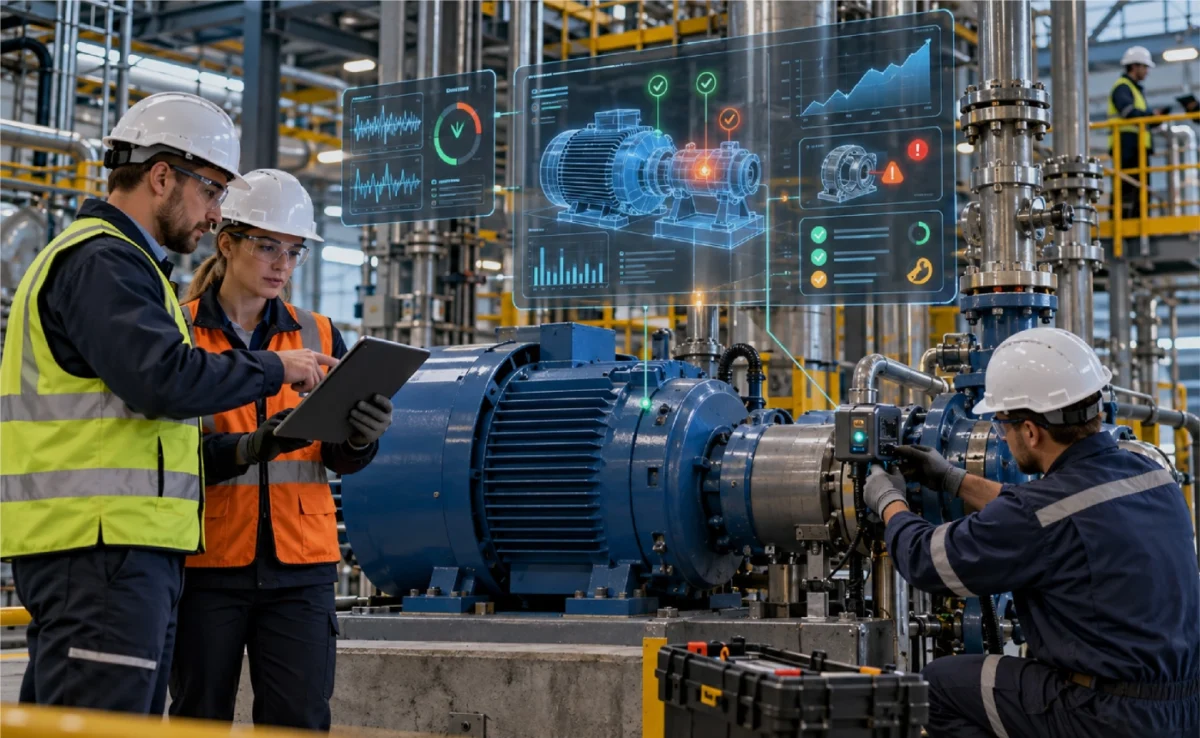
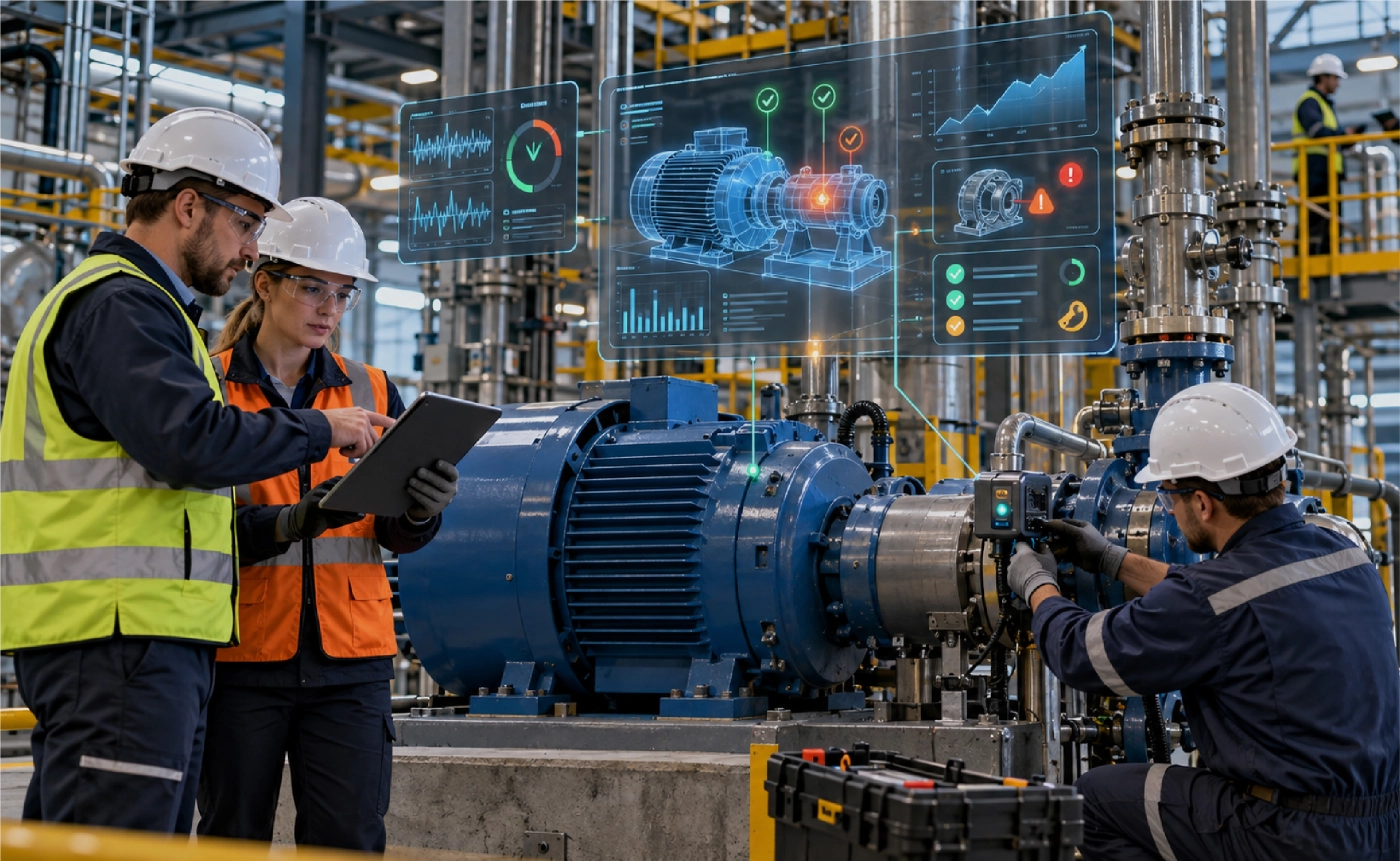
A prediction on its own doesn’t protect a single hour of production. PlantOS™, the Industrial Outcome Intelligence Engine behind the AI Shield family, carries each finding further. Every flagged fault is checked by a CAT III or CAT IV vibration analyst before it goes out, and what reaches the plant is a prescription: which asset, what’s wrong with it, how urgent it is and what should be done. Each one is aimed at keeping uptime and throughput where the plant needs them. A planner can turn it straight into a work order, and a work order means labor.
The service reports tell the story better than a pitch can. A steel plant on the US Gulf Coast got 23 days of warning on a developing fault and avoided 72 hours of unplanned downtime. A chemical plant in Alabama had four months’ notice and saved 12 hours. At a steel plant in the Middle East, a single prescription turned into five separate work orders. Each of those jobs is paid work, and under this model the first call goes to you.
So service pull-through isn’t something your team has to go out and sell. The diagnostics bring the work to you with the reasoning already attached.
PlantOS™ has unlocked operator validated outcomes across 1,000+ plants in 28 countries and nine heavy-industry verticals. Your customer won’t be the first site it has been tested on.
04. HOW THE WORK RUNS
Co-Sold, Every Deal
A fair question at this point is who does the selling. You both do. Every deal is co-sold, with Infinite Uptime’s team in the room with yours. Your firm gets a named sales contact plus a backup, and leads you register are picked up within 48 hours. If you can’t make a customer meeting, it gets moved rather than going ahead without you.
The agreement puts it in three plain lines: we never go around you on your accounts, we never discount your customer, and labor never moves to us. Account protection is earned rather than handed out, so each named account is expected to reach a first order within six months. That keeps the protected list short enough to mean something.
Getting started is deliberately small: a two page memorandum of understanding with a 30 day exit on either side, and deals already in progress carry on if either side walks away. The first project is chosen against five filters, and the one that matters most is that you already hold the relationship. Skip the biggest plant and the hardest asset. Pick the site where the maintenance manager already takes your calls. The first renewal conversation comes around month 10 to 12, when you both sit down with real numbers.
05. The Point
Next Time You’re On The Ladder
The install was always yours. You have the crews, the site access, the safety record and the trust of the people who run the plant. What you haven’t had is anything that keeps paying once the punch list is closed.
So the next time your team is on a mill floor at 2 a.m., ask a slightly different question. Whether the job goes well still matters. But ask who will still be delivering outcomes to that plant, and earning from it, five years from now. With the right structure, that can be the people who did the work.
Stronger Outcomes, Delivered Under Your Name
Go back to that list of your last ten commissioning jobs and pick the three plants you’d most like to still be earning from. Bring those three to a first conversation with the Infinite Uptime partnerships team.
New to the model? Start with our earlier piece,
How System Integrators Can Deliver Prescriptive Maintenance Without Building It From Scratch