Your Crane Doesn't Fail on a Schedule.
So Why Is It Monitored on One?
Standard predictive maintenance was built for steady-state machines. A duty-cycle crane behaves nothing like one, and that mismatch is exactly where the failures hide.
The Short Version
A crane is the most consequential moving asset on your floor, and it’s often the one your monitoring system understands least. Battery-sampled predictive maintenance (PdM) sleeps through the moments that matter, goes quiet under load, and degrades in foundry heat.
Crane AI Shield watches the crane the way a crane actually behaves—always-on, RPM-aware, and engineered for the floor—then hands your operator a prescription, not another alert to chase. The system boasts a 99.97% prediction accuracy across 946 plants in 26 countries.
What Actually Fails on a Crane
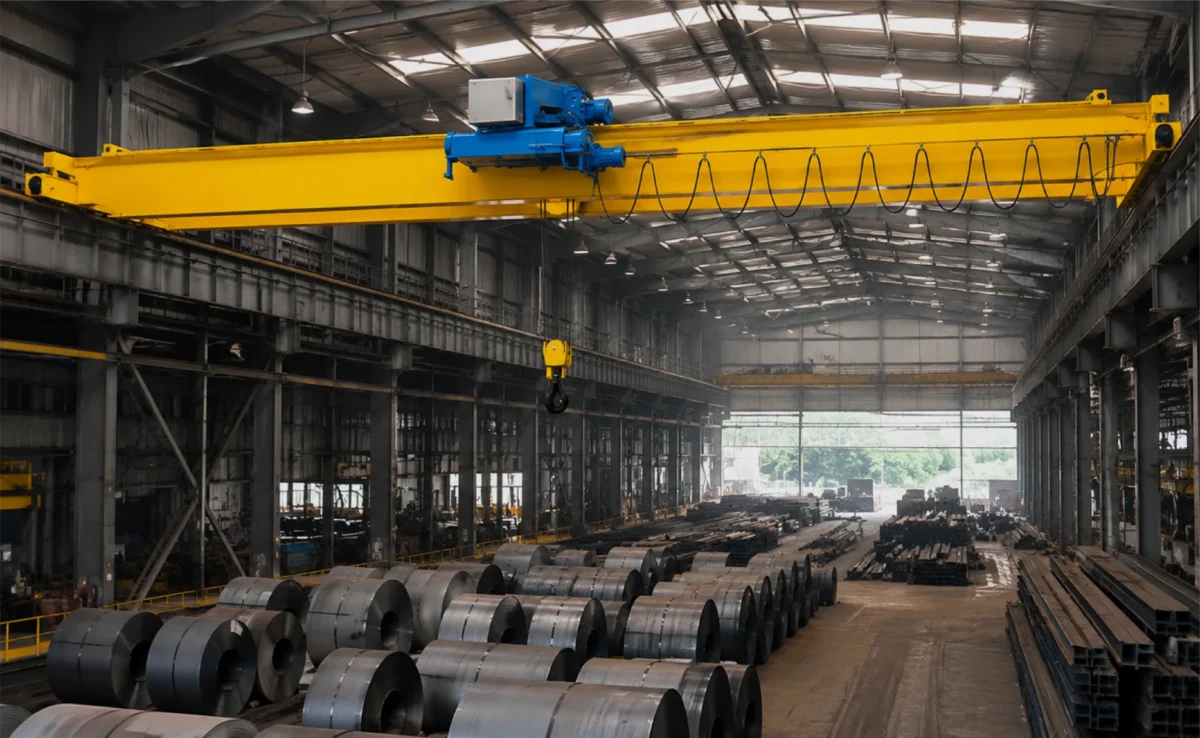
You are the reliability manager. When the main hoist on the melt-shop crane drifts toward a seizure at 2 AM, you are the one who gets the call. A failed hoist doesn’t just idle one machine; it idles the entire bay.
The failures Crane AI Shield is built to stop fall into recognizable patterns:
- Surprise breakdowns: Bearings, gears, and rotating components letting go mid-shift, mid-load, with no warning.
- Silent capacity loss: Slow degradation that quietly eats into uptime and throughput.
- Repeat failures: The same fault returning on hard-to-reach wheels, gearboxes, and hoists.
- The Cascade: A small $5,000 bearing fault that takes the gearbox, motor, and shaft with it, turning into a $500,000 incident.
Every one of these is catchable early—but only if something is actually watching at the moment the fault first shows itself.
A Crane is Not a Pump
Most predictive maintenance tooling was designed to watch steady-state rotating equipment—motors and pumps that turn at a constant speed, in a fixed spot, all day. A crane breaks every one of those assumptions by accelerating, decelerating, sitting idle, and lifting under shock load.
Drop battery-sampled PdM onto that asset and three structural gaps open up:
- It wakes only a few times a day. Faults surface between samples and are never recorded.
- It goes quiet exactly when it matters. Many systems stop reading the moment the asset is working, which is precisely when a fault under load reveals itself.
- It dies before it can warn you. Sealed battery units degrade under sustained heat, dust, and vibration.
What "Built for Cranes" Actually Means
Crane AI Shield closes these gaps by changing how it watches:
- It listens at the right moment. RPM is tracked live, and vibration is captured only when the crane is at a stable speed. This RPM-gated capture keeps noise out of the spectrum, meaning clean diagnostics and effectively zero false alarms.
- It never sleeps. RPM and temperature stream 24/7, leaving no sampling gap for a fault to slip through.
- It survives the floor. IP68 SS316 sensors with 180°C-rated cabling are engineered to keep working where battery units burn out.
R P M O V E R T I M E
↓ FFT vibration capture fires only inside the stable band
Why One Signal is Never Enough
An early-stage crane fault rarely announces itself on a single chart. Crane AI Shield continuously reads and cross-correlates gear-mesh frequencies, sidebands, cepstrum, time waveform, shockwave and envelope, PSD, RPM, temperature, and velocity. Confidence builds only as the evidence agrees, validated by a certified analyst before anything reaches your floor.
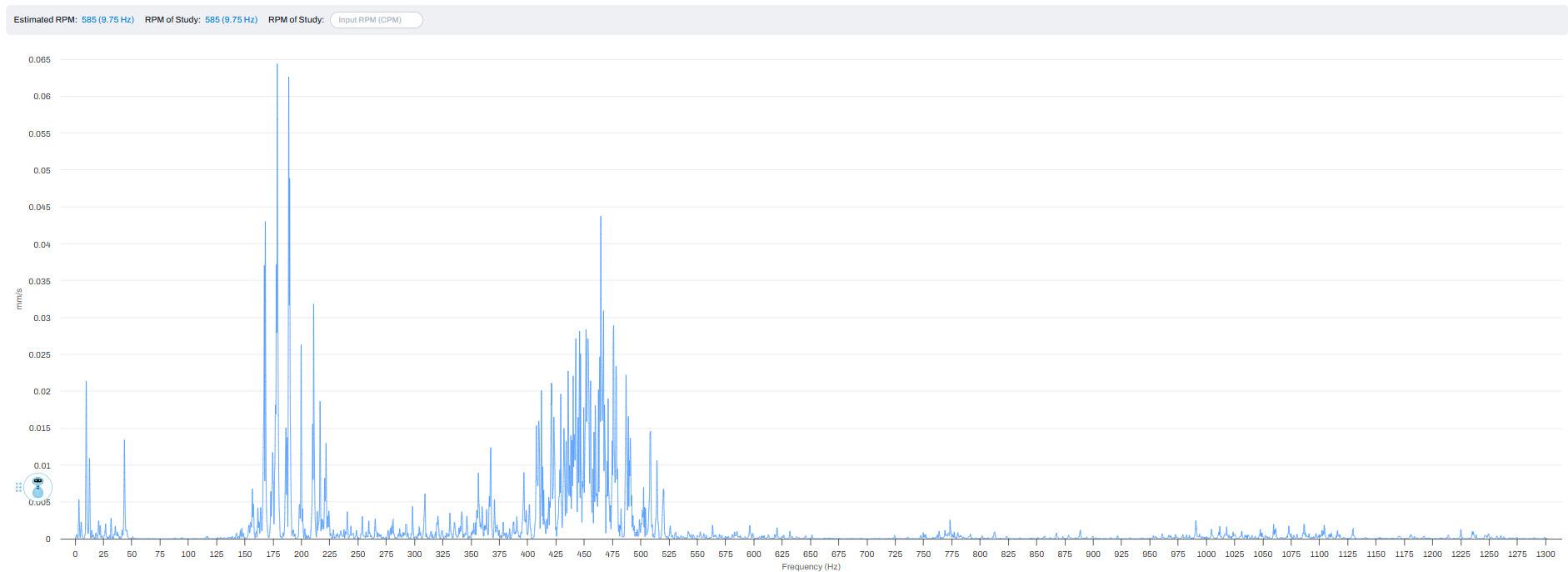
Multiple vibration-analysis traces cross-correlated into a single confirmed-fault diagnosis.
From Alert to Closed Loop
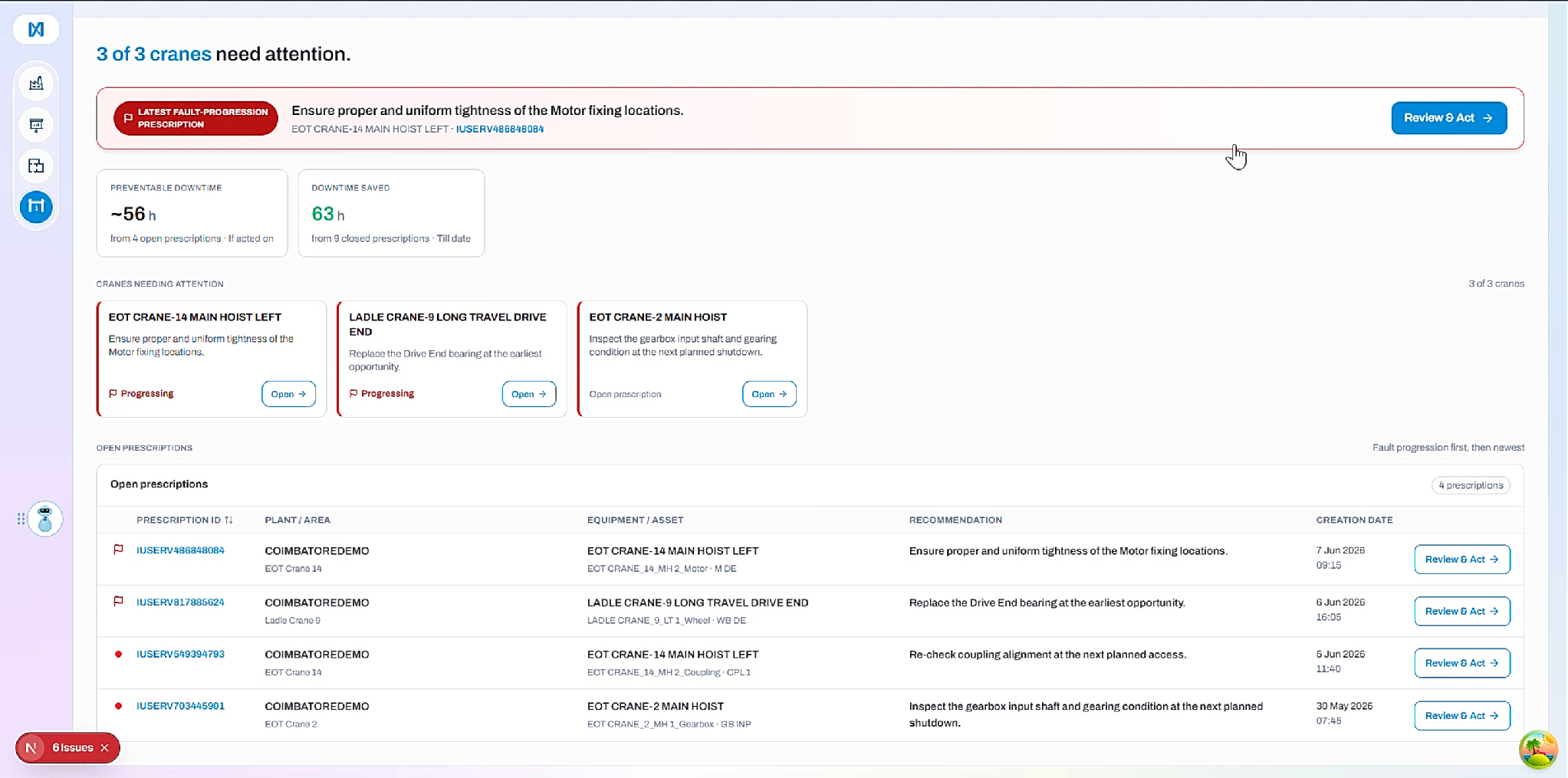
- Contextualize: Every duty-cycle crane is ranked by fault progression.
- Predict & Prescribe: The screen reads the fix in plain words (e.g., “correct the hoist drive coupling alignment”).
- Validate: The operator marks the action done and confirms the accurate prediction.
- Loop Closed: The alert turns green, and confirmed outcomes feed back into the model.
Proof, Not Promise
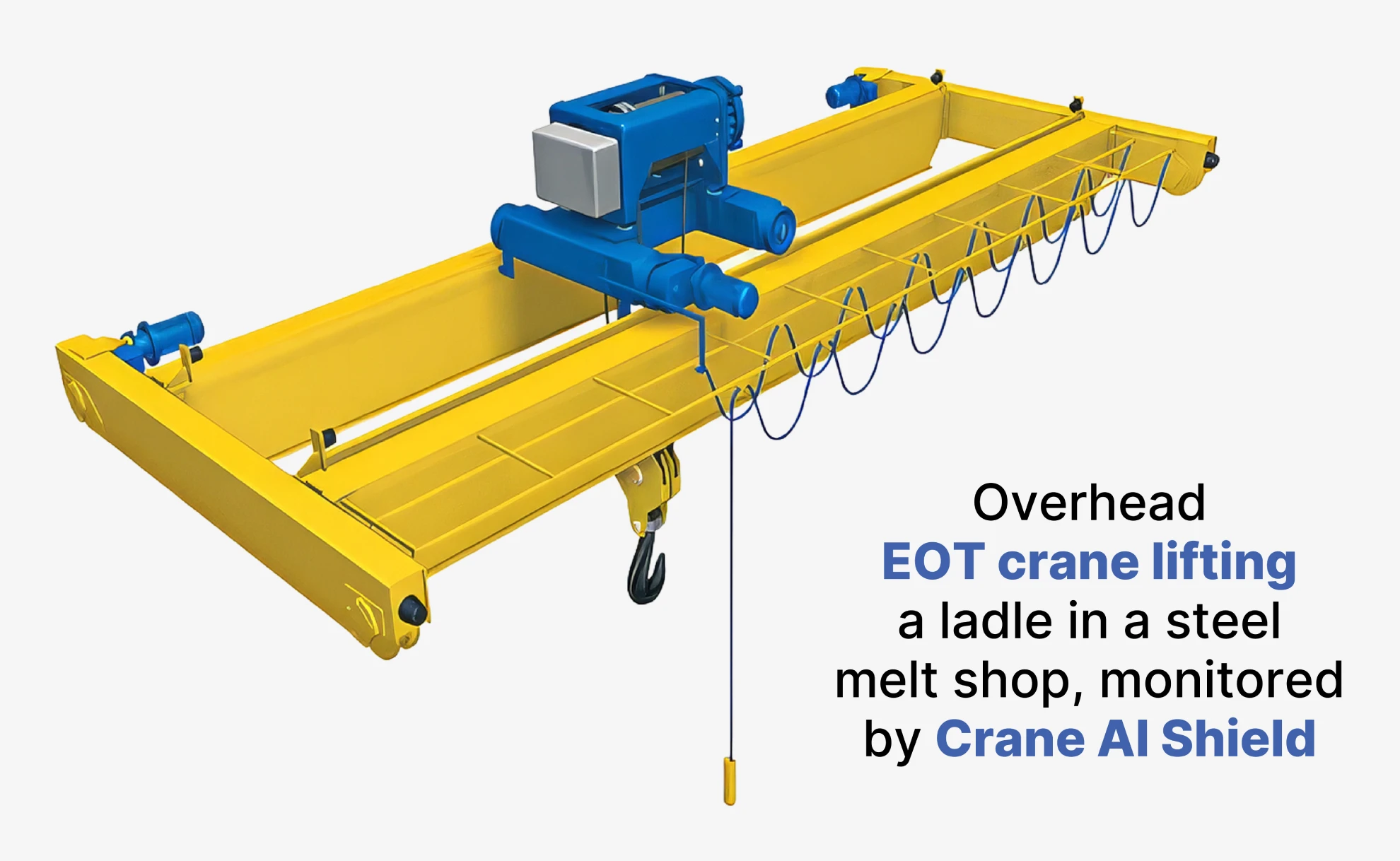
A melt-shop EOT crane at leading steel producing company runs 300-400 lift cycles a shift. When its main hoist motor bearing began drifting toward looseness, Crane AI Shield read the rising signature early and prescribed the exact correction. The result was one planned stop, a re-lube done on schedule, and hours of unplanned downtime eliminated on the bay’s highest-consequence asset.
Two Systems, One Unified View
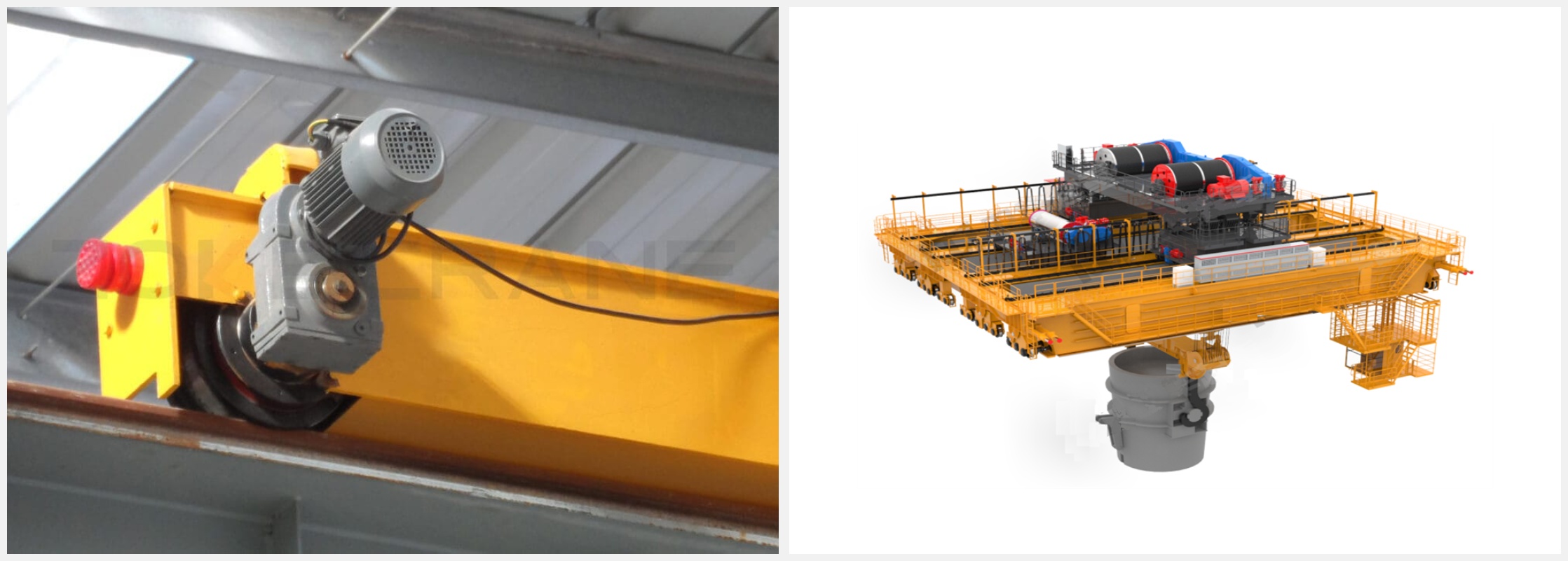
Every EOT crane runs on two motor systems, and Crane AI Shield reads both:
- The Main Hoist Drive: Monitored for gear-mesh defects, bearing degradation, and speed-correlated anomalies.
- The Long-Travel System: Monitored for bearing defects, lubrication degradation, and wheel-side looseness.
The Bottom Line
Crane AI Shield isn’t just a sensor and a model bolted together; hardware and AI are engineered as a single system. Deployments run on a predictable roughly eight-week timeline. You already know how to run the plant. Crane AI Shield gives you the part you couldn’t see before—the fault building right now while every chart still looks normal.
Watch a crane the way a crane behaves, or you’re not managing reliability. You’re hoping.
Try PlantOS™ Crane AI shield today: https://infinite-uptime.com/contact
Frequently Asked Questions
Standard battery PdM sensors fail cranes in three specific ways: they sample vibration only a few times per day, missing faults that develop between snapshots; they stop recording when the crane is under load — exactly when fault signatures are strongest; and their battery enclosures degrade rapidly under foundry heat, dust, and vibration. Crane AI Shield eliminates all three: RPM-gated FFT fires only under stable load conditions, sensors stream RPM and temperature 24/7, and IP68 SS316 hardware with 180°C-rated cabling is designed to survive where battery units fail.
Time-sampled monitoring captures vibration on a clock schedule — not when the crane is actually working. Accel and decel noise contaminates the spectrum, making it difficult to isolate genuine fault frequencies. RPM-gated FFT triggers only when the motor is in a stable speed band under load — producing clean spectra at the exact moment fault signatures are most distinguishable. This eliminates false alarms, reduces filtering requirements, and catches faults that time-sampled systems structurally cannot detect.
Crane AI Shield monitors up to 19 failure modes across the main hoist drive train: bearing defects (BPFO/BPFI/BSF), gear-mesh faults (GMF), gear tooth wear, gear backlash, shaft misalignment, coupling faults, rotor bar cracks, unbalance, structural looseness, and more. The Comprehensive tier adds long-travel wheel bearing defects. Vibration analysis using FFT fault frequency mapping identifies bearing and gearbox degradation 2–6 weeks before catastrophic failure. The Tata Steel Colors case study: Main Hoist Motor #3 flagged 12 days before likely failure — 10 hours of unplanned downtime avoided.
Deployment follows a structured 5-day plan with only one day of crane downtime required for sensor mounting and commissioning sign-off. AI calibration to the crane’s kinematic profile — mapping gear-mesh and shaft-order frequencies — is completed within Days 2–3. The system delivers a first diagnostic typically within 30 days, with a 60-day evaluation period and 75% of payment due only on satisfaction. ROI payback is typically achieved within 6–12 months: the Standard subscription is $24K per crane per year versus $75K–$250K+ per avoided main-hoist failure — a 3–10× return on the first catch.
Yes. Start with your highest-criticality crane, validate the outcome on your specific equipment, then scale at your own pace. The Fleet Operations Center provides a unified view of 100+ cranes — every crane needing attention ranked by fault progression, with preventable downtime hours tracked live. Infinite Uptime currently operates across 845+ plants in 30+ countries. Sensor placement scales with crane size; the scope of fault coverage does not change.