Why Your Mining Plant Keeps Breaking Down
— And Why Your AI Can't See It Coming
Read Time: 8–9 minutes | Author – Kalyan Meduri
- What Is Vertical AI for Outcomes?
- The Problem Generic AI Cannot Solve
- Two Threats. One Asset. One Platform.
- What Prescriptive AI Looks Like in a Mine
- The 99% Trust Loop™ — Why Mining Teams Actually Act on It
- The Energy Dimension: Why Reliability and Efficiency Are the Same Problem
- Starting Where It Matters Most
- The Bottom Line
Somewhere right now, a crusher is about to fail.
The maintenance team doesn’t know it yet. The vibration sensor on the bearing isn’t alarming. The DCS isn’t flagging anything. Everything looks normal — until it doesn’t, and a $40,000-per-hour production halt begins while the team scrambles to understand what happened, source emergency parts, and restart a comminution circuit that’s now backed ore up across the entire plant.
This is not a technology failure. It is an architecture failure. And it plays out every day in open-pit mines, underground operations, and mineral processing plants across the world.
The solution is not more sensors. It is not louder alarms. It is not even better predictive maintenance in the traditional sense.
It is Prescriptive Vertical-AI for Outcomes — AI trained specifically on mining’s failure physics, correlating mechanical degradation and process-induced stress simultaneously, and prescribing specific action before the failure cascade begins.
This is what Infinite Uptime built PlantOS™ to do. And this is why it works when generic AI doesn’t.
What Is Vertical AI for Outcomes?
Vertical AI for Outcomes is industry-specific AI that understands both equipment behavior and process conditions, identifies root causes, prescribes corrective actions, and converts industrial data into measurable, operator-validated business outcomes.
The Problem Generic AI Cannot Solve
Mining is one of the most punishing operating environments on earth. Crushers process thousands of tonnes of abrasive rock per hour. Conveyors run kilometres across open terrain under constant variable loading. SAG mills grind continuously at the intersection of mechanical stress and process chemistry. Slurry pumps move abrasive, corrosive fluid through systems under enormous pressure.
Every crusher stoppage halts the mine. Every conveyor trip risks millions.
Generic AI platforms — the kind trained on broad industrial datasets — can detect that a bearing is degrading. They can tell you that vibration on a conveyor drive is trending upward. What they cannot tell you is why — and in mining, the why is everything. Because in a mine, the mechanical fault and the process condition that created it are almost never independent.
Consider what actually happens when a primary crusher bearing begins to fail.
The bearing might show early-stage spalling — a mechanical fault, clearly detectable through vibration frequency analysis. Standard AI sees it and generates an alert. But what standard AI doesn’t see is that three days earlier, the ore feed grade changed. Rock hardness jumped significantly above the crusher’s optimised design point. Feed rate wasn’t adjusted to compensate. The result: chronic impact overloading — a process-induced stress — compressed what would have been a 6-month degradation timeline into a 3-week collapse.
By the time the vibration alarm fires, the window for a planned intervention has already closed.
This is the core problem that Prescriptive Maintenance solves: detecting not just the mechanical symptom, but the process condition creating it — weeks before the alarm knows to sound.
Two Threats. One Asset. One Platform.
Threat 1 — Equipment-Borne Mechanical Faults01
These are the faults that originate inside the machine: bearing wear, gear-mesh defects, misalignment, looseness, imbalance, cavitation, lubrication breakdown. They develop progressively and are detectable through spectrum analysis, envelope detection, and bearing frequency analytics. PlantOS™ covers 20+ specific mechanical failure modes across every category of mining equipment — from SAG mill pinion bearings to conveyor idler rollers to dragline swing motors.
Threat 2 — Process-Induced Faults02
These are the conditions that originate outside the machine, in the operating environment, and attack the equipment from the outside in. In mining, these include:
- Crusher feed overloading from hardness variation or uncontrolled feed rates — creating impact loads on jaw plates and bearings that exceed design limits, causing accelerated spalling
- Conveyor belt mistracking driven by off-centre loading at transfer points — initiating idler bearing seizure through asymmetric radial stress
- SAG mill feed imbalance — where charge level variation creates cyclic overload on trunnion bearings and shell liners simultaneously
- Slurry pump cavitation from process density excursions — creating pressure wave damage to impeller and seal assemblies
- Vibrating screen deck overload from upstream feed surges — driving bearing preload beyond rated capacity
- Hydraulic system contamination in excavator boom arms — accelerating pump and motor wear through abrasive particle ingestion
- Bearing wear
- Misalignment
- Gear defects
- Lubrication failure
- Feed Overloading
- Ore hardness variation
- Density fluctuation
- Process imbalance
Our prescriptive AI models, trained specifically for mining and metals, detect mechanical, electrical, and process-induced faults across every stage — from drilling, blasting, and hauling to comminution, beneficiation, and flotation.
This is the critical differentiator of Prescriptive AI: because PlantOS™ is trained on mining-specific failure physics — not generic rotating equipment data — it understands the relationship between process parameters and mechanical degradation patterns that are unique to mining operations. It knows what a SAG mill trunnion bearing looks like when feed rate is correct versus when charge is running light. It knows the vibration signature of a crusher operating within specification versus one absorbing feed it wasn’t designed for.
Generic AI has no idea. It has never seen a mine.
What Prescriptive AI Looks Like in a Mine
Predictive maintenance tells you something might fail. Prescriptive Maintenance tells you exactly what to do about it, when, and what happens if you don’t.
In mining, this distinction is not academic. It is the difference between a controlled bearing replacement during a planned shutdown window and a catastrophic crusher failure that backs ore across the comminution circuit for six hours.
Here is what a PlantOS™ prescription looks like in practice:
Mechanical fault detected: Inner race defect — Jaw Crusher #3 Drive-End bearing. Velocity: 4.2 mm/s and rising. Pattern consistent with progressive spalling.
Process correlation: Feed rate has been running 15% above rated capacity for the past 11 days. Impact load frequency consistent with feed grade excursion (hardness index +22% from baseline). Process-induced stress is accelerating mechanical degradation.
Remaining Useful Life estimate: 18–22 days at current operating conditions. If feed rate is not adjusted, RUL compresses to 8–12 days.
Prescription: (1) Reduce feed rate to rated capacity immediately — this extends RUL and prevents cascade to adjacent components. (2) Schedule bearing replacement within the next planned maintenance window (Day 14). (3) Order replacement bearing assembly — part number provided. (4) Inspect jaw plate for impact damage during replacement.
What happens if you don’t act: At current degradation rate, bearing failure leads to shaft seizure. Secondary damage to gearbox estimated at $180,000 in parts. Production stoppage: 14–18 hours. Total financial impact: $2.1M–$2.8M.
That is not an alert. That is a prescription — specific, actionable, financially quantified, and delivered weeks before the alarm knows to fire.
PlantOS™ delivers 99.97% prediction accuracy with prescriptions digitally verified by domain experts before they reach your maintenance team for validation
The 99% Trust Loop™ — Why Mining Teams Actually Act on It
There is a graveyard of AI systems in heavy industry that generated excellent predictions that nobody acted on. Alert fatigue, distrust of black-box outputs, and prescriptions that didn’t fit the operational reality of the plant all contributed.
Infinite Uptime designed around this problem from the start through what we call the 99% Trust Loop™.
Every prescription generated by PlantOS™’s Prescriptive AI models passes through 24/7 review by domain experts — reliability engineers with deep knowledge of mining equipment failure physics. They validate the prescription for contextual accuracy: is this recommendation appropriate for this specific asset, at this operating condition, in this part of the process? Only then does it reach the maintenance team.
The result is not just high prediction accuracy. It is high prescription adoption — because the maintenance team trusts what they receive. They have seen it proven correct, repeatedly, and they know a human expert stands behind every recommendation.
At Vedanta Group — one of the world’s largest producers of zinc, aluminium, copper, and iron ore — PlantOS™ achieved an 83.64%+ user-validation rate across 1,554 prescriptions, with maintenance teams actively choosing to act on PlantOS™ recommendations. At Hindustan Zinc alone, this translated to 5,039 hours of unplanned downtime eliminated and over $700,000 USD in production savings across mines and smelters.
These are not projections. They are operator-validated outcomes tracked through the PlantOS™ Digital Reporting System — signed off by the maintenance teams who acted on the prescriptions.
The Energy Dimension: Why Reliability and Efficiency Are the Same Problem
Mining operations are among the most energy-intensive on earth. Comminution alone — crushing and grinding — can account for up to 50% of a mine’s total energy consumption.
What most mining operators don’t realise is that mechanical degradation and energy inefficiency are the same problem viewed from different angles. A conveyor belt with idler misalignment doesn’t just fail — it overconsumes electricity for months before it does. A crusher operating with a worn liner doesn’t just produce substandard product — it draws excess power on every cycle. A slurry pump running in cavitation doesn’t just damage its impeller — it runs at 30% below rated efficiency while doing so.
PlantOS™ detects these conditions simultaneously — the mechanical signature and the energy waste — and prescribes corrective action that addresses both. The result is not a choice between reliability investment and energy efficiency: it is a single prescription that delivers both.
By prescribing corrective actions that address both reliability and energy efficiency simultaneously, PlantOS™ helps mining plants reduce energy cost per ton of ore processed while maintaining throughput stability.
Starting Where It Matters Most
You don’t need to monitor everything to start getting outcomes. You need to start with the assets where a single failure creates the most operational and financial exposure.
In a typical open-pit mining operation, that is usually: the primary crusher, the SAG/ball mill drives, the main overland conveyor, and the slurry pump station. These four asset categories account for the majority of unplanned downtime events — and the majority of recoverable cost.
PlantOS™ deploys in weeks, integrates with existing historian, PLC, and DCS infrastructure, and delivers first prescriptions within days of go-live. The first prevented failure typically recovers the platform cost entirely.
Most mining and metals plants start seeing measurable improvements in downtime reduction, equipment availability, and energy efficiency within 6–12 months.
The Bottom Line
Mining doesn’t have a data problem. It has a correlation problem.
The faults that cause the most expensive shutdowns in mining don’t originate in one domain and stay there. They begin as process conditions — overloading, feed variation, abrasive excursions — that accelerate mechanical degradation until a bearing fails, a liner cracks, a pump impeller cavitates, and the production circuit stops.
Generic AI sees the bearing. It doesn’t see the overloading that created it.
Vertical AI for Outcomes — trained specifically on mining’s failure physics, correlating mechanical and process domains simultaneously, validated by domain experts, and delivered as actionable prescriptions — sees both. And it sees them weeks before the alarm.
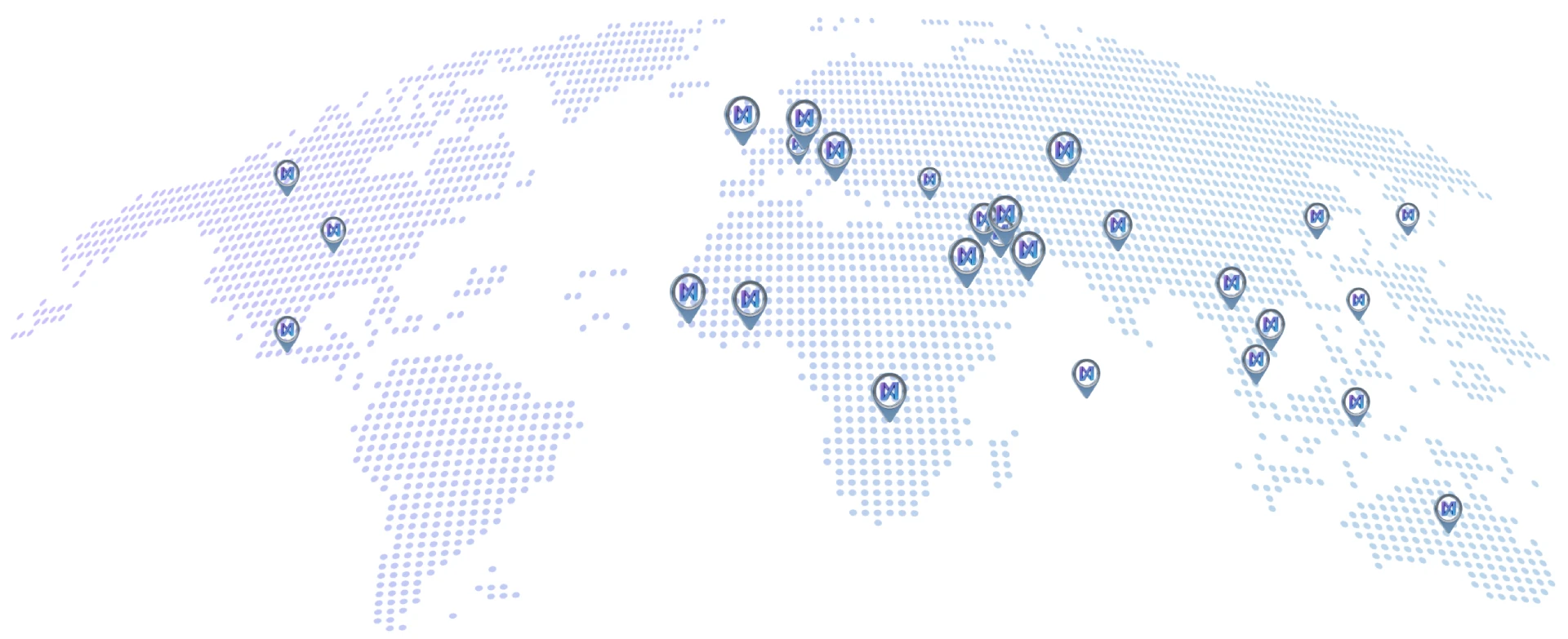
That is what Prescriptive Maintenance looks like when it’s built for mining. That is PlantOS Infinite Uptime’s PlantOS™ is the Prescriptive Vertical-AI for Heavy Manufacturing. Deployed across 946+ plants in 26 countries, PlantOS™ delivers Prescriptive Maintenance and AI for Outcomes across Mining & Metals, Steel, Cement, Chemicals, Tire, F&B, Pharma, and Energies.
Frequently Asked Questions
Most plants already have sensors, but they operate in silos. Traditional systems detect mechanical faults but fail to correlate them with process conditions like overloading or feed variability. Without this correlation, the root cause remains invisible until it’s too late, leading to unexpected breakdowns.
Predictive maintenance identifies that a failure might occur. Prescriptive AI goes further by recommending exactly what action to take, when to take it, and what the operational impact will be. This enables faster, more confident decision-making and prevents failure cascades.
Vertical AI for Outcomes is trained specifically on mining failure physics, allowing it to understand how process conditions and mechanical degradation interact. By correlating both domains, it detects issues earlier and delivers actionable recommendations that directly protect production outcomes.
Process-induced faults occur when operating conditions—such as overloading, material variability, or density changes—stress equipment beyond design limits. These faults are often the real cause behind mechanical failures, but most systems fail to detect them early.
PlantOS™ is typically deployed within weeks and begins delivering prescriptions shortly after installation. Many plants recover their investment with the first prevented failure, while measurable improvements in uptime, maintenance cost, and energy efficiency become visible within months.
By combining Prescriptive AI with Vertical AI for Outcomes, mining plants can achieve:
- Reduced unplanned downtime
- Higher equipment availability
- Lower maintenance costs
- Improved energy efficiency per ton processed