PlantOS™-Vertical AI for Outcomes
Vertical AI for Heavy Manufacturing Industries
Proven across 9 industries. Industry-specific fault libraries turn diagnostics into operator- validated outcomes.
Vertical AI is artificial intelligence designed for a specific industry. PlantOS™ is a Vertical AI platform for heavy manufacturing. It runs industry-specific fault libraries, so the AI understands the process-induced fault signatures, not just generic vibration and alerts. PlantOS™ supports more than 1000 plants across 28 countries, helping manufacturers improve uptime, reduce cost/ton, and increase throughput.
Why does each industry need a different Vertical AI model?
The same motor fails differently in a steel mill than in a paper dryer, because the process around it is different. A generic model reads vibration alone and misses that context. Vertical AI reads the process conditions that actually drive the failure. That is why PlantOS™ runs a different model for each industry, not one generic model for all making it a truly industry-specific Vertical AI platform.
| Industry | Generic AI sees | PlantOS™ - Vertical AI Platform also reads (and prescribes on) |
|---|---|---|
| Steel | Vibration and temperature on the bearing | Rolling loads, casting temperatures, and speed, catching hot-strip thermal fatigue, ladle heat-profile drift, and roll thermal overload |
| Cement | Vibration on the kiln drive | Kiln process swings and coating conditions, catching kiln ring formation, cyclone coating buildup, and girth-gear stress |
| Metals & Mining | Vibration on the mill or crusher | Ore-hardness and mill-load variation, catching SAG and ball-mill load swings, crusher impact loads, and conveyor wear |
| Pulp & Paper | Vibration on the roll | Moisture, felt tension, and steam load, catching wet-end web-tension drift and dryer-cylinder faults |
| Chemicals & Fertilizer | Vibration on the pump or compressor | Pressure, temperature, and corrosion conditions, catching coupling thermal loads, cavitation, and seal faults |
| Tire & Rubber | Vibration on the mixer or extruder | Mixing temperatures and extrusion variability, catching mixer thermal and torque stress and extruder-screw wear |
| Energy & Oil & Gas | Vibration on the turbine or pump | Steam load and efficiency drift, catching turbine efficiency loss and boiler-feed-pump stress |
| Food & Beverage | Vibration on the line motor | Continuous-production variability and washdown moisture, catching filling-line wear and moisture ingress |
| Pharma & Personal Care | Vibration on the mixer or press | Batch and cleanroom conditions, catching high-shear-mixer impeller wear, tablet-press stress, and HVAC drift |
Frequently Asked Questions
01
What is Vertical AI for Outcomes?
Vertical AI for Outcomes is specialized artificial intelligence designed for a specific industry that transforms operational data into actionable recommendations to improve production, reliability, maintenance, and energy efficiency.
01
What is a Vertical AI Platform?
A Vertical AI Platform is an artificial intelligence system built specifically for one industry rather than being a generic AI model. Unlike horizontal AI, Vertical AI understands industry-specific equipment, operating conditions, production processes, and failure mechanisms. In heavy manufacturing, a Vertical AI Platform combines equipment data, operational context, historical failures, and engineering knowledge to generate actionable recommendations instead of generic alerts.
02
What industries does PlantOS™ support?
PlantOS™ supports nine heavy manufacturing industries: steel, cement, metals and mining, pulp and paper, chemicals and fertilizer, tire and rubber, energy and oil and gas, food and beverage, and pharma and personal care. It is deployed across more than 1000 plants in 28 countries.
03
Why do different manufacturing industries need different AI?
Because the process around a machine determines how it fails. A motor in a cement kiln faces thermal cycling and coating buildup, while the same motor in a paper dryer faces moisture and felt tension. Generic AI reads vibration alone and misses these. PlantOS™ runs industry-specific fault libraries that read process context, so it catches process-induced failures generic models cannot see.
04
How is PlantOS™ different for each industry?
Each industry gets its own fault library, trained on the failure signatures of that sector's critical equipment. For steel that means hot-strip thermal fatigue and roll thermal overload; for cement, kiln ring formation and cyclone coating buildup; for paper, wet-end web-tension drift. The underlying platform is the same, but what it looks for is tuned to each process.
05
Can one platform support multiple plants and multiple industries?
Yes. PlantOS™ supports more than 1000 plants across 28 countries from one platform, including manufacturers that run several industries at once. Each site and each asset gets a model matched to its own process, while learning is shared across the installed base.
06
How does PlantOS™ adapt to different production processes?
PlantOS™ reads live process data, such as temperature, load, and speed, alongside vibration. It correlates the two using Dynamic FMEA, which re-ranks failure modes against actual operating conditions. This is what lets one platform adapt from a continuous steel caster to a batch pharma process without a generic one-model-fits-all approach.
07
Which manufacturing industries benefit most from prescriptive AI?
The biggest gains come in energy-intensive, downtime-sensitive industries where a single failure is very expensive: steel, cement, metals and mining, pulp and paper, chemicals and fertilizer, tire and rubber, energy and oil and gas, food and beverage, and pharma and personal care, where one stoppage can cost millions and process conditions drive most failures.
Latest Insights
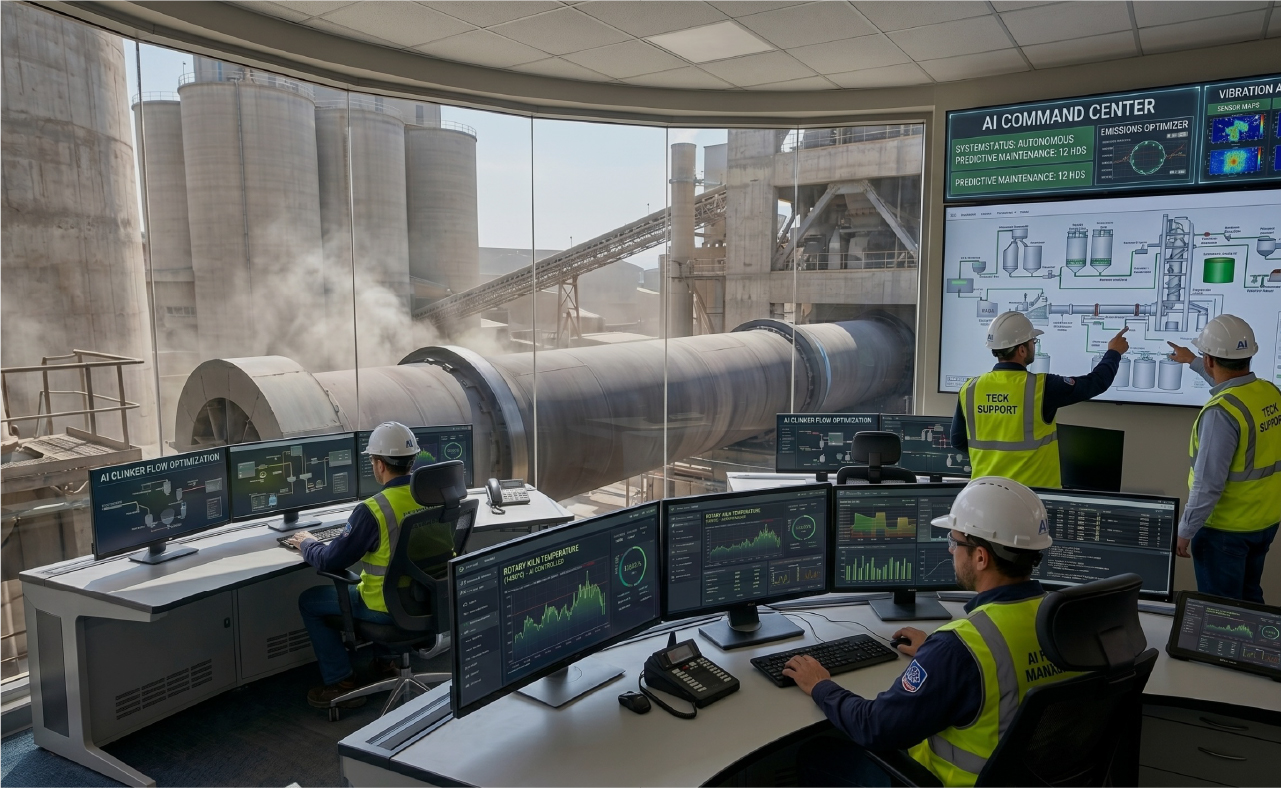
In the United States, unplanned downtime costs manufacturers over $1 trillion annually, while energy accounts for 20–40% of operating costs in energy-intensive plants such as steel, cement, chemicals, and food processing. Industry studies show that unplanned downtime alone can erode 5–20% of annual production capacity, even before maintenance costs are considered.
Read More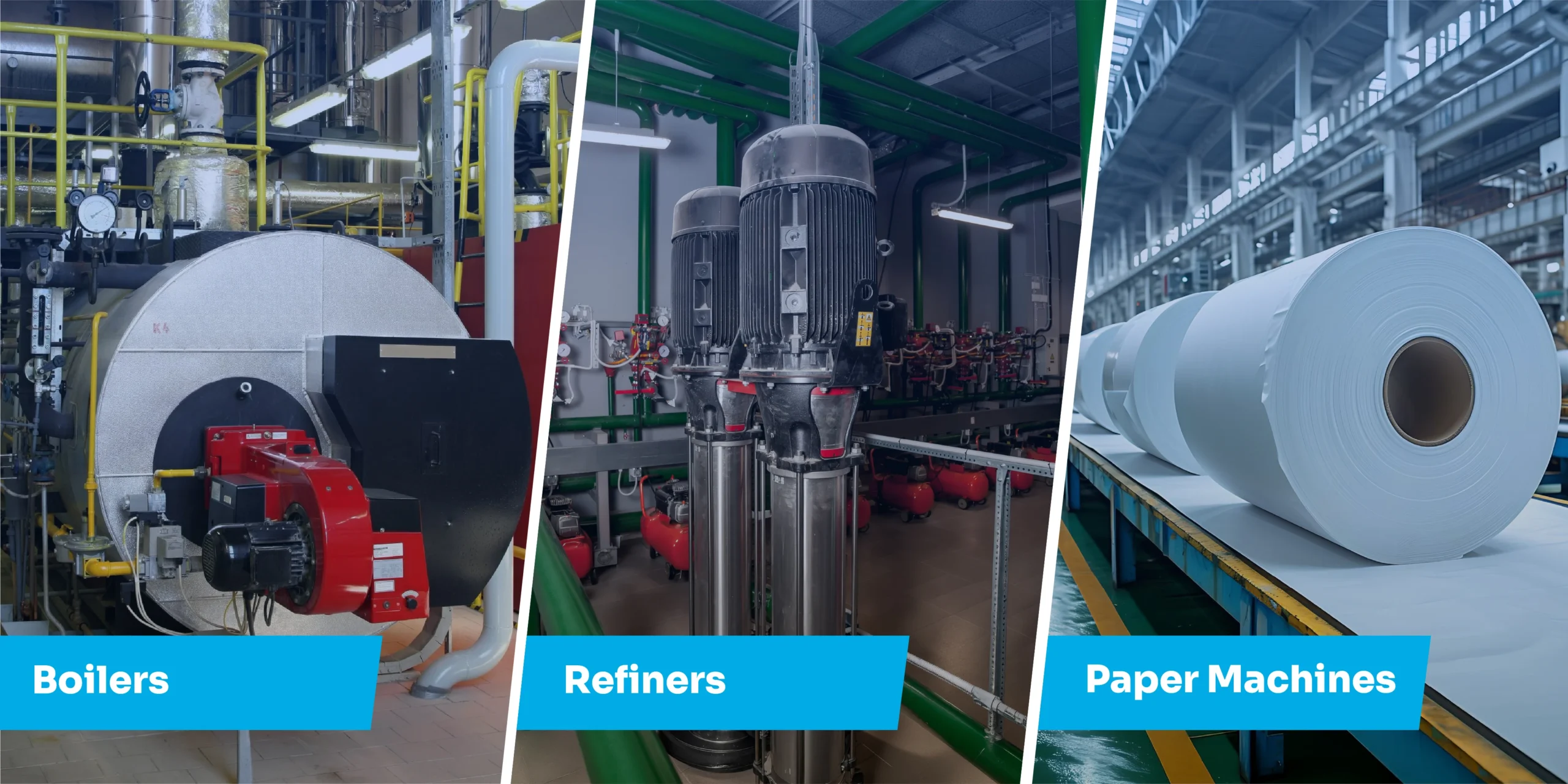
Prescriptive AI for Recovery Boilers, Refiners & Paper Machines
Sustainable pulp and paper manufacturing is no longer a brand statement — it is a boardroom mandate. Regulators, brand owners, and customers want lower kWh/ton, lower fibre loss, and auditable reliability, all while mills stay cost-competitive. The inconvenient truth: none of it holds if the recovery boiler, refiners, and paper machine — the assets that sit at the intersection of reliability, throughput, and energy intensity — keep failing in ways nobody saw coming. A boiler feed pump bearing degrading overnight. A refiner motor developing an inner race defect mid campaign. A dryer cylinder bearing running hot. One fault, and fibre, steam, and tonnage are lost in a single cascade
Read More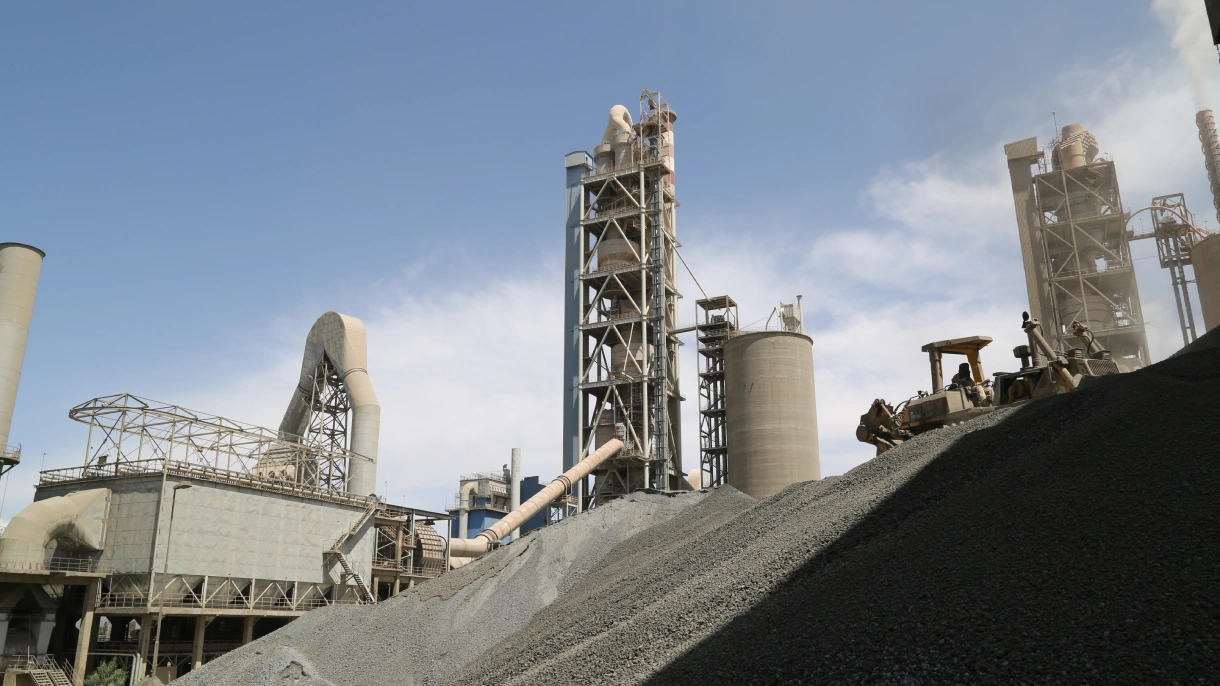
Beyond the Trendline: How PlantOS™ Prescriptive AI Solves the VRM “Discovery Gap”
In the heavy industrial sectors of EMEA, specifically within cement manufacturing, a dangerous “Discovery Gap” has emerged. While most plant heads rely on standard SCADA dashboards to report equipment health, these systems are often blind to the subtle frequency signatures that precede catastrophic failure.
Read More