Categories
Crane AI Shield
Your Crane Works Hardest at 2 PM. Your Sensor Goes to Sleep at 9 AM.

Your Crane Works Hardest at 2 PM.
Your Sensor Goes to Sleep at 9 AM. The fault doesn't wait for your monitoring window. Neither should your monitoring.

Read Time: 8–9 minutes | Author – Kalyan Meduri

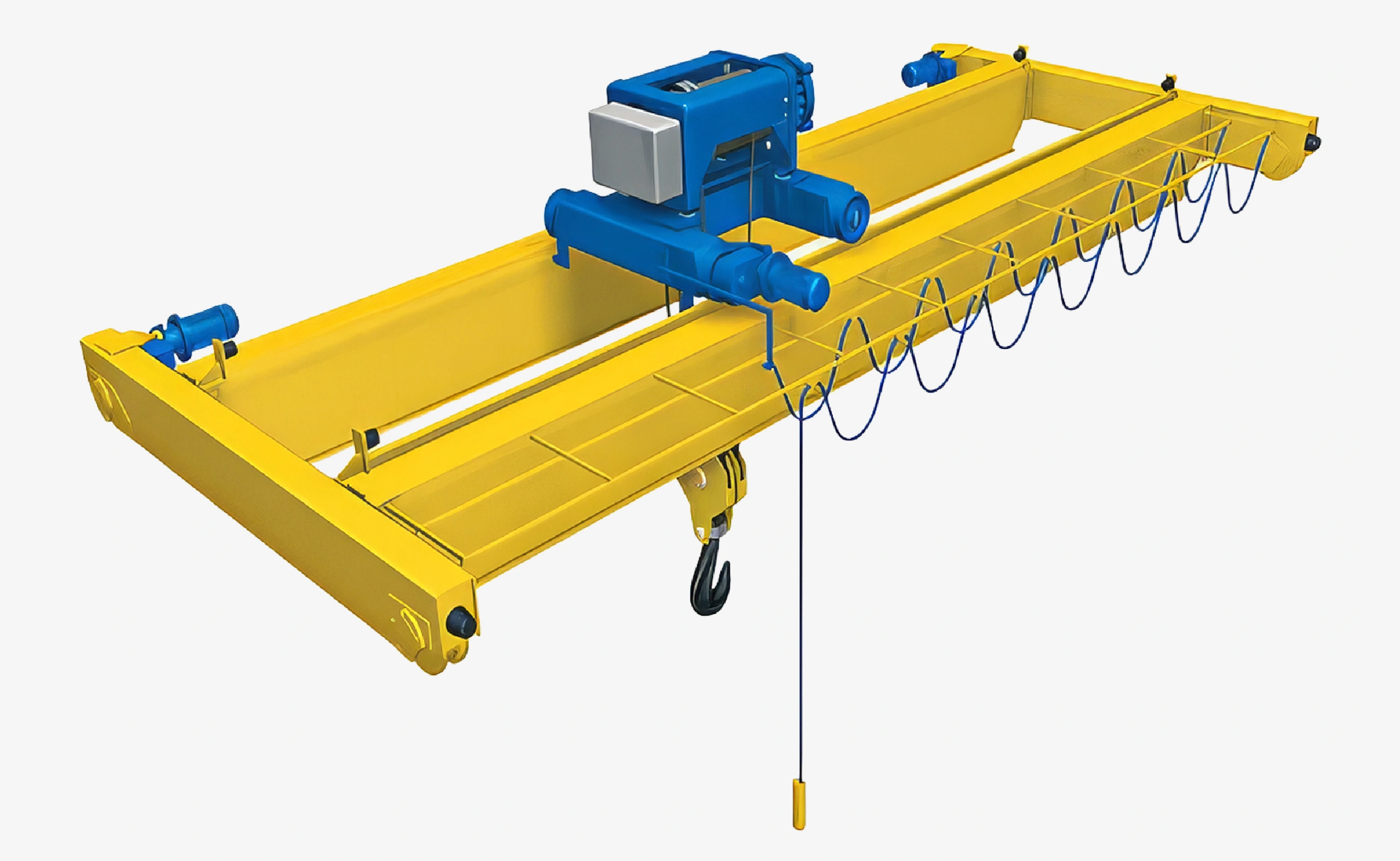
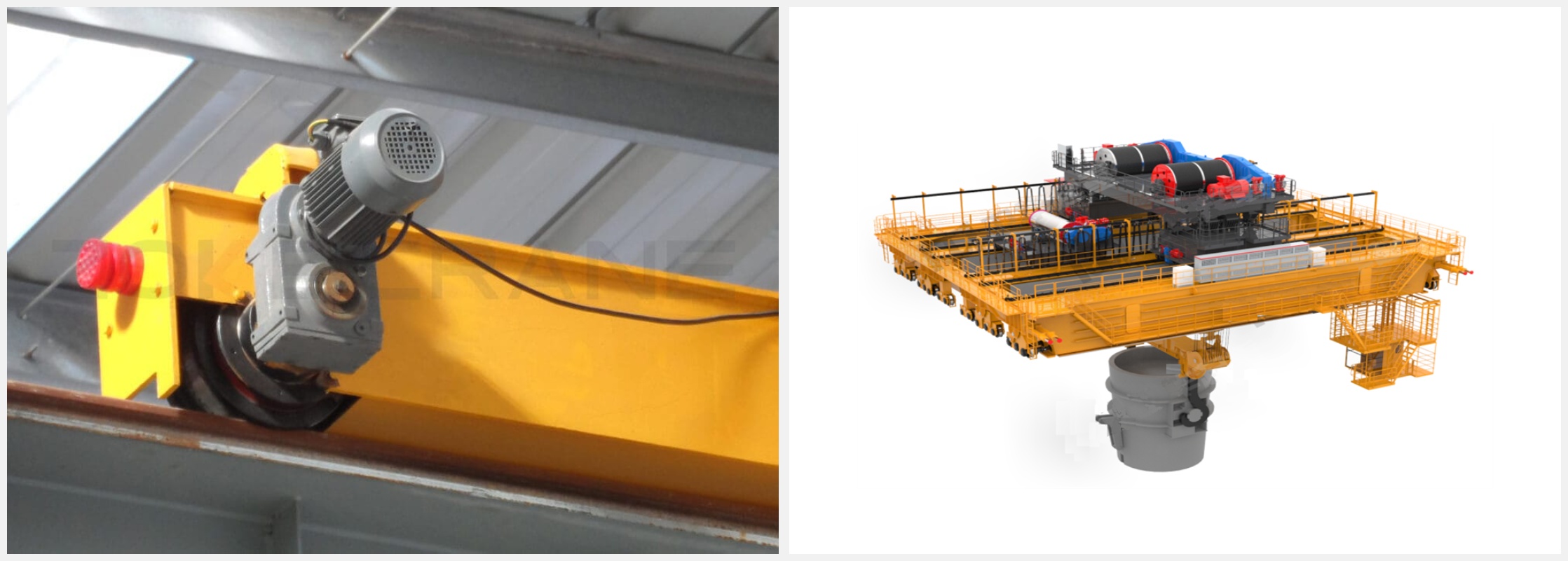
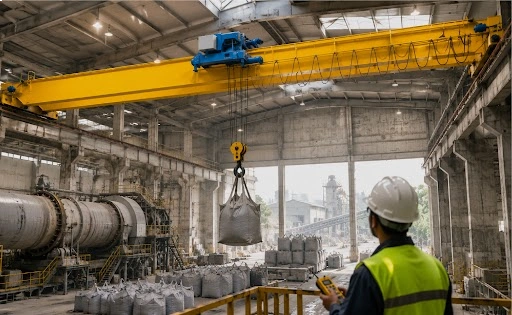
Double girder overhead bridge crane with electric wire rope hoist, motorized trolley, and end carriages for heavy-duty industrial lifting applications.

The Short Version

A battery-sampled PdM sensor wakes a few times a day. Your EOT crane’s main hoist motor runs 300–400 lift cycles a shift. Those two schedules do not overlap – and the mismatch is where the failures hide.

At a leading steel manufacturing plant, a main hoist motor bearing spent 90 days building toward seizure. Vibration rose from 35 to 190 (m/s²)². Every inspection cleared it. The crane kept lifting. The signal was there the entire time – just not in any window any sensor was open to read it.

Crane AI Shield watches at the right moment – RPM-gated, always-on, and built to survive the foundry floor – then hands your operator a prescription, not another alert to chase.

The Sensor That Sleeps Through the Shift

You are the reliability manager. Your EOT crane’s main hoist has been cleared on every round – brakes, wire rope, hooks, limit switches, gearbox oil. The operator reports nothing. The crane lifts.


But lift cycles are not inspections. A single melt-shop EOT crane runs 300–400 of them a shift. Each one loads the main hoist motor’s drive-end bearing – shock of the pick, reversal of the lower, dead-weight hang of the hold. The bearing accumulates every cycle. The inspection schedule does not.


Now consider what your battery-sampled PdM sensor is doing during those 400 cycles. It woke at 9 AM, sampled for a few seconds, and went back to sleep. It will wake again at 3 PM, at 9 PM, at 3 AM. Four windows in 24 hours. Roughly one observation per 100 lift cycles.


The fault that will stop your bay does not announce itself in those four windows. It announces itself under load, at stable speed, mid-lift – exactly when the bearing stress is highest and the signal is clearest. The sensor is asleep.

Fault emerges
Crane lift cycles 300-400 per shift · continuous under load
~350 lift cycles/shift
Battery PdM sensor 4 sample windows per day
~6 hrs apart
Battery PdM sensor 4 sample windows per day
~6 hrs apart
fault signal present
but no sensor reading
S1
S2
gap — 6 hrs
sensor asleep
S3
S4
00:00
06:00
12:00
18:00
24:00
Each bar = one lift cycle
Battery sensor sample window
Fault missed in gap

Ninety Days. No Symptom. No Alarm. A Rising Signal Nobody Read.

At a leading steel manufacturing plant melt shop, a charging EOT crane ran its main hoist through a full quarter of production without a single maintenance flag. The crane passed every check. The operator reported nothing unusual. By any measure available to the maintenance team, the crane was healthy.


PlantOS™ Crane AI Shield saw something different.


From late September 2025, the drive-end bearing’s total acceleration held at a baseline of around 35 (m/s²)². Through October and November – two full months – the trend rose steadily. No operational symptom. No trip. No alarm. Just a number climbing, cycle by cycle, invisible to everything except a system that was watching every cycle continuously.


By 28 December, the spectrum confirmed what the trend had been saying for weeks: 46.66 Hz harmonics, impact peaks near 8G. On 29 December, total acceleration peaked at 190 (m/s²)² – more than five times baseline. Crane AI Shield issued the prescription: bearing looseness, drive-end and non-drive-end, lubrication required.


On 3 February 2026, the re-lubrication was completed during a planned maintenance window – one stop, scheduled, without touching a single production shift. Horizontal vibration velocity collapsed from 10.45 mm/s to 0.30 mm/s – a 97% reduction confirmed by post-repair monitoring. The crane went back to work.

90
of continuous fault progression
— no operational symptom
Acceleration rise: 35 → 190 (m/s²)²
before prescription issued
97%
Vibration reduction post re-lube
10.45 → 0.30 mm/s

It's Not About More Data. It's About Data at the Right Moment.

The bearing had a signal for 90 days. That is not a detection failure – it is a timing failure. A battery-sampled sensor waking four times a day would have seen that trend if it was awake when the load was on. It was not.


This is the structural problem with applying standard PdM to a crane. Three gaps open up the moment you put a time-sampled sensor on a duty-cycle asset:


It wakes on a clock, not on a load: Faults reveal themselves under stress, not at rest. A sensor that samples on a schedule samples the wrong moments.


It goes quiet under load: Many systems stop recording when the asset draws peak current – which is precisely when the fault signature in the bearing is strongest.


It dies before it can warn you: Sealed battery units degrade under foundry heat, dust, and the vibration of the floor. The sensor that failed last Tuesday was not monitoring your bearing before it happened.


The answer is not more frequent sampling. It is fundamentally different timing. Crane AI Shield captures vibration only when the motor is inside a stable RPM band – under load, not on a clock. The spectrum is clean because the accel/decel noise is not in it. The fault signature is clear because the data is taken at the exact moment the fault is loudest.

Why One Signal is Never Enough

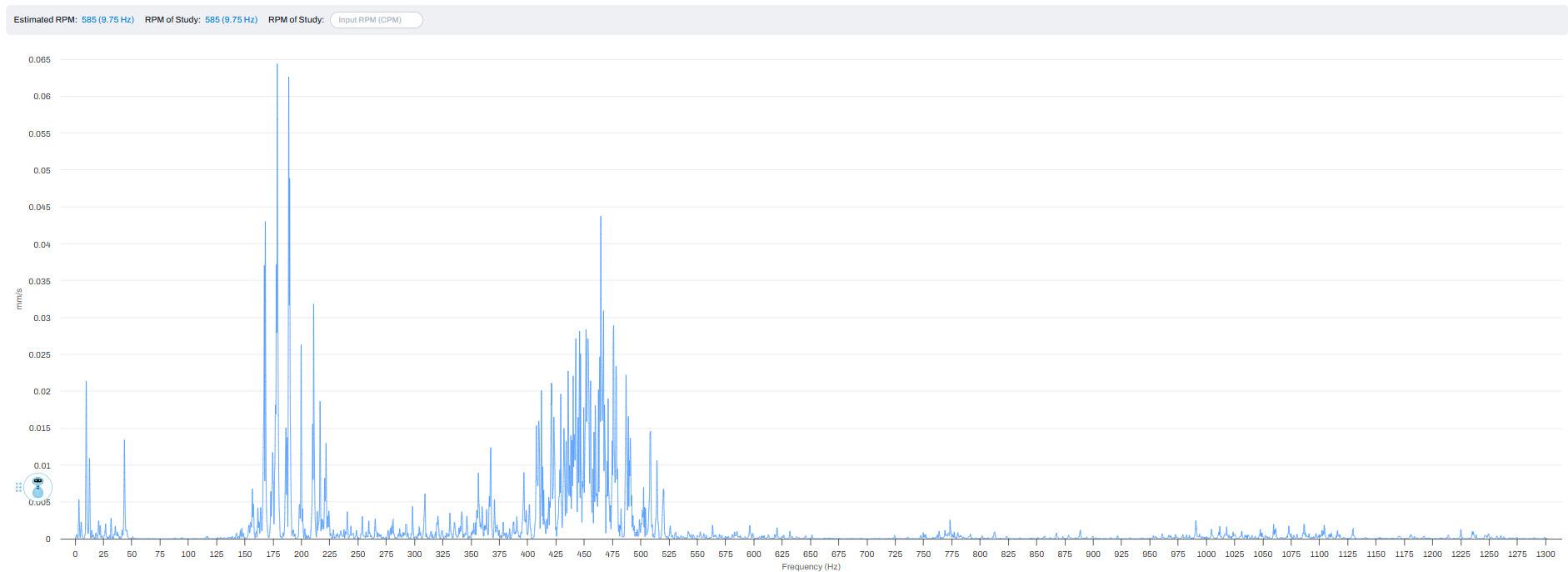
The bearing did not announce itself on a single chart. The acceleration trend was rising – but acceleration alone could mean many things. What confirmed the diagnosis was the agreement between multiple signal streams: 46.66 Hz harmonic content in the FFT spectrum, impact peaks in the shockwave, RPM tracking confirming the frequency was load-correlated.


Crane AI Shield continuously reads and cross-correlates gear-mesh frequencies, sidebands, time waveform, shockwave and envelope, PSD, RPM, temperature, and velocity. Confidence builds only as the evidence agrees – validated by a certified analyst before anything reaches your floor. A single rising number is a prompt. Eight signals agreeing is a prescription.
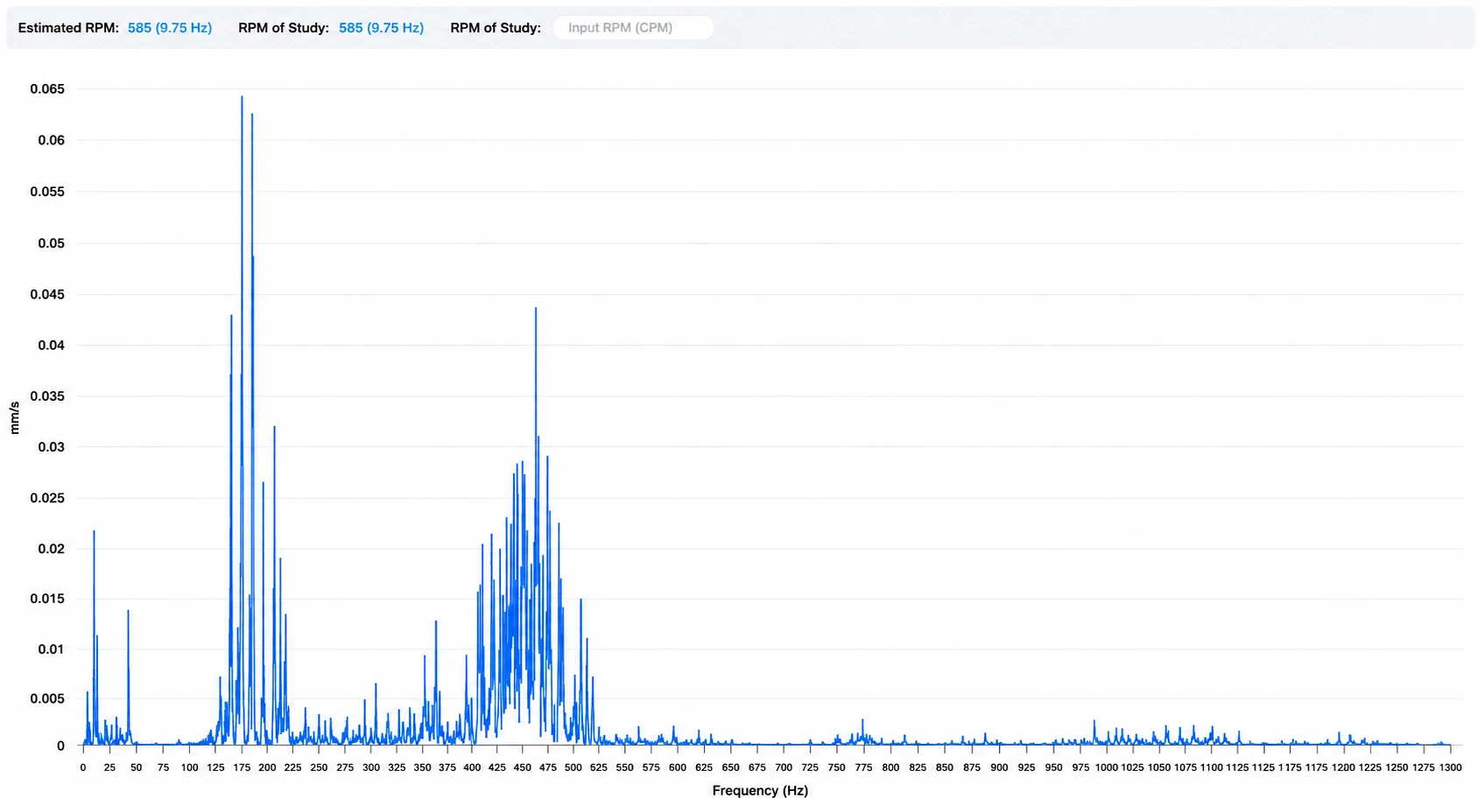
FFT vibration analysis spectrum displaying vibration velocity in mm/s across frequencies from 0 to 1300 Hz, with prominent peaks near 175 Hz and 460 Hz.

From Detection to Closed Loop - Without a Crisis in Between

The difference between the above instance’s outcome and a bay stoppage was not luck. It was the loop:


Contextualize: Every crane is ranked by fault progression in real time. The melt-shop EOT crane moved up the list as its bearing trended.


Predict & Prescribe: PlantOS™ did not say ‘check bearing.’ It said: looseness confirmed at DE and NDE, re-lubrication required, urgency level and timing window specified.


Validate: Maintenance completed the re-lube during a planned window. Post-repair monitoring confirmed the 97% vibration reduction.


Loop Closed: The confirmed outcome feeds back into the model. The next prescription is sharper than the last.
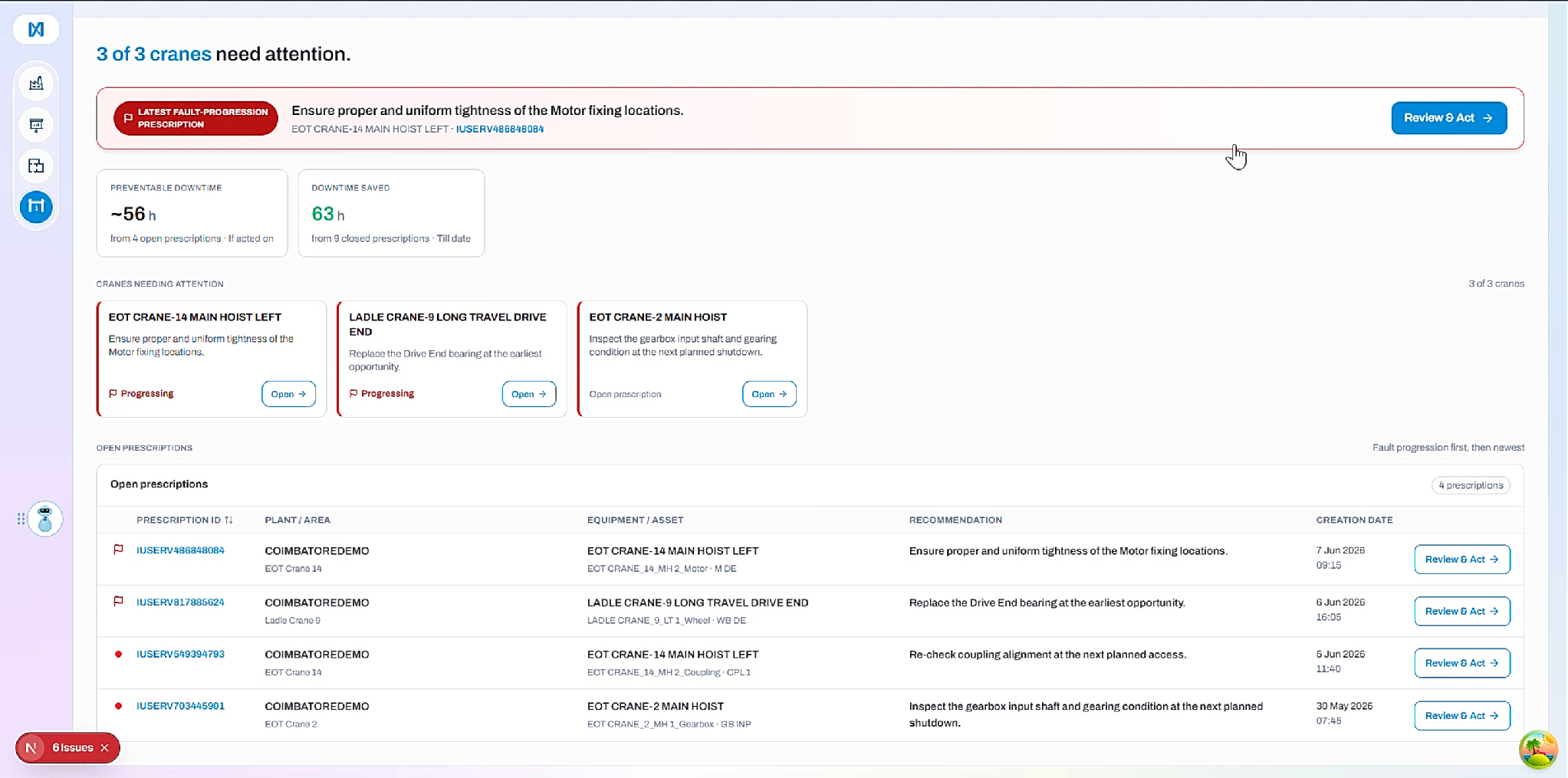
The 99% Trust Loop UI – Contextualize → Predict & Prescribe → Validate → Loop closed.

No emergency stop. No crisis room. No call in the dark. The crane’s highest-consequence failure mode – a main hoist bearing seizure with a suspended load – became a scheduled re-lube on a Tuesday morning.

Built to Survive Where the Signal Matters Most

Getting the timing right means nothing if the hardware cannot survive long enough to take the reading. The foundry floor is not a controlled environment. The ambient temperature around a melt-shop EOT crane runs hot enough to destroy standard battery-enclosures. The dust is conductive. The vibration is constant.


Crane AI Shield runs on IP68 SS316 sensors with 180°C-rated cabling – stud or bracket mounted, no adhesive, no batteries. The same sensor that read the bearing through 90 days of rising acceleration was on the motor the entire time: through the heat of every ladle, the shock of every lift, the electromagnetic interference of the furnace bay.


The sensor did not degrade. The reading did not drop out. The trend was continuous because the hardware was continuous.

The Bottom Line

Your EOT crane works hardest between inspections. The bearing that is building toward seizure right now is not making a sound your team can hear – but it is producing a signal that Crane AI Shield is designed to read, at the exact moment it is most readable, continuously, without a sampling gap between it and the next alarm.


Above crane ran 90 days with a rising signal. One planned stop. One re-lube. No bay stoppage. No emergency call.


That is what monitoring at the right moment looks like.

If your sensor is sampling on a clock, it is not watching your crane. It is watching the clock.

Try PlantOS™ Crane AI Shield today: infinite-uptime.com/contact
Frequently Asked Questions

Standard battery PdM sensors fail cranes in three specific ways: they sample vibration only a few times per day, missing faults that develop between snapshots; they stop recording when the crane is under load — exactly when fault signatures are strongest; and their battery enclosures degrade rapidly under foundry heat, dust, and vibration. Crane AI Shield eliminates all three: RPM-gated FFT fires only under stable load conditions, sensors stream RPM and temperature 24/7, and IP68 SS316 hardware with 180°C-rated cabling is designed to survive where battery units fail.

Time-sampled monitoring captures vibration on a clock schedule — not when the crane is actually working. Accel and decel noise contaminates the spectrum, making it difficult to isolate genuine fault frequencies. RPM-gated FFT triggers only when the motor is in a stable speed band under load — producing clean spectra at the exact moment fault signatures are most distinguishable. This eliminates false alarms, reduces filtering requirements, and catches faults that time-sampled systems structurally cannot detect.

Crane AI Shield monitors up to 19 failure modes across the main hoist drive train: bearing defects (BPFO/BPFI/BSF), gear-mesh faults (GMF), gear tooth wear, gear backlash, shaft misalignment, coupling faults, rotor bar cracks, unbalance, structural looseness, and more. The Comprehensive tier adds long-travel wheel bearing defects. Vibration analysis using FFT fault frequency mapping identifies bearing and gearbox degradation 2–6 weeks before catastrophic failure. The Tata Steel Colors case study: Main Hoist Motor #3 flagged 12 days before likely failure — 10 hours of unplanned downtime avoided.

Deployment follows a structured 5-day plan with only one day of crane downtime required for sensor mounting and commissioning sign-off. AI calibration to the crane’s kinematic profile — mapping gear-mesh and shaft-order frequencies — is completed within Days 2–3. The system delivers a first diagnostic typically within 30 days, with a 60-day evaluation period and 75% of payment due only on satisfaction. ROI payback is typically achieved within 6–12 months: the Standard subscription is $24K per crane per year versus $75K–$250K+ per avoided main-hoist failure — a 3–10× return on the first catch.

Yes. Start with your highest-criticality crane, validate the outcome on your specific equipment, then scale at your own pace. The Fleet Operations Center provides a unified view of 100+ cranes — every crane needing attention ranked by fault progression, with preventable downtime hours tracked live. Infinite Uptime currently operates across 845+ plants in 30+ countries. Sensor placement scales with crane size; the scope of fault coverage does not change.
Categories
Crane AI Shield
Your Crane Is Already Going Down. You Just Don’t Know It Yet!!

Your Crane Is Already Going Down. You Just Don't Know It Yet!! Why standard PdM was never built for cranes — and why the sensors you trust most are silent exactly when faults emerge.

Read Time: 8–9 minutes | Author – Kalyan Meduri

Your Crane Is Already Going Down. You Just Don't Know It Yet!!

Key highlights

  • You are managing the most complex and costly asset on the plant floor. Crane downtime is an operations problem — the cascade cost dwarfs the repair bill by 10–15×.
  • The tools you trust most have a structural blind spot. Battery-based PdM(Predictive Maintenance) sensors sample too rarely, stop recording under load, and fail in foundry heat — missing faults exactly when they emerge.
  • The gap is 3–4 weeks of fault progression your current system cannot see. By the time a vibration alarm fires on a time-sampled sensor, the bearing is already failing.
  • Crane AI Shield from Infinite Uptime is purpose-built for this environment. RPM-gated FFT, always-on monitoring, and IP68 hardware that survives where battery sensors burn out — with 99.97% validated uptime accuracy.
  • 5-day deployment. 6–12 month ROI payback. Up to 99% prescription adoption rate. Outcomes validated — not just predicted.

What is Crane AI Shield?

Crane AI Shield is an always-on, crane-specific AI monitoring solution that detects developing mechanical faults under real operating conditions and delivers evidence-backed maintenance prescriptions before failures cause unplanned downtime.

You are the reliability manager. The plant maintenance head. The person who knows that when the ladle crane goes down mid-shift with no warning, the bay stops, the heat schedule collapses, and your phone rings before the crane does.


You have monitoring in place. You have schedules, sensors, and inspection routes. And yet, right now, a fault is developing inside your crane’s gearbox that your current sensor cannot detect.


Not because it hasn’t alarmed yet. Because it physically cannot alarm. The sensor sampled at 6 AM. The fault emerged at 2 PM — under load, when the crane was working hardest. The sensor was asleep.


This is the sampling gap. And it is costing you downtime you cannot see coming.

"Standard PdM was never built for cranes. The sensor sleeps while the crane works — and faults reveal themselves exactly at the moment the sensor is silent."

— Infinite Uptime, Crane AI Shield

What you are responsible for protecting

Before we get to the monitoring gap, let’s be clear about what is actually at stake. In steel mills and mining operations, cranes are not auxiliary equipment — they are the production flow. When the main hoist fails, the bay stops. The cost compounds within hours.


When the crane goes down, it doesn’t produce a maintenance work order. It produces a cascade.

$10K–50K[1]
per hour, lost productivity
Steel mills & Mining
3–5×[2]
reactive vs planned repair cost
Emergency mobilisation
$75K–$250K[3]
all-in cost, one hoist failure
Emergency repair + lost production
8 of 10[3]
breakdowns eliminated
Converted to planned maintenance

The repair cost is the smallest number on the incident report. The real cost is the 24–72 hours of bay downtime, the emergency parts at premium pricing, the overtime labour, and the cascading damage — a $5K bearing fault that takes out the gearbox, motor, and shaft, turning a small repair into a $500K incident.

Cost component Estimated impact per event
Emergency repair premium (parts + rigging + overtime) $30K–$80K
Lost production — bay idle during repair 24–72 hrs
Cascading damage — bearing fault → gearbox → motor → shaft Up to $500K
Safety investigation + adjacent crane halt Variable — hours to days
Source: [1] Mazzella Companies; [3] Infinite Uptime ROI Estimate 2026. Actual costs vary by facility size and crane criticality.

The tool you trust has a structural blind spot

You have predictive maintenance in place. The problem isn’t effort or investment. The problem is that the sensor technology underlying standard PdM(Predictive Maintenance) was not designed for cranes — and in three specific ways, it fails at exactly the moment you need it most.

01
You miss the
moments that matter
Battery sensors only wake a few times a day. Most faults reveal themselves between samples — and you never see them.
02
No data when the
crane is working
Standard sensors stop recording exactly when the asset is loaded — the moment faults actually emerge. The crane works hardest. The sensor is asleep.
03
Sensors die before
they can warn you
Sealed battery units crumble under foundry heat, dust, and vibration. By the time the sensor fails, the bearing already has — and you had no warning from either.

The structural problem runs deeper than sensor quality. Every approach your team currently uses shares the same limitation: it reacts to failure signals rather than tracking degradation continuously.

What you're currently using What it captures The gap it leaves
OEM scheduled intervals Average component life at standard conditions Actual degradation rate under your duty cycles — heat, load, speed, environment
Battery PdM sensors Vibration snapshots at scheduled intervals — a few times per day Faults that develop between samples and under load — precisely when cranes are most stressed
Operator observation Visible or audible failure symptoms Early-stage bearing and gear degradation — weeks before it becomes observable
PlantOS™ Crane AI Shield RPM + temperature streaming 24/7. FFT triggered at stable speed under load Nothing — always-on coverage exactly when faults emerge
Vibration-based systems can identify bearing and gearbox degradation 2–6 weeks before catastrophic failure[4] — but only when the sensor is capturing data at the moment the fault signal exists. A sensor that sleeps through the fault cannot catch it.

What your crane is actually dealing with — and why it matters

The sampling gap hits hardest in the two environments where Crane AI Shield operates. In steel mills and mining operations, cranes run the most demanding duty cycles in heavy industry — and bearing and gearbox faults develop faster, more unpredictably, and with higher consequence than in any standard industrial environment.

Steel mills: ladle cranes and casting cranes

A ladle crane in a BOF or EAF shop runs in one of the harshest industrial environments on earth — sustained radiant heat from molten steel at 1,600°C, heavy shock loading on every lift, and back-to-back duty cycles with minimal rest between heats. These conditions accelerate bearing wear, gear mesh degradation, and motor winding fatigue at rates that OEM maintenance intervals were never calibrated for.

The problem with standard battery PdM in this environment is threefold. First, battery units degrade rapidly under sustained radiant heat — the sensor fails before the bearing does. Second, the most destructive loading events happen during the lift itself, precisely when a time-sampled sensor is between snapshots. Third, the high-shock, high-duty-cycle profile of a ladle crane means bearing defects progress from incipient to catastrophic in days — not weeks.

Crane AI Shield captures 3-axis vibration, temperature, and RPM continuously from sensors rated to 180°C surface temperature. FFT analysis triggers only when the motor is in a stable RPM band — under load, capturing the fault signature at its clearest, not during accel/decel noise.

Mining: overhead cranes in concentrators and crushers

In copper, gold, and iron ore processing, overhead cranes in concentrator buildings and crusher halls run high duty cycles in extreme particulate environments. The combination of continuous operation, abrasive dust ingress into bearing housings, and the physical consequence of a main hoist failure — stopping maintenance access to the entire grinding and flotation circuit — makes these cranes among the highest-risk assets on any mine site.

Battery sensors in crusher hall environments face compounding failure modes: particulate contamination of the sensor housing, adhesive mount degradation under vibration, and sampling schedules that have no relationship to when the crane’s bearing loads are highest. A wheel-bearing failure on an overhead crane idles the whole concentrator bay. A hoist gearbox failure with no advance warning turns a $5K bearing replacement into a $500K multi-component rebuild at height.

Crane AI Shield’s IP68 SS316 enclosures and stud-mounted wired sensors are designed specifically for this environment — no adhesive mounts, no batteries, no wireless signal dropout in high-RF industrial buildings.

Your guide to closing the blind spot: Crane AI Shield

Crane AI Shield does not replace your expertise. It closes the gap your current sensors leave open.

You know your cranes. You know your plant. What you need is a system that captures vibration data exactly when faults emerge — under load, at stable speed, in the harshest environment on your site — and translates that data into specific, evidence-backed actions your team can execute on shift. That is what Crane AI Shield is built to do.

Not another dashboard. Not another time-sampled alert. A prescription: which bearing, which gear, which shift to schedule it — with the FFT spectrum and trend data to justify the intervention.

The fault coverage map: what Crane AI Shield detects

Across three coverage tiers, Crane AI Shield monitors up to 19 failure modes on the main hoist drive train and long-travel wheel systems — all mechanical faults that standard battery PdM either misses between samples or fails to detect under load.

Coverage tier Fault / fault mode Detected by Detection method
Starter + Standard Gear tooth wear ✓  Crane AI Shield Gear-mesh frequency (GMF) analysis
Starter + Standard Gear backlash ✓  Crane AI Shield GMF sidebands
Starter + Standard Misaligned gears ✓  Crane AI Shield Spectral analysis
Starter + Standard Cracked / broken gear teeth ✓  Crane AI Shield Cepstrum + shock pulse
Starter + Standard Inadequate gear lubrication ✓  Crane AI Shield GMF amplitude trending
Starter + Standard Inadequate bearing lubrication ✓  Crane AI Shield High-frequency envelope analysis
Starter + Standard Rolling-element bearing defects (BPFO/BPFI/BSF) ✓  Crane AI Shield FFT fault frequency mapping
Standard only Structural looseness / soft-foot ✓  Crane AI Shield Sub-synchronous vibration
Standard only Rotating looseness ✓  Crane AI Shield Harmonic spectrum analysis
Standard only Unbalance ✓  Crane AI Shield 1× RPM amplitude
Standard only Bent shaft ✓  Crane AI Shield 1× + 2× RPM
Standard only Rotor bow & rub ✓  Crane AI Shield Sub-synchronous + 1×
Standard only Cracked / loose rotor bars ✓  Crane AI Shield Motor current + vibration
Standard only Coupling faults ✓  Crane AI Shield 2× RPM sidebands
Standard only Shaft misalignment ✓  Crane AI Shield Axial + radial vibration
Standard only Pedestal bearing looseness ✓  Crane AI Shield Harmonic series
Comprehensive only Wheel-bearing lubrication degradation ✓  Crane AI Shield High-frequency envelope
Comprehensive only Rolling-element wheel-bearing defects ✓  Crane AI Shield FFT + wheel RPM
Comprehensive only Wheel unbalance ✓  Crane AI Shield 1× wheel RPM
Comprehensive only Wheel-side rotating looseness ✓  Crane AI Shield Harmonic series
Starter: 7 failure modes (main hoist gearbox only)   |   Standard: 19 failure modes (full hoist drive)   ★ Recommended   |   Comprehensive: 19 + wheel systems
Fault Detection Gap — Steel & Mining Crane Operations
Fault Severity (%)
Fault severity (%)
Crane AI Shield detection point
Traditional monitoring (failure event)

The PlantOS™ Architecture: from signal to prescription

Crane AI Shield is built on a three-tier architecture designed specifically for cranes — continuously moving assets that need wired, always-on instrumentation and RPM-synchronised data capture. Every design decision responds directly to the three failures of standard battery PdM.

Tier 1 : Signal Acquisition — what goes on your crane 01

Primary sensor: IP68 SS316 unit mounted on the AC motor — captures 3-axis vibration, temperature, and RPM in a single rugged node. 180°C-rated cabling. No batteries. Stud or bracket mount. Secondaries on gearbox stages and drum bearings flow data in a strict primary–secondary RPM-synchronised loop. Survives where battery sensors burn out.

Tier 2 : Edge Processing and Transmission 02

Primary sensor: IP68 SS316 unit mounted on the AC motor — captures 3-axis vibration, temperature, and RPM in a single rugged node. 180°C-rated cabling. No batteries. Stud or bracket mount. Secondaries on gearbox stages and drum bearings flow data in a strict primary–secondary RPM-synchronised loop. Survives where battery sensors burn out.

Tier 3 : AI Engine and Prescription Delivery 03

Primary sensor: IP68 SS316 unit mounted on the AC motor — captures 3-axis vibration, temperature, and RPM in a single rugged node. 180°C-rated cabling. No batteries. Stud or bracket mount. Secondaries on gearbox stages and drum bearings flow data in a strict primary–secondary RPM-synchronised loop. Survives where battery sensors burn out.

A Crane AI Shield prescription does not say 'check gearbox.' It says: "Gearbox vibration at MDE bearing trending 23% above baseline over 14 days. BPFO frequency signature indicates outer race wear. Recommend bearing inspection within 7 days. Evidence: trend chart, FFT spectrum attached." That is actionable. That is why up to 99% of prescriptions are acted upon.

The 99% Trust Loop — your guarantee, not just a feature

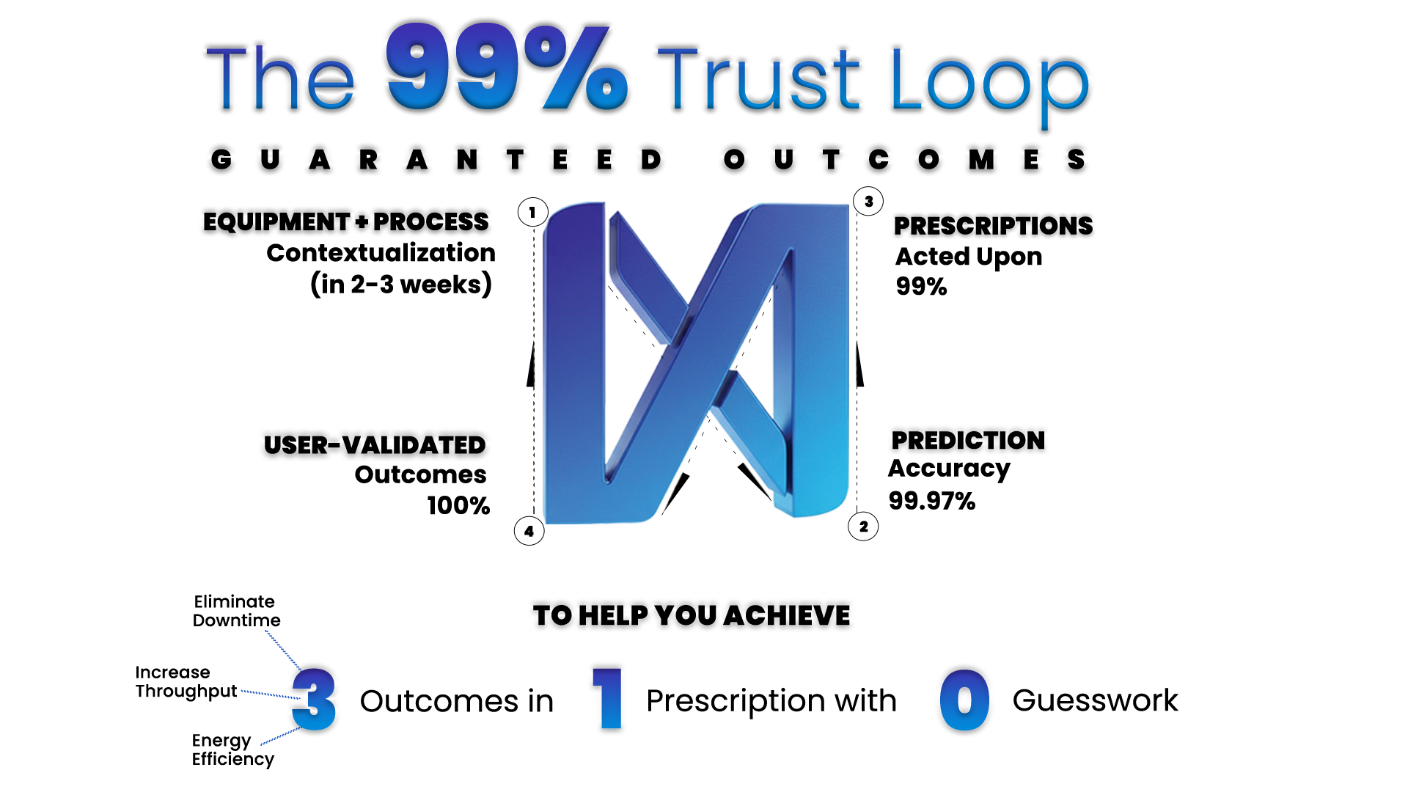
Most industrial AI generates alerts. The bottleneck has never been detection accuracy — it has been execution. You’ve seen alert fatigue. Your team gets a notification, investigates, finds nothing actionable, and gradually stops trusting the system. PlantOS™ is built around the 99% Trust Loop™ — a validated cycle where every prescription is specific, evidence-backed, and contextually grounded.

Infographic titled "The 99% Trust Loop: Guaranteed Outcomes." A central blue 3D "N" icon is surrounded by a four-step cycle: 1. Equipment + Process Contextualization, 2. 99.97% Prediction Accuracy, 3. 99% Prescriptions Acted Upon, and 4. 100% User-Validated Outcomes.
01

Equipment
Contextualization


Your crane's kinematic profile, gear-mesh frequencies, shaft orders, and duty cycle mapped before any inference. Context-free alerts are the source of false alarms and alert fatigue.

02

Prediction
Accuracy

99.97%

Validated across 85,000+ monitoring locations.[5] Multi-signal cross-correlation: every FFT, GMF, cepstrum, RPM and temperature trace combined. Confidence builds as evidence agrees.

03

Prescriptions Acted Upon

Up to 99%

Your team acts because the prescription specifies which bearing, which gear, which shift—with the FFT evidence to justify it. Not an alert. A directive.

04

User-Validated Outcomes

100%

You confirm. The DRS report closes with before/after proof. Every validated outcome sharpens the next prescription.

946[5]
Plants online globally
30+ countries · heavy industry
157,115[5]
Downtime hours eliminated
Last 24 months · user-validated
3.3B+[5]
Data points trained on
Sharpens with every closed work order
99.97%[5]
Equipment uptime
Achieved on contract

What success looks like: from reactive firefighting to prescribed reliability

This is the shift that Crane AI Shield enables — from the world where your team responds to crane failures to the world where your team acts on prescriptions weeks before a failure occurs.

Outcome Your world today (reactive) Your world with Crane AI Shield Verified improvement
Unplanned breakdowns Failure-triggered response — you find out when the crane stops Prescriptions acted on 2–6 weeks before failure 8 of 10 eliminated[5]
MTBF OEM intervals — not calibrated to your actual duty cycles Condition-based — intervene on signal, not schedule +25–30% MTBF improvement[6]
Detection to response Hours to days — operator observation after failure Minutes — RPM-gated FFT + evidence trail delivered >80% reduction in response time[6]
Emergency repair cost 3–5× premium — overtime, expedited parts, rigging Planned interventions replace emergency mobilisation Significant cost reduction[2]
Safety compliance Manual logs, periodic inspections Continuous digital logging — audit-ready 100% interlock event visibility[5]

Getting started: 5 days to live monitoring

Deployment is structured around your operation — not ours. Only one day of crane downtime required. Start with your highest-criticality crane. Validate the value on your equipment. Scale at your pace.
Day 1
Mount sensors, route cabling, cut over to PlantOS™. Commissioning sign-off on site. Only day requiring crane downtime.
Days 2–3
Dashboard configuration, signal validation, baseline calibration. AI calibrated to the crane's kinematic profile—gear-mesh and shaft-order frequencies mapped. Crane operates normally.
Days 4–5
Go-live: final validation, user training, system handover. First diagnostic typically within 30 days. 60-day evaluation period — 75% of payment due only on satisfaction.
You already know how to run the plant.
Now your sensors can keep up with you.
845+ plants · 30+ countries · 111,600+ hours of unplanned downtime eliminated.
Not from dashboards. From prescriptions. Validated by the operators who signed off.
What is your crane not telling you?
Try PlantOS™ today → infinite-uptime.com/contact
Frequently Asked Questions

Standard battery PdM sensors fail cranes in three specific ways: they sample vibration only a few times per day, missing faults that develop between snapshots; they stop recording when the crane is under load — exactly when fault signatures are strongest; and their battery enclosures degrade rapidly under foundry heat, dust, and vibration. Crane AI Shield eliminates all three: RPM-gated FFT fires only under stable load conditions, sensors stream RPM and temperature 24/7, and IP68 SS316 hardware with 180°C-rated cabling is designed to survive where battery units fail.

Time-sampled monitoring captures vibration on a clock schedule — not when the crane is actually working. Accel and decel noise contaminates the spectrum, making it difficult to isolate genuine fault frequencies. RPM-gated FFT triggers only when the motor is in a stable speed band under load — producing clean spectra at the exact moment fault signatures are most distinguishable. This eliminates false alarms, reduces filtering requirements, and catches faults that time-sampled systems structurally cannot detect.

Crane AI Shield monitors up to 19 failure modes across the main hoist drive train: bearing defects (BPFO/BPFI/BSF), gear-mesh faults (GMF), gear tooth wear, gear backlash, shaft misalignment, coupling faults, rotor bar cracks, unbalance, structural looseness, and more. The Comprehensive tier adds long-travel wheel bearing defects. Vibration analysis using FFT fault frequency mapping identifies bearing and gearbox degradation 2–6 weeks before catastrophic failure. The Tata Steel Colors case study: Main Hoist Motor #3 flagged 12 days before likely failure — 10 hours of unplanned downtime avoided.

Deployment follows a structured 5-day plan with only one day of crane downtime required for sensor mounting and commissioning sign-off. AI calibration to the crane’s kinematic profile — mapping gear-mesh and shaft-order frequencies — is completed within Days 2–3. The system delivers a first diagnostic typically within 30 days, with a 60-day evaluation period and 75% of payment due only on satisfaction. ROI payback is typically achieved within 6–12 months: the Standard subscription is $24K per crane per year versus $75K–$250K+ per avoided main-hoist failure — a 3–10× return on the first catch.

Yes. Start with your highest-criticality crane, validate the outcome on your specific equipment, then scale at your own pace. The Fleet Operations Center provides a unified view of 100+ cranes — every crane needing attention ranked by fault progression, with preventable downtime hours tracked live. Infinite Uptime currently operates across 845+ plants in 30+ countries. Sensor placement scales with crane size; the scope of fault coverage does not change.
References

[1] Mazzella Companies — "Depending on the facility and its output, downtime can cost anywhere from $10,000 to $20,000 per hour for standard operations. High-production environments may lose hundreds of thousands of dollars per hour." mazzellacompanies.com/learning-center/the-true-cost-of-overhead-crane-breakdowns/ (2026)

[2] U.S. Department of Energy, as cited in OxMaint and eWorkOrders — Reactive maintenance costs 3–5 times more than planned preventive maintenance when all costs are included: emergency labour, expedited parts, production loss, cascading damage. oxmaint.com/blog/post/maintenance-cost-reduction-20-proven-strategies

[3] Infinite Uptime ROI Estimate 2026 — "Standard at $24K / crane / yr vs $75K–$250K+ per avoided failure → 3–10× return. Payback on the first catch." Across Infinite Uptime install base. infinite-uptime.com

[4] iFactory / OxMaint — Vibration analysis using FFT fault frequency mapping can identify bearing and gearbox degradation 2–6 weeks before catastrophic failure. ifactory.jrsinnovation.com/blog/vibration-sensors-predictive-maintenance

[5] Infinite Uptime PlantOS™ — Live data as of June 2026: 845+ plants, 30+ countries, 111,600+ hours downtime eliminated (last 24 months), 3.3B+ data points, 99.97% equipment uptime achieved on contract. infinite-uptime.com

[6] Industry benchmark — Predictive maintenance associated with +25–30% MTBF improvement and >80% reduction in detection-to-response time. R. Keith Mobley, Plant Engineer's Handbook, as cited in PDS Balancing (2026). Actual improvement varies by asset mix and programme maturity.

Categories
Crane AI Shield
Your Crane Doesn’t Fail on a Schedule. So Why Is It Monitored on One?

Your Crane Doesn't Fail on a Schedule.
So Why Is It Monitored on One?

Standard predictive maintenance was built for steady-state machines. A duty-cycle crane behaves nothing like one, and that mismatch is exactly where the failures hide.

Read Time: 8–9 minutes | Author – Kalyan Meduri

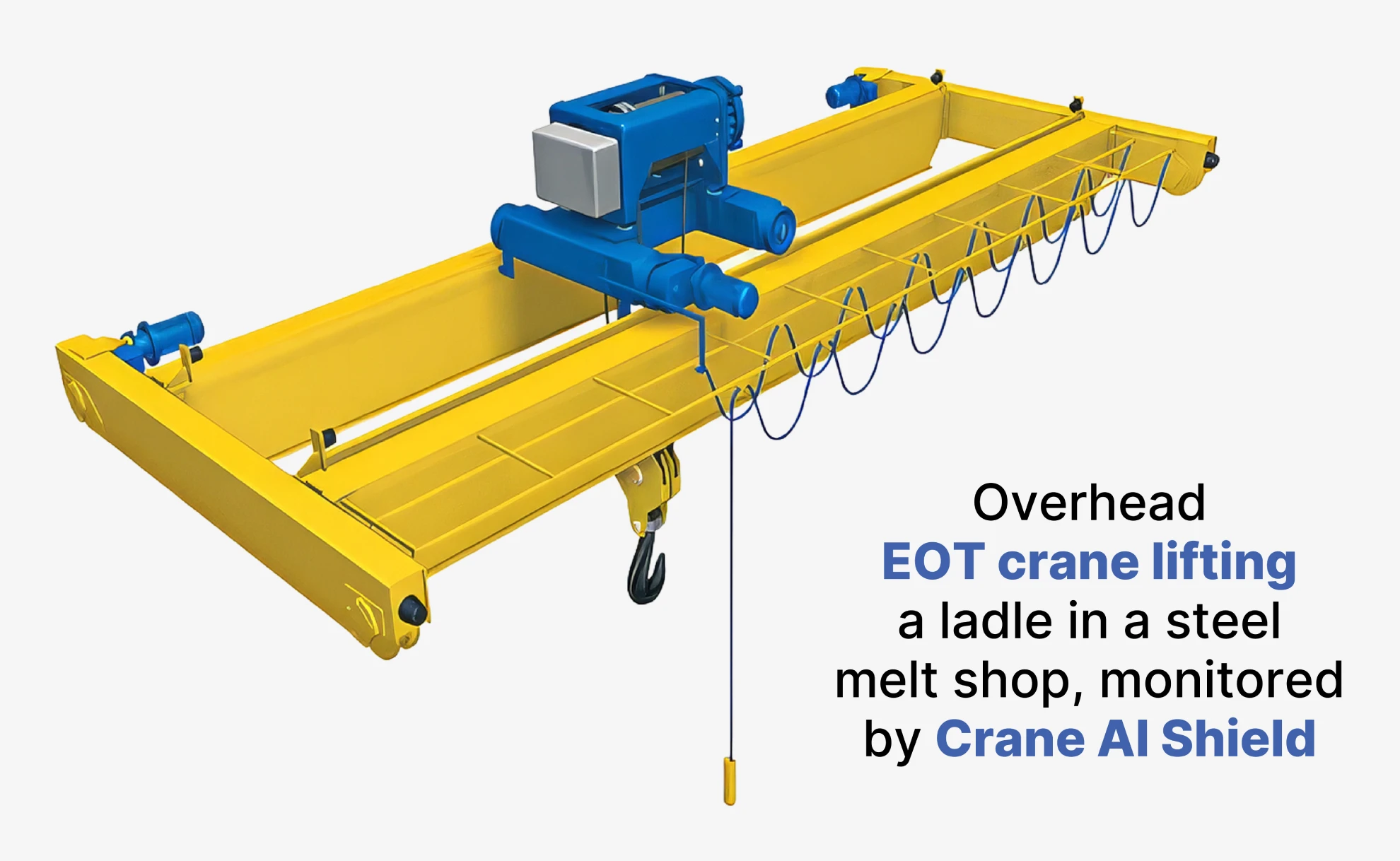
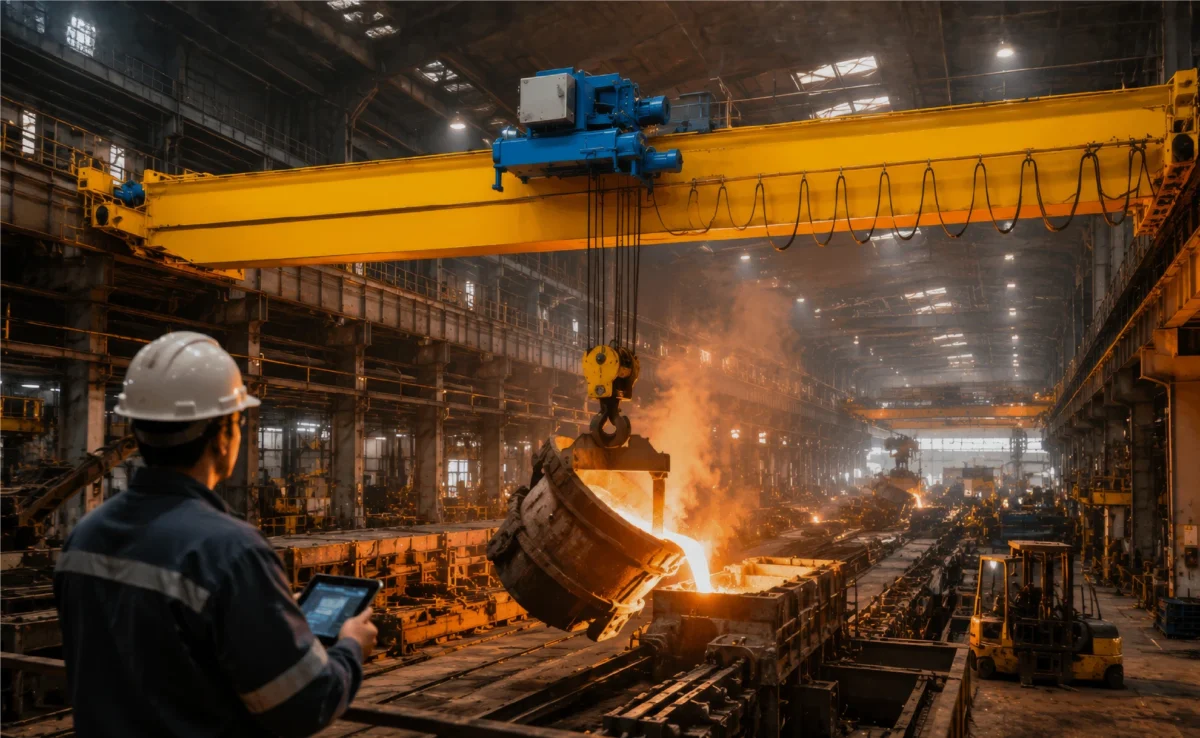
3D rendering of a double girder overhead EOT crane with an electric wire rope hoist and the text: "Overhead EOT crane lifting a ladle in a steel melt shop, monitored by Crane AI Shield."

The Short Version

A crane is the most consequential moving asset on your floor, and it’s often the one your monitoring system understands least. Battery-sampled predictive maintenance (PdM) sleeps through the moments that matter, goes quiet under load, and degrades in foundry heat.

Crane AI Shield watches the crane the way a crane actually behaves—always-on, RPM-aware, and engineered for the floor—then hands your operator a prescription, not another alert to chase. The system boasts a 99.97% prediction accuracy across 946 plants in 26 countries.

What Actually Fails on a Crane

You are the reliability manager. When the main hoist on the melt-shop crane drifts toward a seizure at 2 AM, you are the one who gets the call. A failed hoist doesn’t just idle one machine; it idles the entire bay.


The failures Crane AI Shield is built to stop fall into recognizable patterns:

  • Surprise breakdowns: Bearings, gears, and rotating components letting go mid-shift, mid-load, with no warning.
  • Silent capacity loss: Slow degradation that quietly eats into uptime and throughput.
  • Repeat failures: The same fault returning on hard-to-reach wheels, gearboxes, and hoists.
  • The Cascade: A small $5,000 bearing fault that takes the gearbox, motor, and shaft with it, turning into a $500,000 incident.

Every one of these is catchable early—but only if something is actually watching at the moment the fault first shows itself.

A Crane is Not a Pump

Most predictive maintenance tooling was designed to watch steady-state rotating equipment—motors and pumps that turn at a constant speed, in a fixed spot, all day. A crane breaks every one of those assumptions by accelerating, decelerating, sitting idle, and lifting under shock load.


Drop battery-sampled PdM onto that asset and three structural gaps open up:

  • It wakes only a few times a day. Faults surface between samples and are never recorded.
  • It goes quiet exactly when it matters. Many systems stop reading the moment the asset is working, which is precisely when a fault under load reveals itself.
  • It dies before it can warn you. Sealed battery units degrade under sustained heat, dust, and vibration.

What "Built for Cranes" Actually Means

Crane AI Shield closes these gaps by changing how it watches:

  • It listens at the right moment. RPM is tracked live, and vibration is captured only when the crane is at a stable speed. This RPM-gated capture keeps noise out of the spectrum, meaning clean diagnostics and effectively zero false alarms.
  • It never sleeps. RPM and temperature stream 24/7, leaving no sampling gap for a fault to slip through.
  • It survives the floor. IP68 SS316 sensors with 180°C-rated cabling are engineered to keep working where battery units burn out.

R P M   O V E R   T I M E

Sharp zigzag RPM line across three phases.

↓  FFT vibration capture fires only inside the stable band

Why One Signal is Never Enough

An early-stage crane fault rarely announces itself on a single chart. Crane AI Shield continuously reads and cross-correlates gear-mesh frequencies, sidebands, cepstrum, time waveform, shockwave and envelope, PSD, RPM, temperature, and velocity. Confidence builds only as the evidence agrees, validated by a certified analyst before anything reaches your floor.

Multiple vibration-analysis traces cross-correlated into a single confirmed-fault diagnosis.

From Alert to Closed Loop

The output isn’t a dashboard to decode; it’s a decision. This is the 99% Trust Loop on the floor:


  1. 1. Contextualize: Every duty-cycle crane is ranked by fault progression.
  2. 2. Predict & Prescribe: The screen reads the fix in plain words (e.g., “correct the hoist drive coupling alignment”).
  3. 3. Validate: The operator marks the action done and confirms the accurate prediction.
  4. 4. Loop Closed: The alert turns green, and confirmed outcomes feed back into the model.
The 99% Trust Loop UI – Contextualize → Predict & Prescribe → Validate → Loop closed.

Proof, Not Promise

A melt-shop EOT crane at leading steel producing company runs 300-400 lift cycles a shift. When its main hoist motor bearing began drifting toward looseness, Crane AI Shield read the rising signature early and prescribed the exact correction. The result was one planned stop, a re-lube done on schedule, and hours of unplanned downtime eliminated on the bay’s highest-consequence asset.

BASELINE DEVELOPING CRITICAL POST-ACTION → RECOVERY Baseline ~43 m/s² 250 200 150 100 50 0 Total Acceleration (m/s²) 24 Nov 01 Dec 08 Dec 15 Dec 22 Dec 29 Dec 05 Jan 12 Jan 19 Jan Dec 16 • Prescription raised to stakeholders 232 m/s² ≈ 5× baseline Dec 28 • Action taken

Two Systems, One Unified View

Every EOT crane runs on two motor systems, and Crane AI Shield reads both:

  • The Main Hoist Drive: Monitored for gear-mesh defects, bearing degradation, and speed-correlated anomalies.
  • The Long-Travel System: Monitored for bearing defects, lubrication degradation, and wheel-side looseness.

The Bottom Line

Crane AI Shield isn’t just a sensor and a model bolted together; hardware and AI are engineered as a single system. Deployments run on a predictable roughly eight-week timeline. You already know how to run the plant. Crane AI Shield gives you the part you couldn’t see before—the fault building right now while every chart still looks normal.


Watch a crane the way a crane behaves, or you’re not managing reliability. You’re hoping.


Try PlantOS™ Crane AI shield today: https://infinite-uptime.com/contact

Frequently Asked Questions

Standard battery PdM sensors fail cranes in three specific ways: they sample vibration only a few times per day, missing faults that develop between snapshots; they stop recording when the crane is under load — exactly when fault signatures are strongest; and their battery enclosures degrade rapidly under foundry heat, dust, and vibration. Crane AI Shield eliminates all three: RPM-gated FFT fires only under stable load conditions, sensors stream RPM and temperature 24/7, and IP68 SS316 hardware with 180°C-rated cabling is designed to survive where battery units fail.

Time-sampled monitoring captures vibration on a clock schedule — not when the crane is actually working. Accel and decel noise contaminates the spectrum, making it difficult to isolate genuine fault frequencies. RPM-gated FFT triggers only when the motor is in a stable speed band under load — producing clean spectra at the exact moment fault signatures are most distinguishable. This eliminates false alarms, reduces filtering requirements, and catches faults that time-sampled systems structurally cannot detect.

Crane AI Shield monitors up to 19 failure modes across the main hoist drive train: bearing defects (BPFO/BPFI/BSF), gear-mesh faults (GMF), gear tooth wear, gear backlash, shaft misalignment, coupling faults, rotor bar cracks, unbalance, structural looseness, and more. The Comprehensive tier adds long-travel wheel bearing defects. Vibration analysis using FFT fault frequency mapping identifies bearing and gearbox degradation 2–6 weeks before catastrophic failure. The Tata Steel Colors case study: Main Hoist Motor #3 flagged 12 days before likely failure — 10 hours of unplanned downtime avoided.

Deployment follows a structured 5-day plan with only one day of crane downtime required for sensor mounting and commissioning sign-off. AI calibration to the crane’s kinematic profile — mapping gear-mesh and shaft-order frequencies — is completed within Days 2–3. The system delivers a first diagnostic typically within 30 days, with a 60-day evaluation period and 75% of payment due only on satisfaction. ROI payback is typically achieved within 6–12 months: the Standard subscription is $24K per crane per year versus $75K–$250K+ per avoided main-hoist failure — a 3–10× return on the first catch.

Yes. Start with your highest-criticality crane, validate the outcome on your specific equipment, then scale at your own pace. The Fleet Operations Center provides a unified view of 100+ cranes — every crane needing attention ranked by fault progression, with preventable downtime hours tracked live. Infinite Uptime currently operates across 845+ plants in 30+ countries. Sensor placement scales with crane size; the scope of fault coverage does not change.