
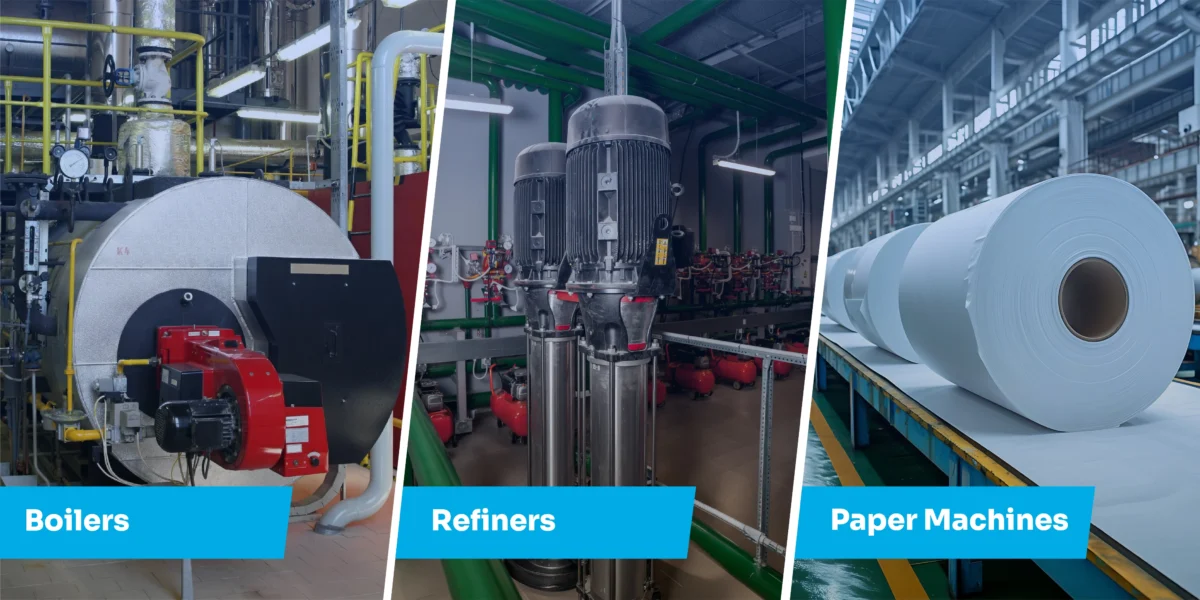
Prescriptive AI for Recovery Boilers, Refiners & Paper Machines Enabling Semi-Autonomous Pulp & Paper Mills
Read Time: 8–9 minutes | Author – Kalyan Meduri
- The Sustainable Mill Mandate Meets Operating Reality
- Why Traditional Predictive Tools Stall at Alarms
- PlantOS™ and the 99% Trust Loop
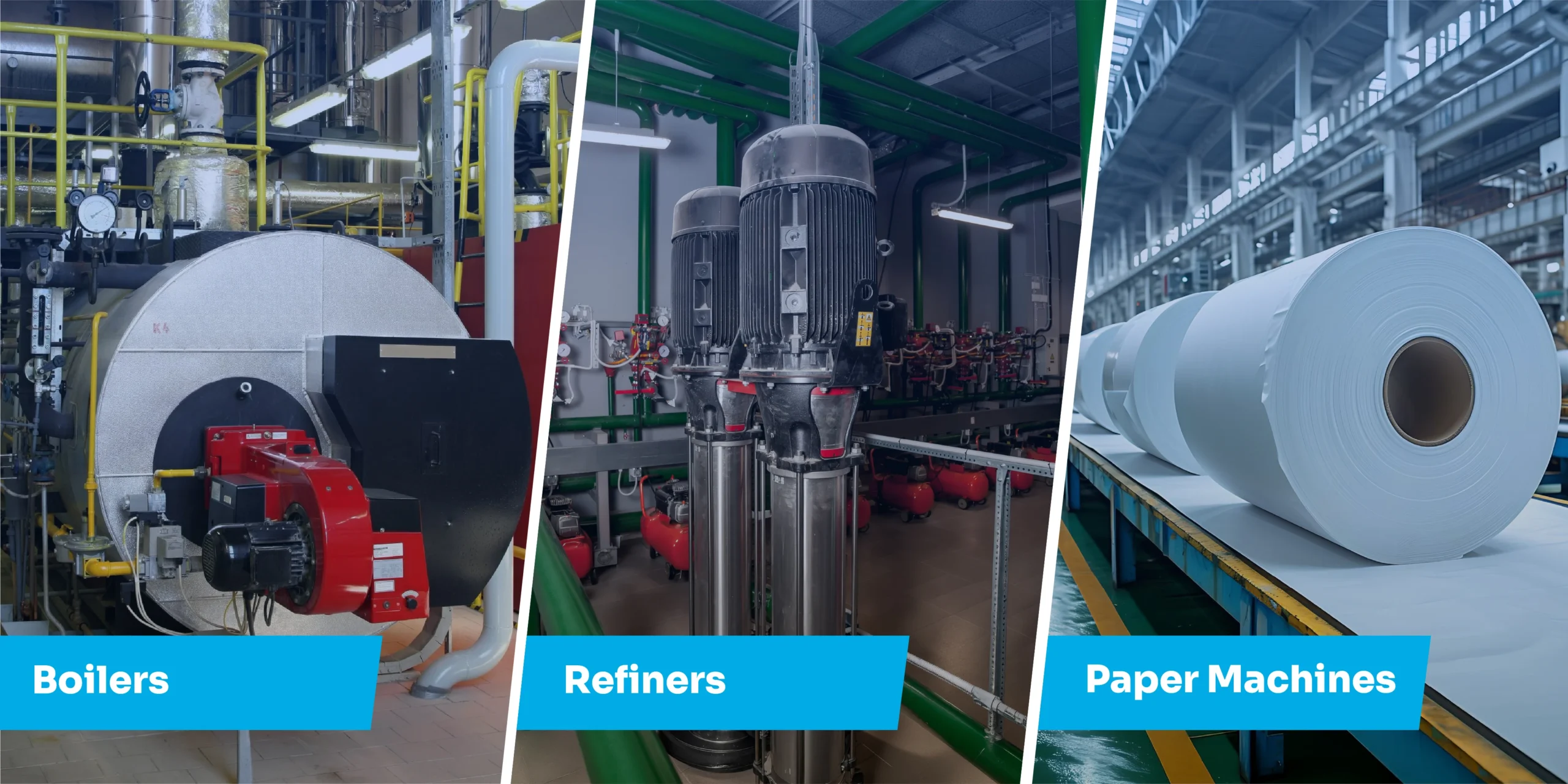
- Recovery Boiler — From Surprise Failures to Predictable Availability
- Refiners — Where Reliability, Quality, and kWh/Ton Converge
- Paper Machine Dryer Section — From Sheet Breaks to Scheduled Interventions
- Preventing Unplanned Stops — Equipment and Process Reliability as One
- Energy Efficiency — Reliability and Energy, Solved ogether
- What This Means for Mill Leadership
Key Highlights
- How fibre-cost pressure and sustainability commitments are quietly undermined by reliability failures on recovery boilers, refiners, and paper machine dryer sections.
- Why traditional predictive tools stall at alarms — leaving mill teams to interpret signals rather than execute the right action in high-stakes, high-temperature environments.
- How PlantOS™ orchestrates vertical-trained, agentic, explainable AI across mechanical, electrical, and process-induced failure modes — turning streaming equipment and process data into a single, trusted source of truth for prescriptive maintenance and energy-efficient operation.
- What Prescriptive AI looks like on the Plant floor: fewer sheet breaks, higher availability, lower kWh/ton — validated by operators, not dashboards.
Sustainable pulp and paper manufacturing is no longer a brand statement — it is a boardroom mandate. Regulators, brand owners, and customers want lower kWh/ton, lower fibre loss, and auditable reliability, all while mills stay cost-competitive.
The inconvenient truth: none of it holds if the recovery boiler, refiners, and paper machine — the assets that sit at the intersection of reliability, throughput, and energy intensity — keep failing in ways nobody saw coming.
A boiler feed pump bearing degrading overnight. A refiner motor developing an inner race defect mid campaign. A dryer cylinder bearing running hot. One fault, and fibre, steam, and tonnage are lost in a single cascade
That is exactly where Prescriptive AI — and the PlantOS™ 99% Trust Loop — change the script.
The Sustainable Mill Mandate Meets Operating Reality01
Consider a recovery boiler forced into an unplanned load reduction when a feed pump motor bearing fails without warning. Steam balance collapses, the paper machine loses dryer capacity, reel ends go off spec, and the mill compensates with auxiliary firing that drives up both kWh/ton and emissions intensity. A refiner motor failure mid-grade compounds this — off-quality stock, energy penalties from running above the efficiency inflection point, and production losses that ripple through the stock prep line.
Sustainable mill operations succeed when reliability enables energy efficiency — not as a side effect, but as a concrete P&L lever with measurable energy savings per ton produced.
Why Traditional Predictive Tools Stall at Alarms02
Most mills today are not short of data. Vibration sensors on fans and motors, temperature monitoring on dryer bearings, motor current and load feedback on refiners, plus process measurements like freeness, consistency, steam pressure, and sheet moisture are all streaming somewhere. Traditional predictive tools do a decent job of turning raw signals into alerts:
- “Motor DE bearing acceleration trending above threshold.”
- “Refiner motor vibration velocity fluctuating.”
- “Dryer cylinder bearing temperature rising.”
The problem is what happens next.
In many cases, these tools leave engineers with a red or yellow signal and a generic recommendation: “Inspect asset,” “Plan maintenance,” or “Check lubrication.” In a mill running three grades across two machines under steam-balance constraints, that is not enough.
The result:
- Alarm fatigue: too many alerts with too little context.
- Low trust: operators remember every false alarm, not the saves.
- Outcome gap: insights exist, but they do not reliably translate into timely, precise, executed actions.
You remain in a world of predictive signals without a prescriptive path to prevent the next boiler trip, refiner failure, or sheet break with confidence.
Mill failures are rarely purely mechanical in nature. A bearing defect (mechanical), a motor current excursion (electrical), and a consistency or steam-pressure swing (process-induced) often coexist on the same asset in the same shift. Any tool that handles only one dimension will keep missing the causal chain.
PlantOS™ and the 99% Trust Loop 03
PlantOS™ — the world’s most user-validated Prescriptive AI — was built to close this outcome gap, not to produce more dashboards. Under the hood, PlantOS™ orchestrates a network of agentic, explainable AI models, vertical-trained on pulp and paper, metals, mining, cement, chemicals, and other asset intensive sectors. It brings vibration, motor current, temperature, and process signals into one reasoning layer — so mechanical, electrical, and process-induced failure modes on the same asset are evaluated together, not in isolation.
The result is a single prescription, with zero guesswork on what to do next.
At the heart of PlantOS™ is the 99% Trust Loop — a closed loop combining fault prediction and data contextualization, prescriptive recommendations, operator validation, and outcome tracking.
For a recovery boiler, refiner line, or paper machine dryer section, the Trust Loop closes like this: raw equipment and process streams are contextualized by vertical AI models →a high-accuracy fault prediction is generated with the underlying evidence made
visible to the operator →a specific, actionable prescription is delivered →the operator validates and executes →the outcome is tracked and fed back to sharpen the model.
A living reliability system, not a static rules engine.
Every PlantOS™ prescription is built on the same explainable logic — a clear observation, a named diagnosis, a specific recommendation, and a quantified business impact.
The same structure applies whether the root cause is mechanical, electrical, or process-induced.
Recovery Boiler — From Surprise Failures to Predictable Availability 04
Why it matters. The recovery boiler and its auxiliary train — boiler feed pumps, ID and FD fans, precipitator drives, soot blowers — sit at the top of every pulp mill’s risk register.
Availability here is the single largest determinant of integrated mill output, steam balance across the paper machine, and increasingly, of audited sustainability performance.
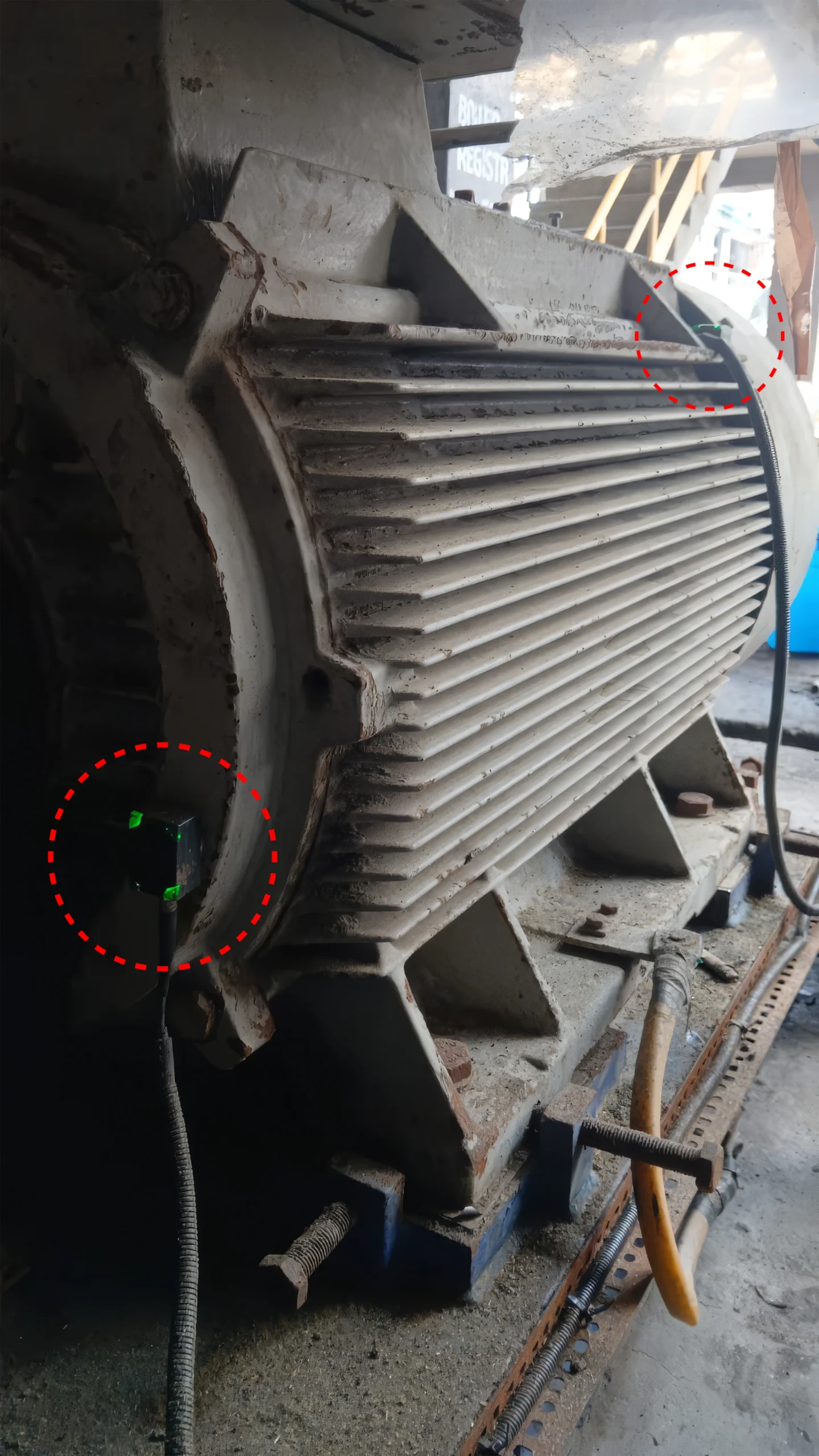
Where it fails. Feed pump motor bearings are a classic pressure point. They run continuously, across load swings and firing cycles, and a single overnight degradation — most often a lubrication issue on the drive-end bearing — can escalate into a forced load reduction, a steam shortfall, and a paper machine slowdown within hours. Legacy tools see a vibration spike and flag it. They rarely tell the engineer whether it is load-induced, lubrication-related, or the start of a genuine defect — and they almost never tell them what to do about it or when.
What Prescriptive AI does differently. A live prescription from a leading Pulp & Paper Manufacturing Plant in India shows the difference in practice.
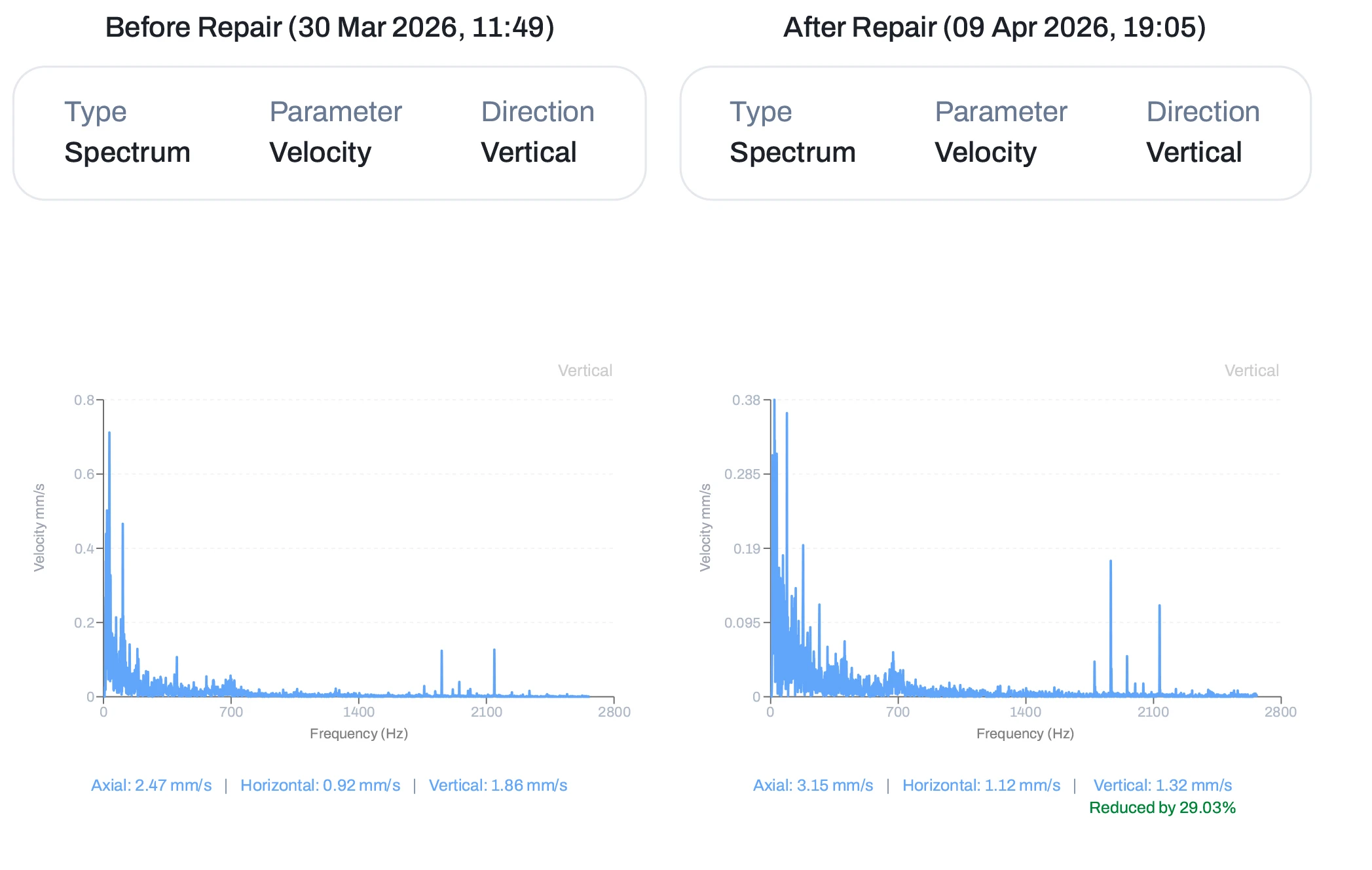
- Observation: Total acceleration at the boiler feed pump motor drive-end bearing jumped from 38 to 252 (m/s²)² inside a single day, with a raised noise floor in the vibration spectrum.
- Diagnosis: PlantOS™ did not stop at the anomaly. It identified inadequate lubrication on the Drive End (DE) bearing as the specific cause
- Recommendation: Issued a clear action — re-lubricate the motor DE and NDE bearings.
- Business Impact: 6 hours of unplanned downtime saved.
The site reliability engineer executed the greasing. Post-repair trends verified a 29% reduction in vibration velocity.
That is the shift: from a flashing alert to a named fault, a named action, a named owner, and a measured outcome.
Refiners — Where Reliability, Quality, and kWh/Ton Converge05
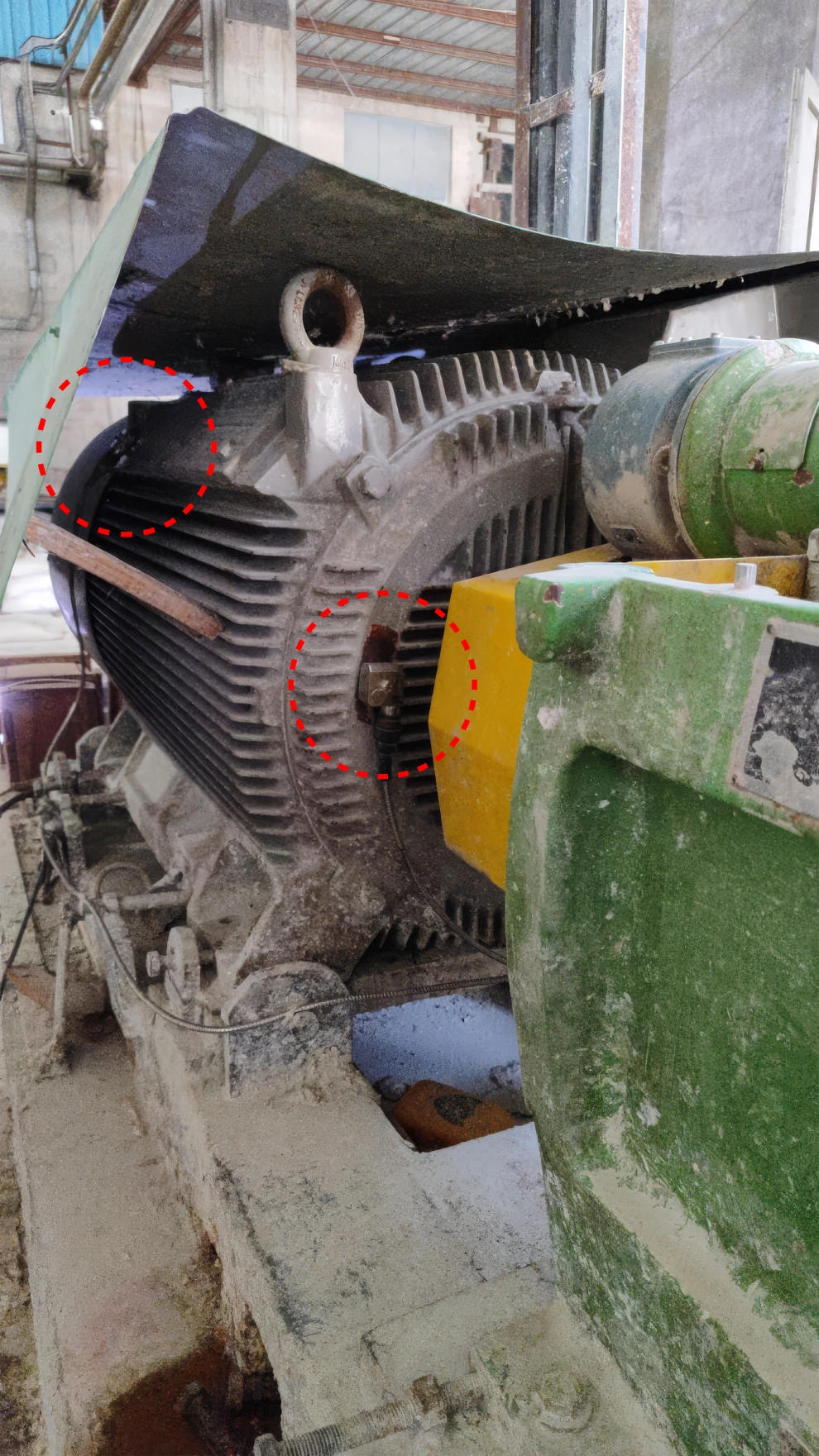
Why it matters. Disc and conical refiners sit at the most energy-intensive point of the stock prep line. They do not justkeep the mill running; they shape the sheet.Freeness,sheetstrength, and specific energy consumption are all influenced by refiner health – which means refiner reliability and refiner energy efficiency are not two problems, they are one.
Where it fails. Refiner failure signatures are rarely purely mechanical. A bearing defect often shows up first in the electrical current trace as load drift, becomes visible in vibration as it progresses, and only then begins to affect freeness downstream. Traditional tools that look at one dimension at a time – vibration alone, or motor current alone – tend to catch the fault too late, and usually without enough context to prescribe the right intervention.
What Prescriptive AI does differently. A live prescription from an 11 kV refiner motor at a leading paper mill in the Middle East illustrates the point.
- Observation: PlantOS™ detected fluctuating vibration velocity at the refiner non-drive-end bearing, with the spectrum showing inner race defect frequencies (BPFI at 357.51 Hz) and non synchronous components.
- Diagnosis was specific: an inner race defect on the bearing – not a generic anomaly.
- Recommendation was equally specific: re-lubricate as an immediate corrective step, plan a bearing replacement at the next available stop, and inspect the refiner disc condition during the same window.
- Business Impact: six hours of potential unplanned downtime prevented, with the heavier intervention folded into a planned stop instead of forced as a reactive one.
The outcome is a refiner line that delivers consistent freeness at the lowest achievable kWh/ton – with bearing and plate life extended against real process conditions, not conservative calendar planning.
Paper Machine Dryer Section — From Sheet Breaks to Scheduled Interventions06
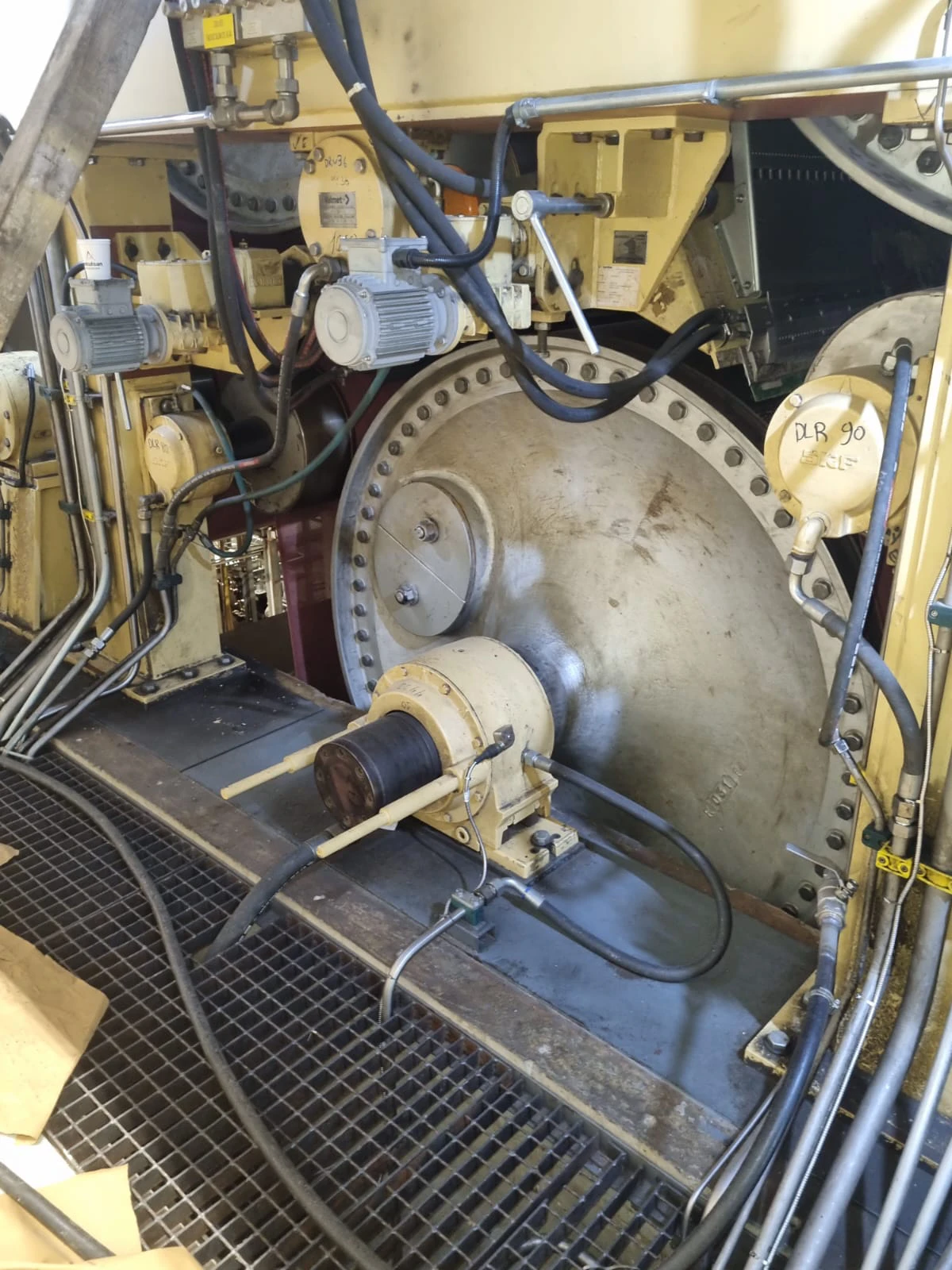
Why it matters. The dryer section is the longest, hottest, and most unforgiving stretch of the paper machine. Dryer cylinder bearings, felt roll imbalance, steam joint integrity, and drive gearbox health each represent a direct path to a sheet break. And in the dryer section, a sheet break does not end when the sheet is rethreaded – it cascades into lost steam stability, off-quality reel ends, and recovery times that routinely exceed an hour on a fast machine.
Where it fails. Dryer bearings typically warn before they fail – through rising temperature, subtle vibration change, or both. The challenge is interpretation. A rising bearing temperature can mean inadequate lubrication, a coolingsystem problem, or an early-stage bearing defect, and each demands a different corrective path. Traditional alerts flag the symptom without guiding the engineer to the right root cause or the right moment to act.
What Prescriptive AI does differently. A live prescription from a leading Turkish paper mill shows the Prescriptive intelligence at work.
- Observation: PlantOS™ detected a sudden temperature rise to 129.5°C (265°F) at the Dryer Cylinder Roll-non-drive-end bearing.
- Diagnosis: Rather than issue a generic “inspect asset” alert, the platform prescribed a logical, prioritized sequence.
- Recommendation: verify lubrication first; if adequate, check the cooling system and plan additional cooling if required; if both are satisfactory, plan a bearing inspection at the next available opportunity.
The mill’s reliability engineer followed the sequence, increased the oil flow rate, and closed the intervention with no abnormality observed.
The business impact: 8 hours of unplanned downtime saved.
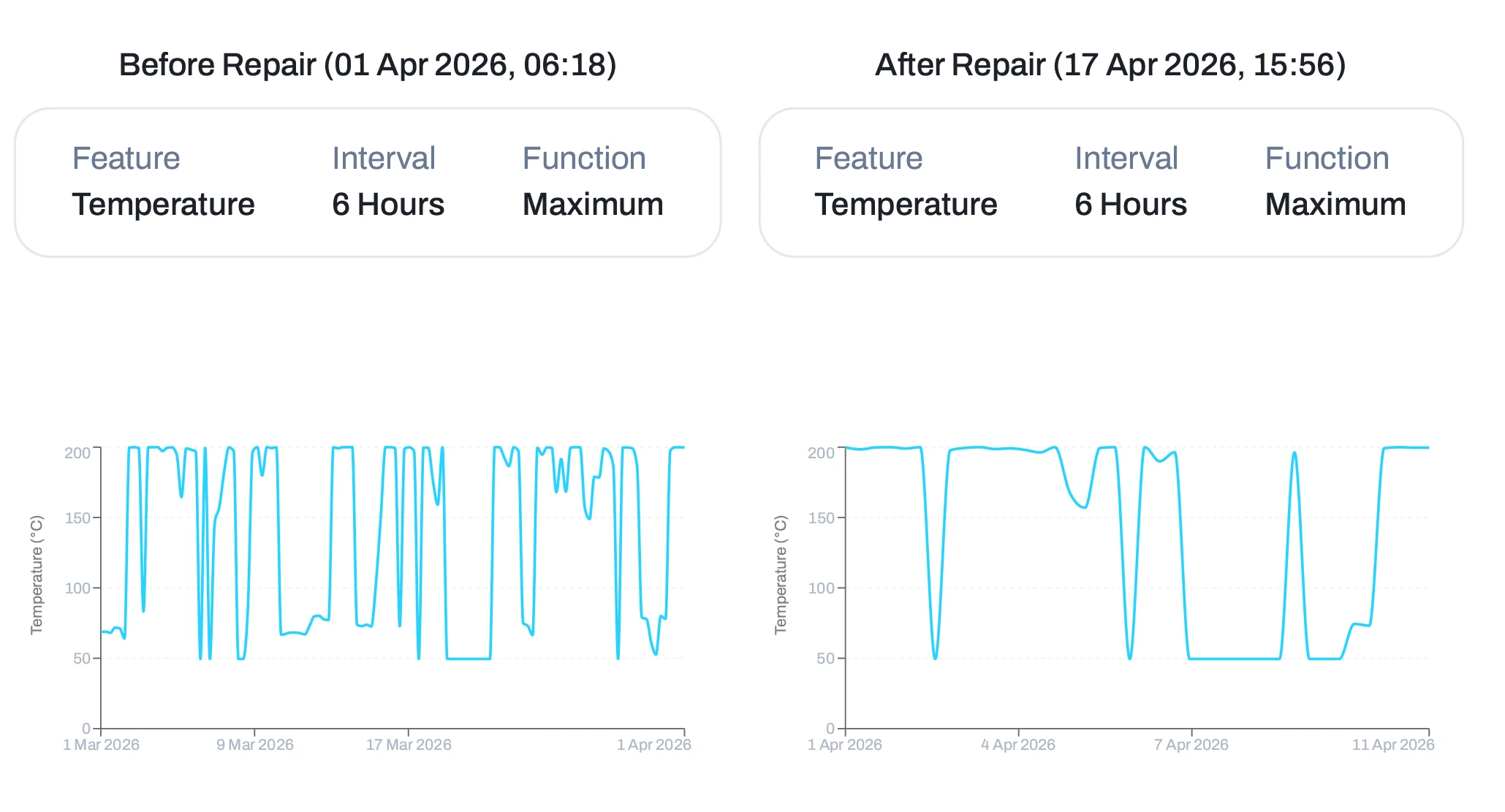
The prescriptive advantage in the dryer section is not just detection – it is scheduling intelligence. PlantOS™ sequences interventions against planned grade changes, wire and felt changes, and cleaning stops, so fixes land inside stops the mill was already taking, not as emergencies that cool the machine.
Preventing Unplanned Stops — Equipment and Process Reliability as One07
The three cases above share a pattern. Each prescription is specific, explainable, and tied to a quantified outcome — and each one cuts across what would traditionally be treated as separate domains.
Unplanned stops in a pulp and paper mill rarely originate in a single component. A sheet break in the dryer section is as likely to trace back to steam pressure instability from a recovery boiler auxiliary as it is to a dryer bearing. A refiner trip is as likely to reflect a stock consistency excursion upstream as a plate or bearing issue. A motor bearing failure is as likely to expose itself first through an electrical current signature as through vibration. Traditional approaches silo these subsystems – boiler here, stock prep there, paper machine elsewhere; and within each silo, mechanical here, electrical there, process data somewhere else – creating diagnostic blind spots that prescriptive AI eliminates.
PlantOS™ delivers Equipment + Process Reliability as a single source of truth by correlating:
- Mechanical data: Vibration spectra, bearing defect frequencies (BPFI, BPFO), acceleration, temperature.
- Electrical data: Motor current signatures, load profile, power quality, torque.
- Process data: Steam pressure, black liquor firing rate, freeness, consistency, sheet moisture, grade and schedule.
Rather than surfacing a bearing anomaly in isolation, PlantOS™ evaluates it in the context of motor load, upstream process stability, and upcoming production events – and recommends action that addresses the system, not just the component.
Energy Efficiency — Reliability and Energy, Solved ogether 08
In pulp and paper, where thermal and electrical energy together dominate the cost base, every minute of unstable operation taxes kWh/ton and steam/ton. Recovery boiler load fluctuations, refiner instability, and dryer-section disturbances create cascading thermal and fibre losses — inefficient steam generation, over-refining compensation, and reheating penalties across the machine.
Reliability and energy efficiency are the same problem, solved in tandem. PlantOS™ stabilizes critical asset reliability by detecting faults early — whether mechanical, electrical, or process-induced — and prescribing corrective action before thermal and fibre losses compound:
- Smoother runs: Fewer interruptions mean better steam balance and less energy wasted in start up and stabilization cycles.
- Higher throughput per energy block: More tons produced within the same scheduled energy window, improving effective energy intensity.
- Lower specific energy on refiners: Plate and bearing interventions aligned to the wear-and efficiency inflection, not the calendar.
Every fault avoided on a boiler auxiliary, refiner, or dryer section is a reliability gain and an energy gain in the same action — making sustainability claims operationally credible and financially defensible.
What This Means for Mill Leadership 09
For a Paper Mill Head, Reliability Engineering, and Digitalization teams, Prescriptive AI-powered closed loop reliability is now a strategic lever, not just a maintenance tactic.
With PlantOS™ orchestrating agentic, explainable AI across recovery boiler, refiner, and paper machine operations, mills achieve:
- Decisions operators execute: AI-assisted prescriptions replace guesswork with high-accuracy fault prediction, explainable evidence, and 99%+ operator action rates.
- Direct KPI linkage: Reliability actions measurably improve MTBF, MTTR, and kWh/ton –making production outcomes an operational reality.
- Scalable reliability playbook: Standardized prescription templates, thresholds, and parts lists across machines, mill sites, and grades – eliminating site-to-site variation.
- Proven, fast payback: Payback in 6–12 months, against an 18–24 month industry norm for digital projects.
This enables semi-autonomous mill operations where vertical AI, orchestrated end-to-end, handles diagnostics and prescriptions across mechanical, electrical, and process-induced faults – freeing COO, CFO, CDO, Maintenance Managers, Energy Managers, reliability experts for strategic oversight and delivering safer, more profitable, and more sustainable pulp and paper production.
Frequently Asked Questions
Predictive maintenance flags that a component may fail soon but rarely tells you exactly what to do, when, and with what expected business impact. Prescriptive AI on PlantOS™ goes further – delivering an explainable report that names the fault, specifies the action and timing, and quantifies the business outcome. Operator action rates consistently exceed 99%, because the evidence behind every prescription is visible and auditable.
Yes. PlantOS™ ingests data from existing condition monitoring systems, PLC, DCS, historians, and third party sensors on recovery boilers, refiners, paper machines, and auxiliary equipment. It layers vertical AI models and the 99% Trust Loop on top – without forcing a rip-and-replace hardware strategy.
By reducing unplanned stoppages, fibre losses, and energy excursions, PlantOS™ helps you produce more tons within the same or lower energy envelope, improving kWh/ton, steam/ton, and associated emissions intensity. These improvements are operator-validated and auditable – credible inputs into sustainability reporting and customer commitments.
User-validated prescriptions across pulp and paper sites — including Satia Paper Plants, Al Dafrah Paper, Ankutsan Paper Mill in Turkey, and more — have delivered 2788 hours of unplanned downtime saved per single intervention on critical assets across 28 Paper Mills globally, with payback consistently inside 6–12 months. Across PlantOS™’s global footprint spanning nine industrial verticals, 881 Plants the platform has eliminated over 140,641 hours of unplanned downtime.
See the outcomes for yourself.
Explore how PlantOS™ is delivering semi-autonomous operations across pulp and paper mills.
Thank you for your interest in PlantOS™ Prescriptive AI.
Read More on Prescriptive AI

Prescriptive AI for Low-Speed, Hygiene-Critical Assets in Pharma and F&B: Beyond Traditional Condition Monitoring
Prescriptive AI for Low-Speed, Hygiene-Critical Assets in Pharma and F&B...
Prescriptive AI for Continuous Casting Cranes
Prescriptive AI for Continuous Casting Cranes Enabling Semi-Autonomous Steel Mills...

Prescriptive AI: The Future of Smart Manufacturing and Reliable Semi‑Autonomous Plant Operations
In a world where operational reliability defines competitiveness, manufacturing leaders...