
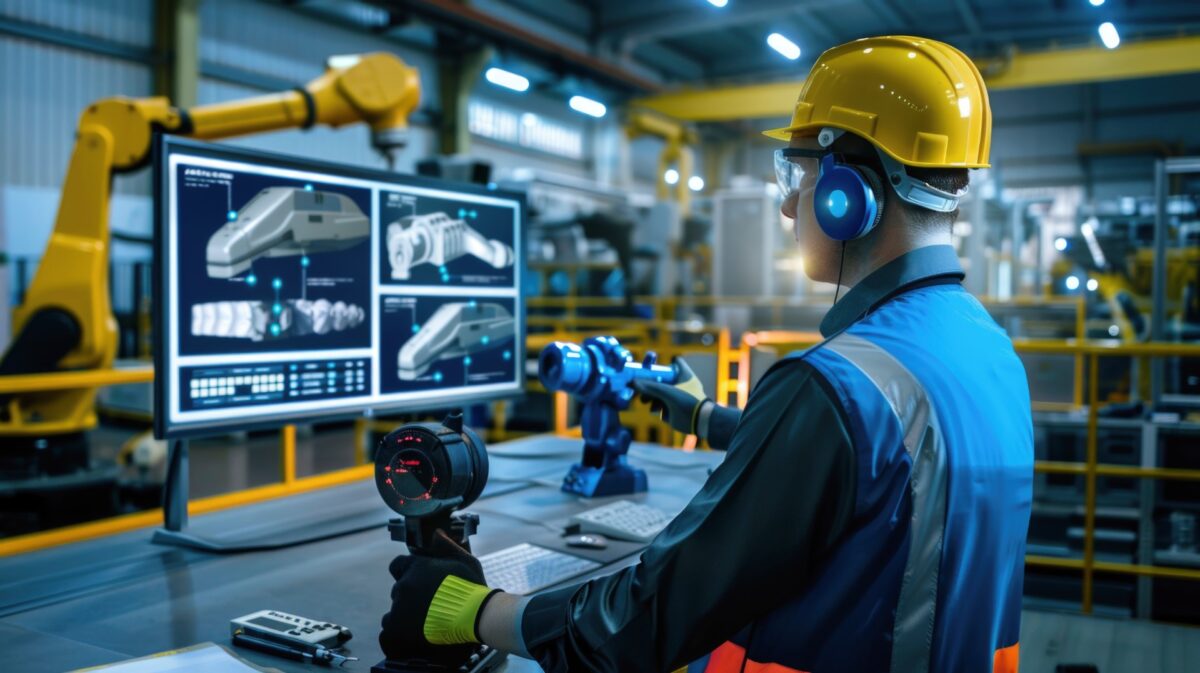
AI Predictive Maintenance: Revolutionizing Industrial Efficiency

- What is AI Predictive Maintenance ?
- What is Machine Learning in Predictive Maintenance?
- Benefits of AI in Predictive Maintenance
- Examples of AI in Predictive Maintenance
- How Does AI Predictive Maintenance Reduce Downtime?
- How Predictive Maintenance and the Application of AI Prevent Unplanned Downtime ?
- How Machine Learning Works in PdM
- The Future of Predictive Maintenance Using AI
- AI for Predictive Maintenance in Industrial Systems
- Conclusion
Key Highlights
- AI predictive maintenance detects equipment failures early
- Machine learning improves maintenance accuracy
- Real-time monitoring reduces unplanned downtime
- AI helps manufacturers optimize maintenance schedules
- Predictive analytics improves equipment reliability
- AI-powered maintenance lowers operational costs
- Industrial AI enables data-driven maintenance decisions
In modern manufacturing, the integration of artificial intelligence (AI) has paved the way for significant advancements in predictive maintenance (PdM). Traditionally, maintenance strategies relied on scheduled inspections or reactive repairs, leading to potential downtime and inefficiencies. AI based predictive maintenance, however, represents a transformative shift towards proactive and data-driven approaches.
What is AI Predictive Maintenance ?
What is Machine Learning in Predictive Maintenance?
Machine learning (ML) is the core technology that makes AI predictive maintenance possible. It is a branch of artificial intelligence in which algorithms learn patterns from data rather than being explicitly programmed with rules.
Benefits of AI in Predictive Maintenance
Case Studies and Real-World Applications
Examples of AI in Predictive Maintenance
How Does AI Predictive Maintenance Reduce Downtime?
AI predictive maintenance reduces downtime by continuously monitoring equipment health using sensors and machine learning algorithms. The system detects abnormal patterns in vibration, temperature, pressure, and operating conditions before equipment failure occurs, allowing maintenance teams to perform repairs during planned shutdowns instead of emergency breakdowns.
How Predictive Maintenance and the Application of AI Prevent Unplanned Downtime ?
AI further reduces unplanned downtime by converting raw condition data into actionable insights. Instead of relying on fixed schedules or human interpretation alone, AI predicts failure windows, prioritises critical assets, and recommends the right maintenance action at the right time. This enables:
- Planned interventions during scheduled shutdowns
- Reduced emergency repairs and overtime labour costs
- Improved equipment reliability across the plant
- Consistent production output and on-time delivery performance
By shifting maintenance from reactive firefighting to data-driven prevention, manufacturers significantly minimise unexpected stoppages, protect productivity, and improve overall operational efficiency.
How Machine Learning Works in PdM
In the context of predictive maintenance, machine learning models are trained on historical equipment data — including both normal operating data and data collected during or before known failures. The model learns the statistical patterns and signal signatures that precede failure events. When it encounters similar patterns in live data, it raises a predictive alert.
The Future of Predictive Maintenance Using AI
As AI technologies continue to evolve, the capabilities of predictive maintenance will only expand. Enhanced algorithms, coupled with advancements in sensor technology and IoT connectivity, will enable even more precise predictions and proactive maintenance strategies. Manufacturers stand to benefit from reduced costs, improved sustainability, and enhanced competitiveness in the global market.
AI for Predictive Maintenance in Industrial Systems
Conclusion
AI predictive maintenance (PdM)represents a pivotal advancement in industrial operations, offering manufacturers a strategic advantage in managing equipment reliability and operational efficiency. By harnessing the power of AI-driven insights, businesses can not only mitigate risks associated with equipment failures but also pave the way for a more sustainable and productive future.
In conclusion, the integration of AI in predictive maintenance is not merely a technological upgrade but a transformative approach towards achieving operational excellence in manufacturing industries worldwide. Infinite Uptime is taking asset condition monitoring to newer heights with its conversational AI, Nity. Nity is designed to identify critical assets and report performance data on a massive scale. Its ability to interact with users and provide data swiftly facilitates quicker decision-making, improved productivity, and enhanced operational efficiency. By harnessing the power of AI-driven insights through Nity, businesses can mitigate risks associated with equipment failures and pave the way for a more sustainable and productive future.
Read More Blogs

Prescriptive vs Predictive Maintenance
Prescriptive vs predictive maintenance refers to two different industrial maintenance...
Prescriptive AI: The Future of Smart Manufacturing and Reliable Semi‑Autonomous Plant Operations
In a world where operational reliability defines competitiveness, manufacturing leaders...
Condition-Based Maintenance vs. Predictive Maintenance: A Comprehensive Comparison
In the ever-evolving world of industrial operations, maintenance strategies play...