PlantOS™ Prescriptive AI

Built for the section of the mill you can’t afford to stop.

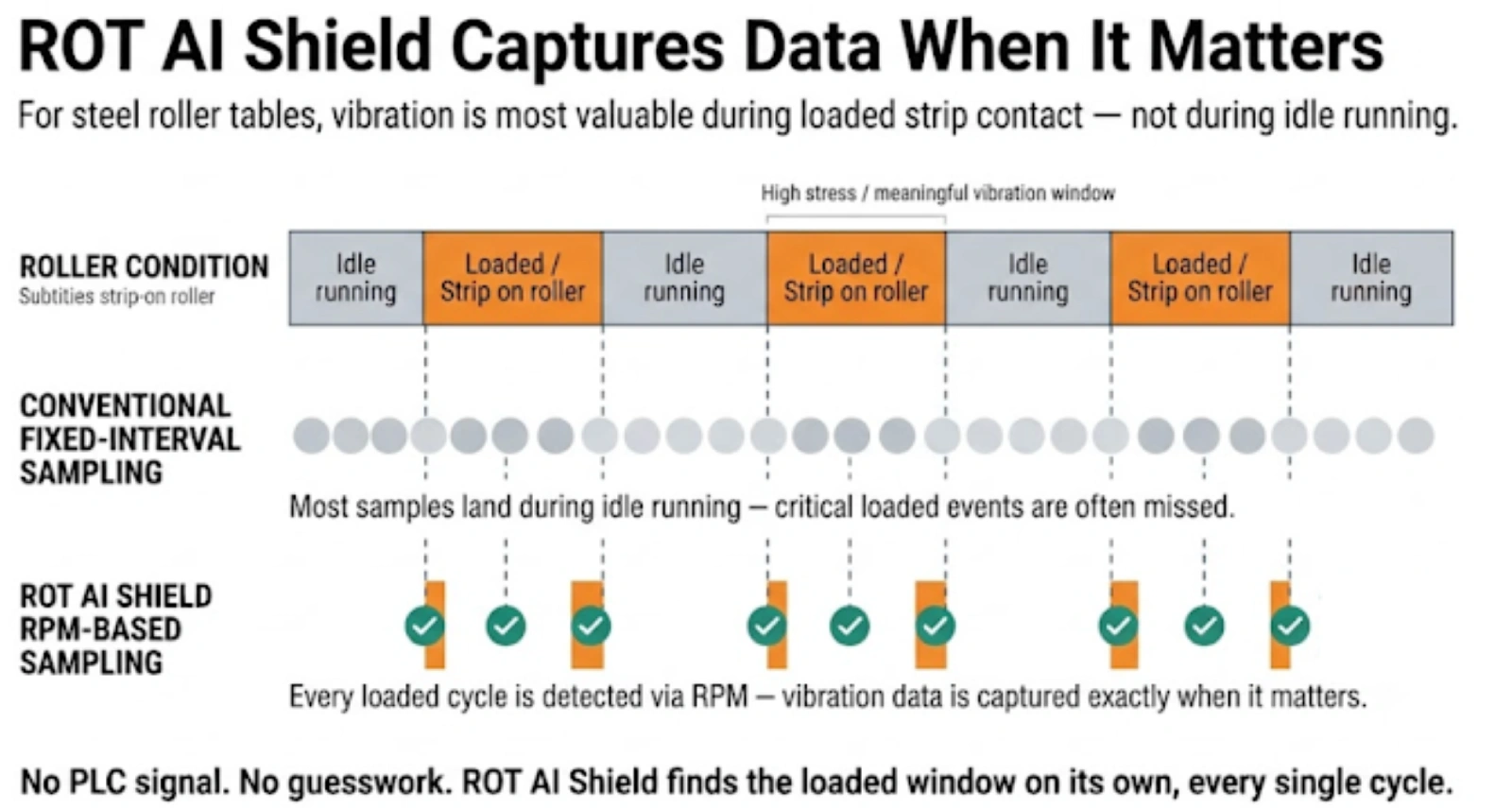
Standard predictive maintenance was never built for the ROT. ROT AI Shield captures vibration only when the rollers are loaded and turns it into prescriptive work orders, not graphs to investigate.

See how it works
1000 Plants
Digitalized
167,837 Hours
Saved
99% Prescriptions
Acted On
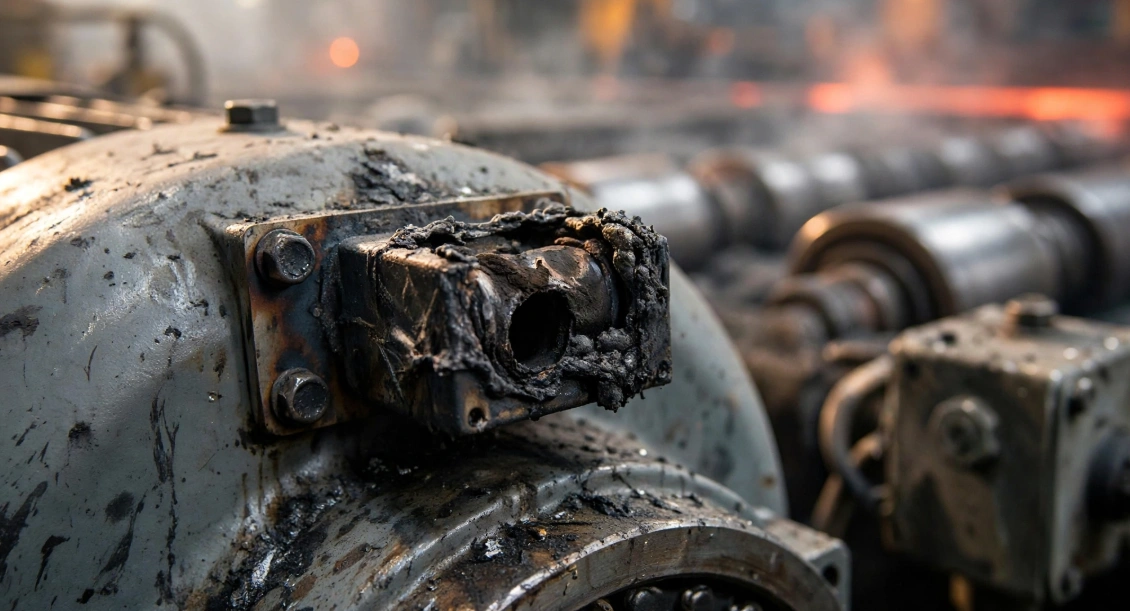
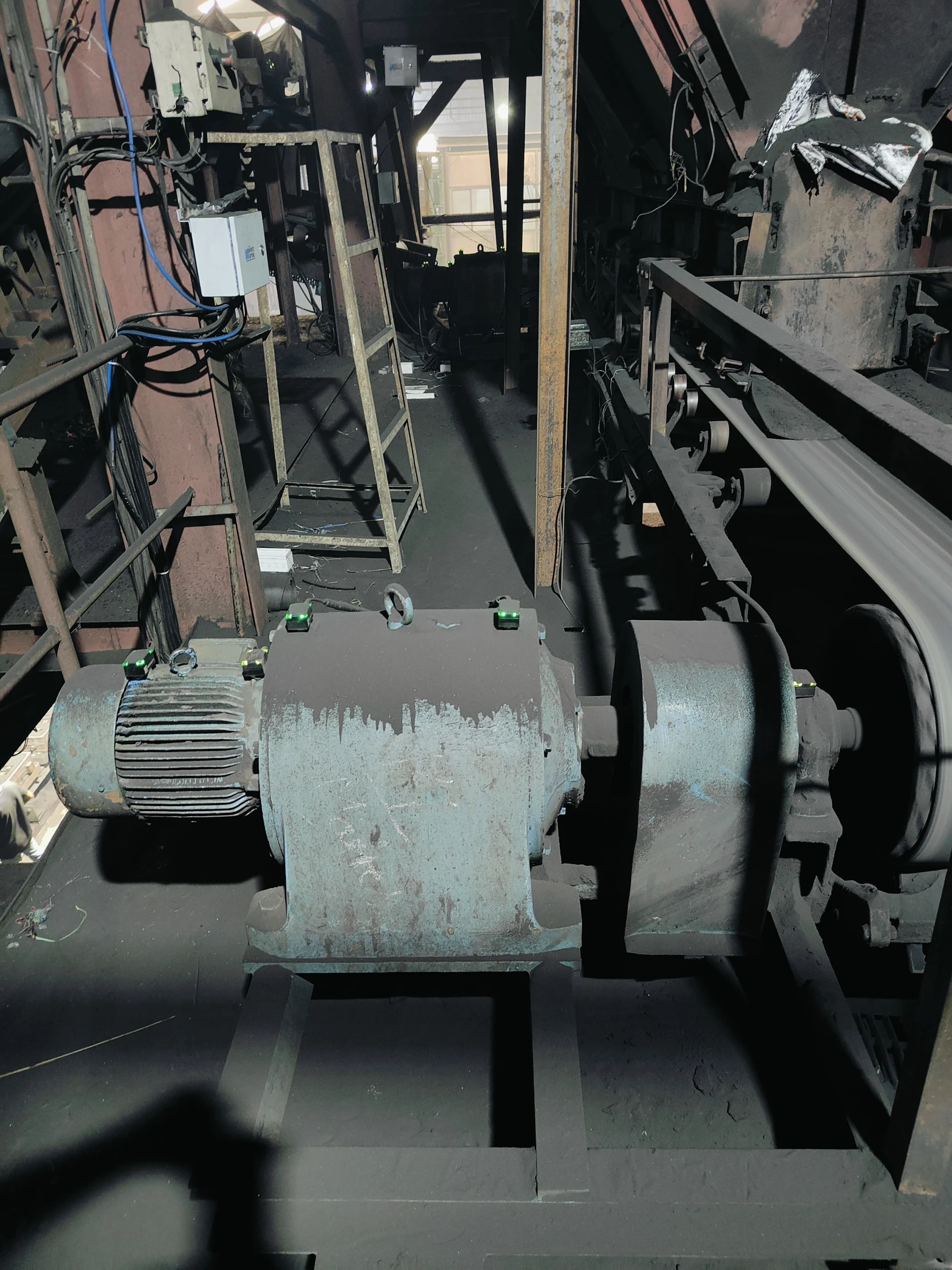
vEdge Mounted on Motor_Gearbox_Blast Furnace
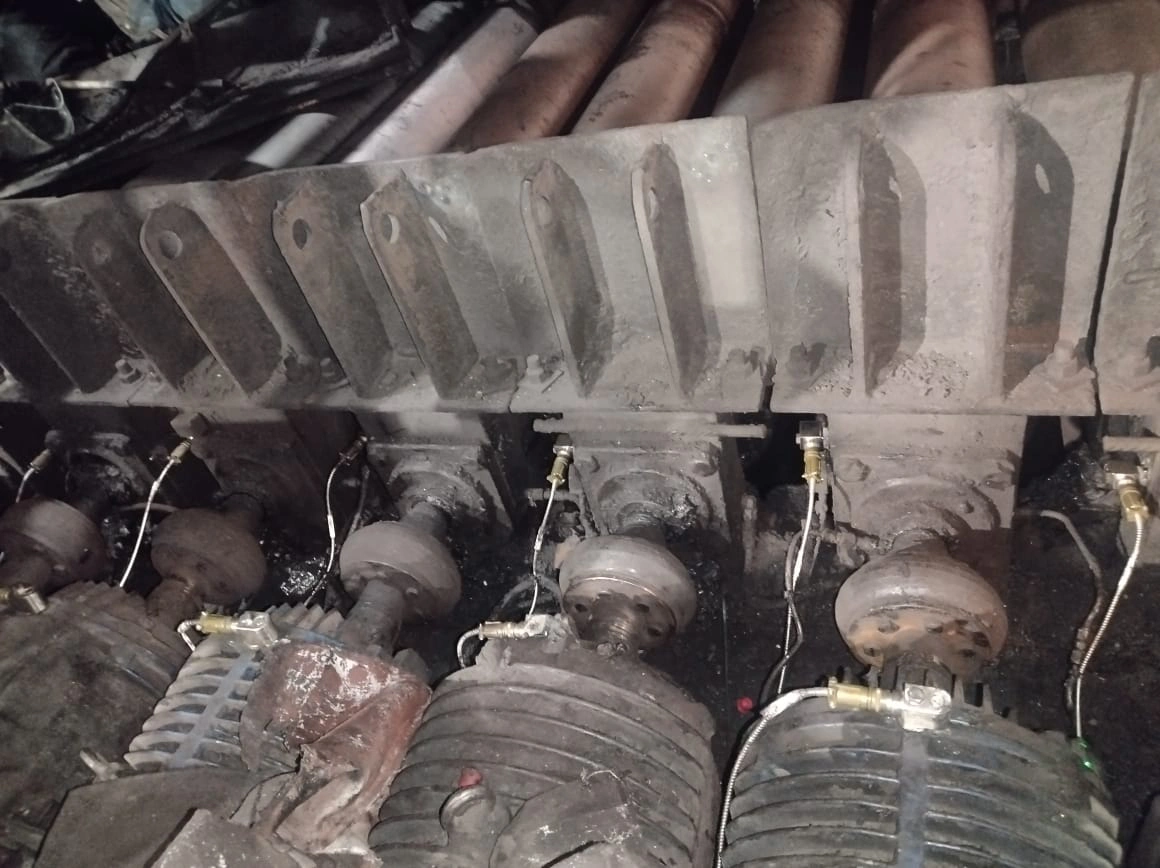
vSense mounted on Hot Strip Mill Rollers NDE

Book a Discovery Call

Lock in a 30-minute diagnostic session
with our crane reliability engineers.

The problem

Standard PdM was never built for the ROT

Battery sensors fail fast

Wireless nodes can't survive the heat, spray, dust and vibration at a roller table.

Sampling misses the moment

Fixed intervals skip loaded conditions. The fault happens between two samples.

Wired setups still lag

Even hard-wired systems rarely capture data exactly when the rollers are loaded.

The Approach

ROT AI Shield gets it right

01

RPM-based smart capture

Detects load instantly and records vibration at the exact moment the strip is on the rolls.

02

No PLC. No touchpoints.

A drop-in installation that never interferes with your existing control system.

03

Rugged, purpose-built node

IP68 SS316 multi-sense hardware built for water spray, steam and scale. No batteries.

04

One AI engine, whole drive line

Motor, coupling and roller streams fuse into a single model trained on 3.3B+ data points.

RPM-based capture diagram
RPM-based capture: 3 of 3, every loaded pass.
vEdge Mounted on Continuous Casting Conveyor

IP68 SS316 multi-sense node — 3-axis vibration, temperature and RPM in one unit. RPM-gated capture, no batteries, eight years hardened in heavy industry.

Steel Maintenance & Reliability

3 Minute Plant Pulse Check

2026 Steel Reliability Pulse
3 minutes

Where does unplanned downtime actually hit your mill?

Seven questions, under three minutes. Answer only the parts you know; every answer builds the picture.

Every respondent receives the aggregated findings brief in September: how your reliability numbers, monitoring approach, and downtime exposure compare with peers across North American steel. Individual answers are never published; the brief reports patterns, not plants.

I am answering as...
Before we start
Your details

So the September brief and anything you ask for below actually reaches you, even if a question later gets skipped. Nothing here is shared or published.

Your own read
You rated reliability today at
–
out of ten

No connection right now. Your answers are saved on this device and will send automatically when the line comes back.
That's in. Thank you.

The September brief will come to your email. Whatever else follows comes from someone who has read your answers, not from a list.

Conducted by Andrew Bielat, Pilot Advisors LLC, in collaboration with Infinite Uptime. Responses are used in aggregate for the September 2026 findings brief and to scope reliability solutions for the equipment classes covered. Individual responses are not published or sold.

Solution coverage

Failures ROT AI Shield prevents

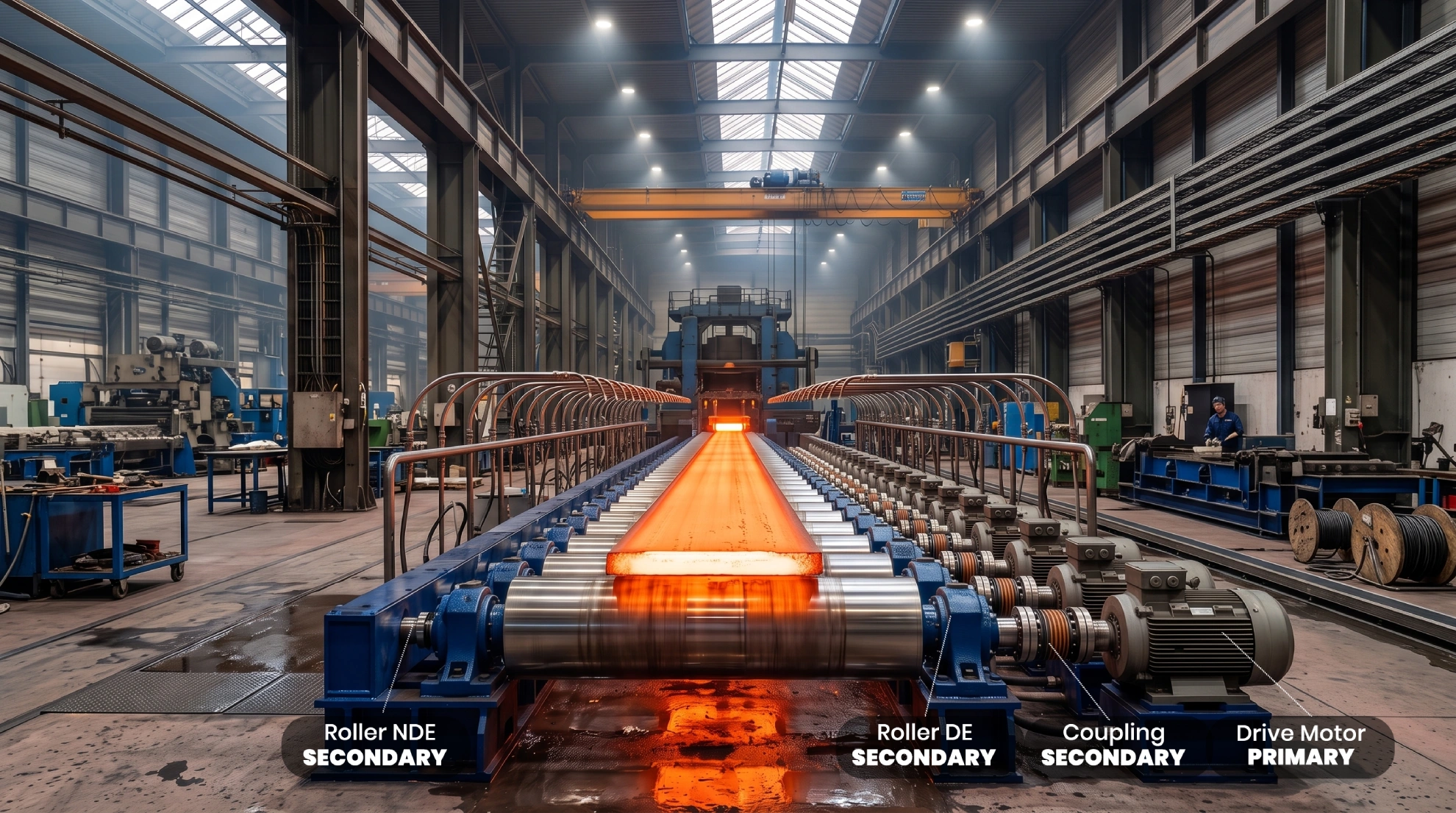
Runout table drive line
One primary sensing point on the drive motor extends coverage across the coupling and both roller bearings.

Surprise breakdowns

Rollers, bearings, couplings and motors failing without warning — mid-campaign, mid-strip.

Silent capacity loss

Slow degradation eating into strip quality and throughput, invisible until it's costly.

Cascading damage

A small bearing fault that takes out the coupling, roller and motor — and stops the table.

Repeat failures

The same fault recurring across a roller population no manual inspection route can cover.

Reactive firefighting becomes planned maintenance — up to 8 of 10 unplanned breakdowns eliminated annually.

Proof from the field

Two ROT rolls caught before they failed

Live prescriptions raised on a hot strip mill runout table — detection, diagnosis, action and customer-certified downtime saving.

Case study 01
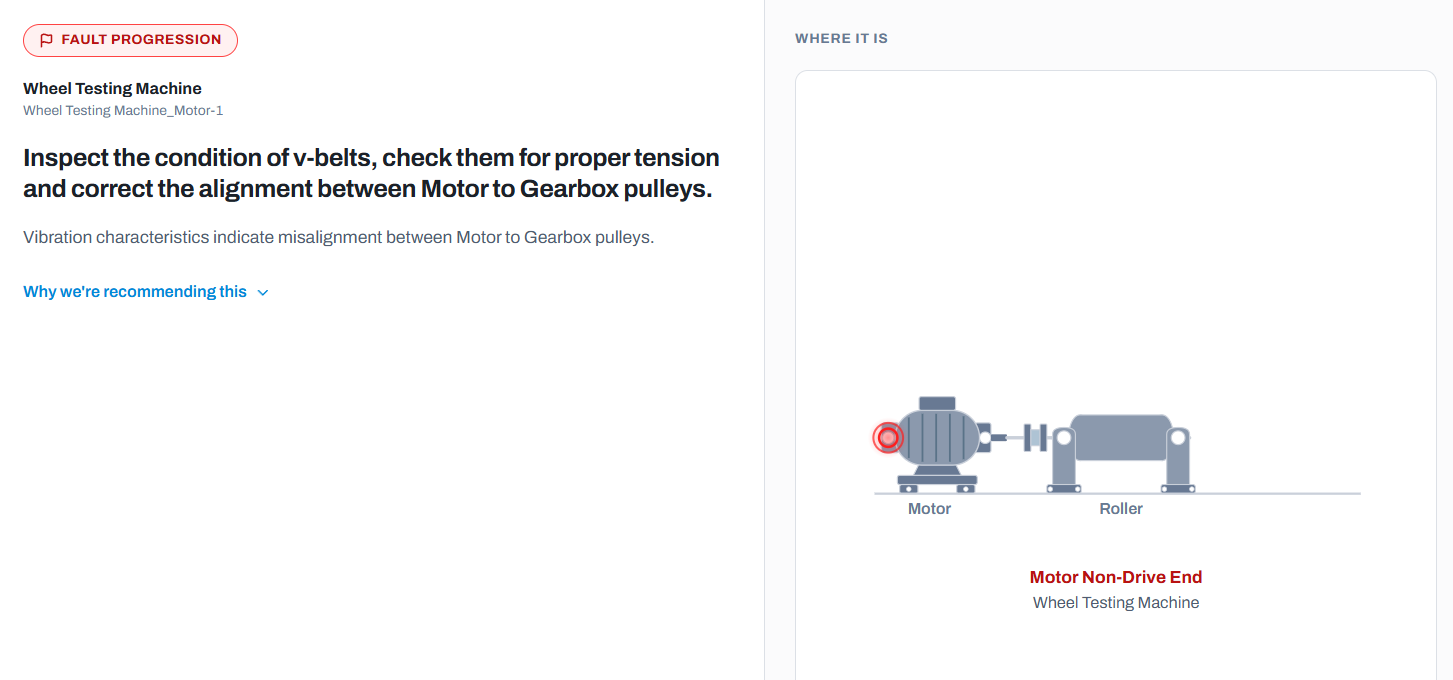
ROT Roll-6 — Roll DE bearing Prescription IUSERV475025635

ROT Roll saved from secondary damage

  1. 01

    PlantOS AI raised an anomaly alert on ROT Roll-6 DE bearing as peak vibration reached 6.39 mm/s (Warning threshold: 4.5 mm/s).

  2. 02

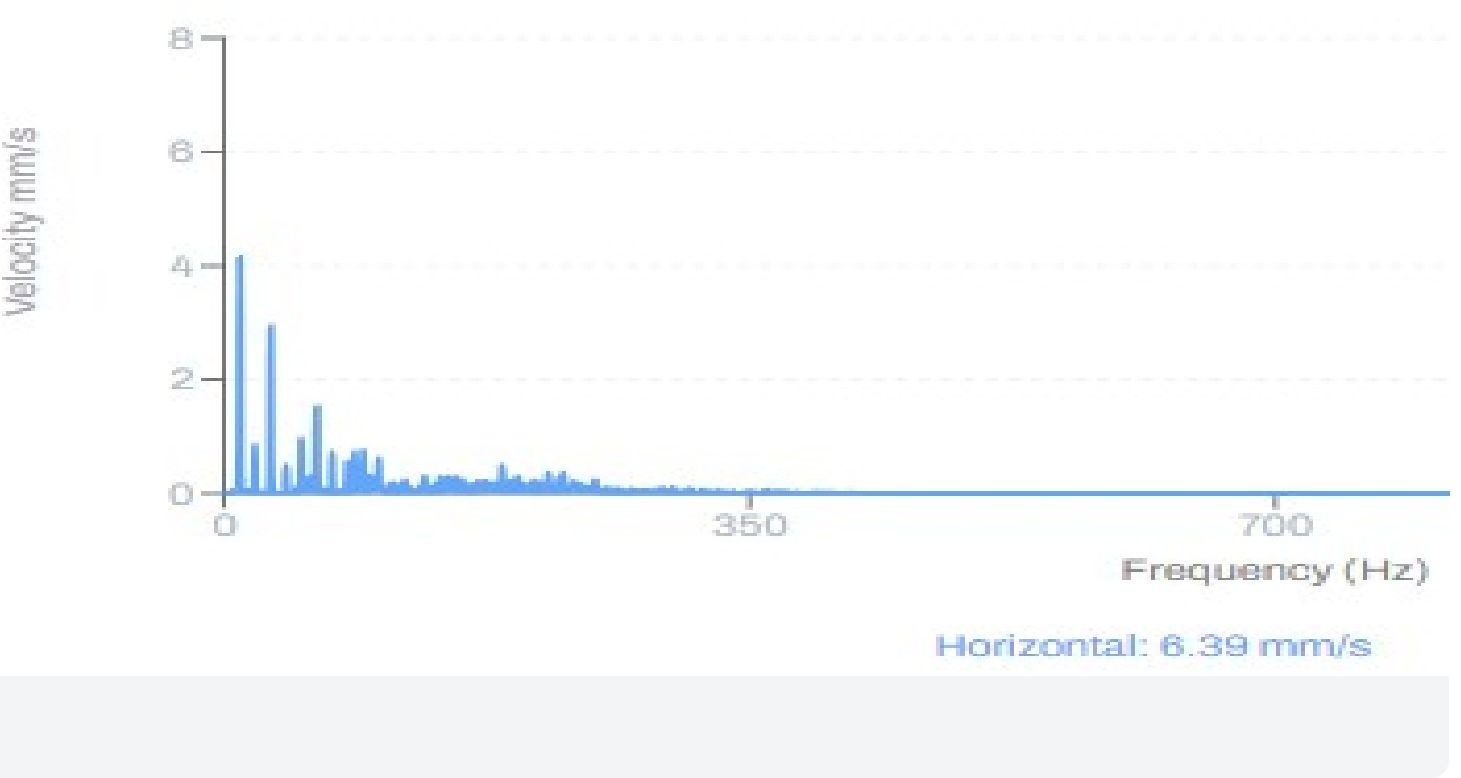
    Spectral breakdown identified strong 1X harmonic peaks — rotational unbalance and structural looseness on the drive end.

  3. 03

    A fault prescription recommended uniform base-bolt tightening and inspection of both roll bearings for clearance.

  4. 04

    The plant team replaced the Roll-6 bearing and tightened the base bolts. Vibration dropped back to ~1 mm/s.

3 hrs of downtime saving certified by customer

Bearing defect caught in advance — unplanned stoppage and secondary damage to the roll avoided.
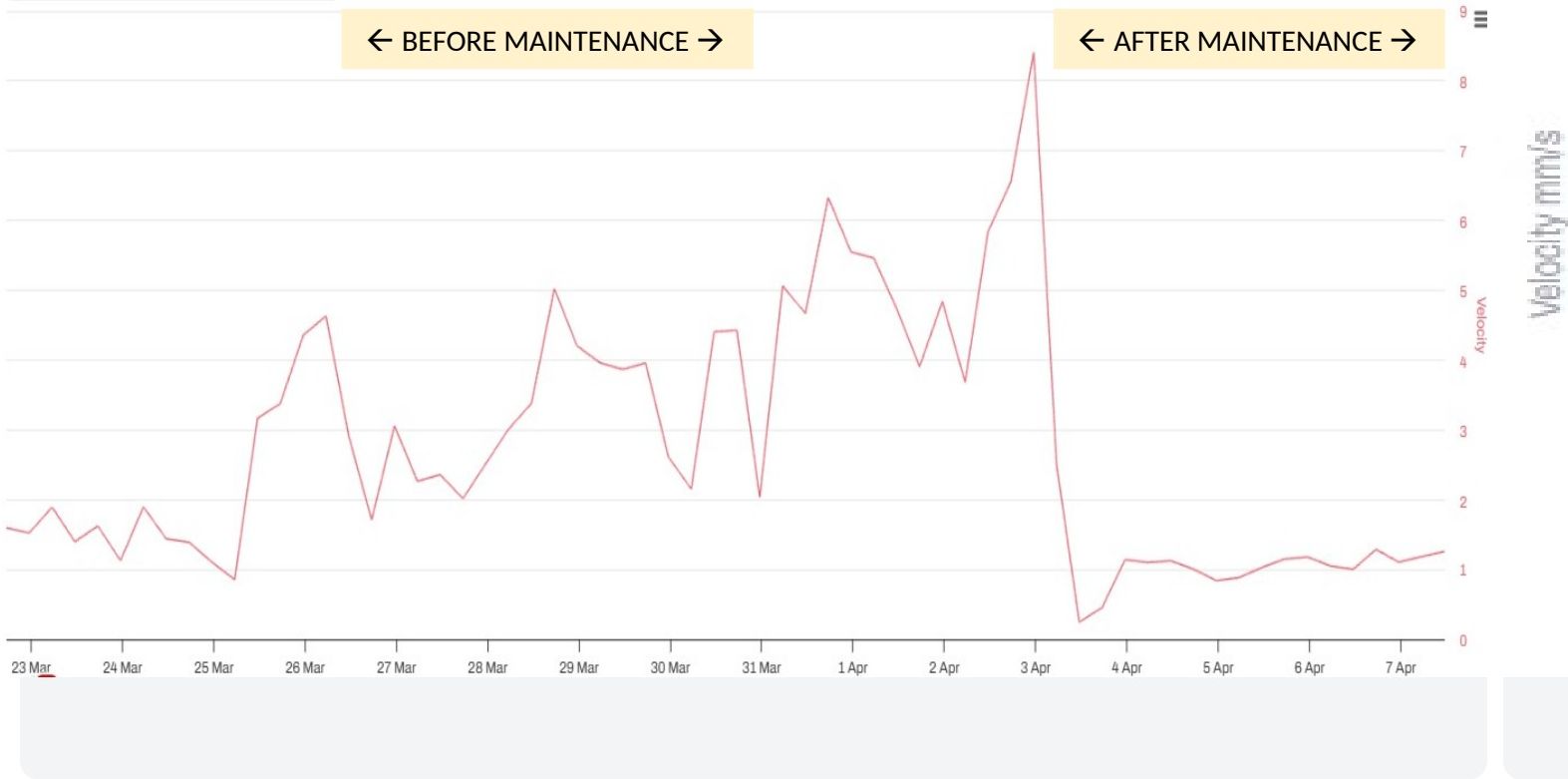
Velocity Trend
Velocity trend, 23 Mar – 7 Apr — before and after maintenance
FFT Spectrum
FFT spectrum — 1X at 12.20 Hz with harmonics, horizontal 6.39 mm/s
Case study 02
ROT Roll-1 — Roll NDE bearing Prescription IUSERV885911842

ROT Roll saved by detecting structural looseness

  1. 01

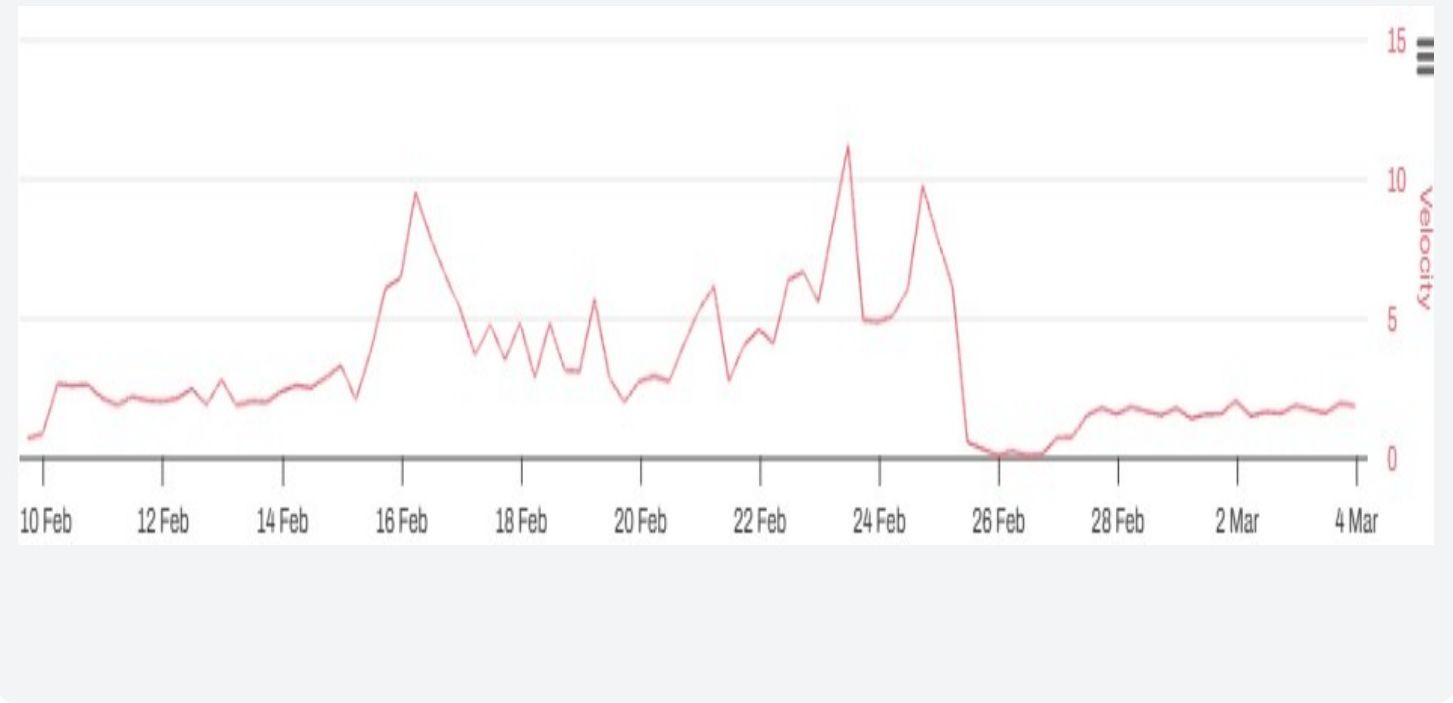
    PlantOS AI detected vibration fluctuating up to 9.1 mm/s at the Roll NDE bearing under high-load conditions.

  2. 02

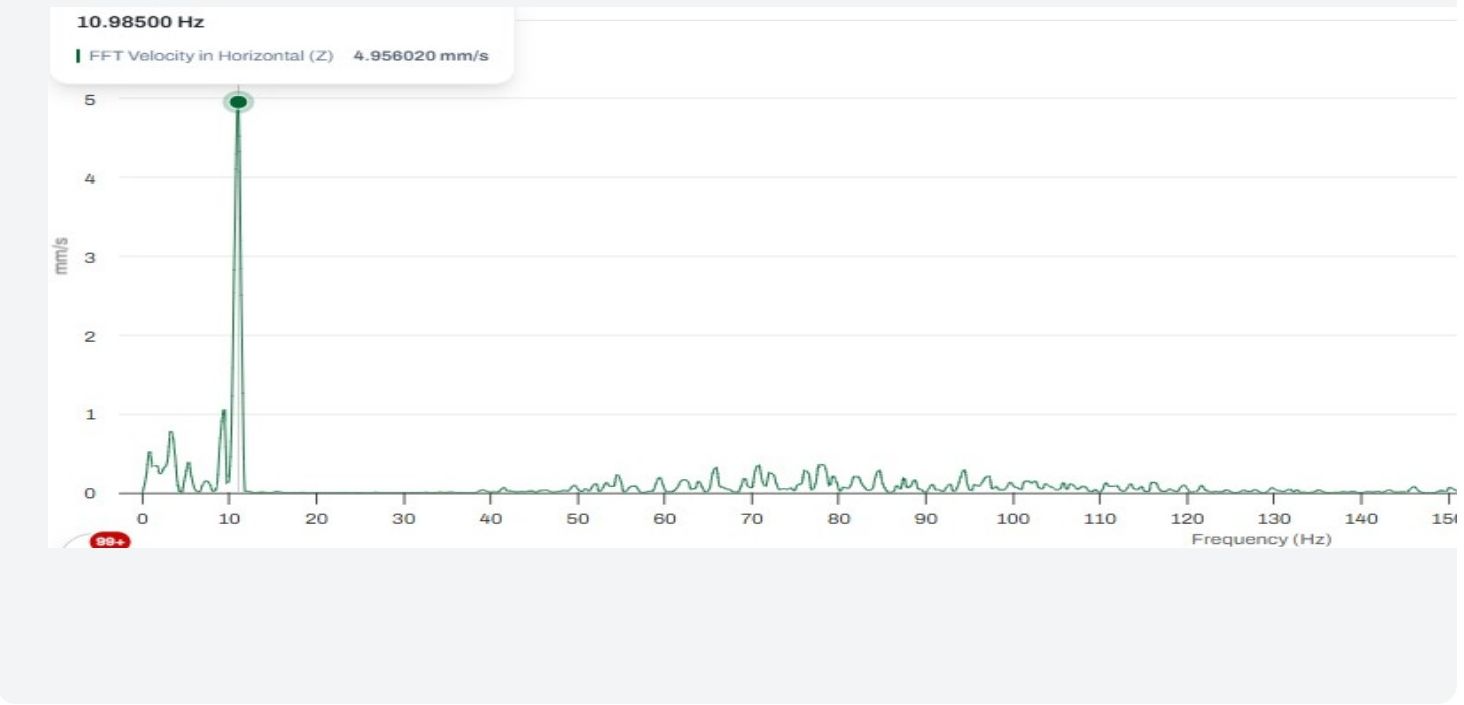
    Spectrum analysis showed an elevated 1X / synchronous frequency at 10.9 Hz — structural looseness.

  3. 03

    A fault prescription recommended uniform tightening of base, motor and roll fixing points plus improved base rigidity.

  4. 04

    The maintenance team found an issue in the roll mounting and replaced the pair as standard practice.

3 hrs of downtime saving certified by customer

Structural looseness caught early, avoiding an unplanned failure of the ROT Roll-1.

Velocity Trend
Velocity trend, 10 Feb – 4 Mar — before and after roll replacement
FFT Spectrum
FFT spectrum — synchronous peak at 10.98 Hz, 4.96 mm/s
PlantOS dashboard PlantOS dashboard
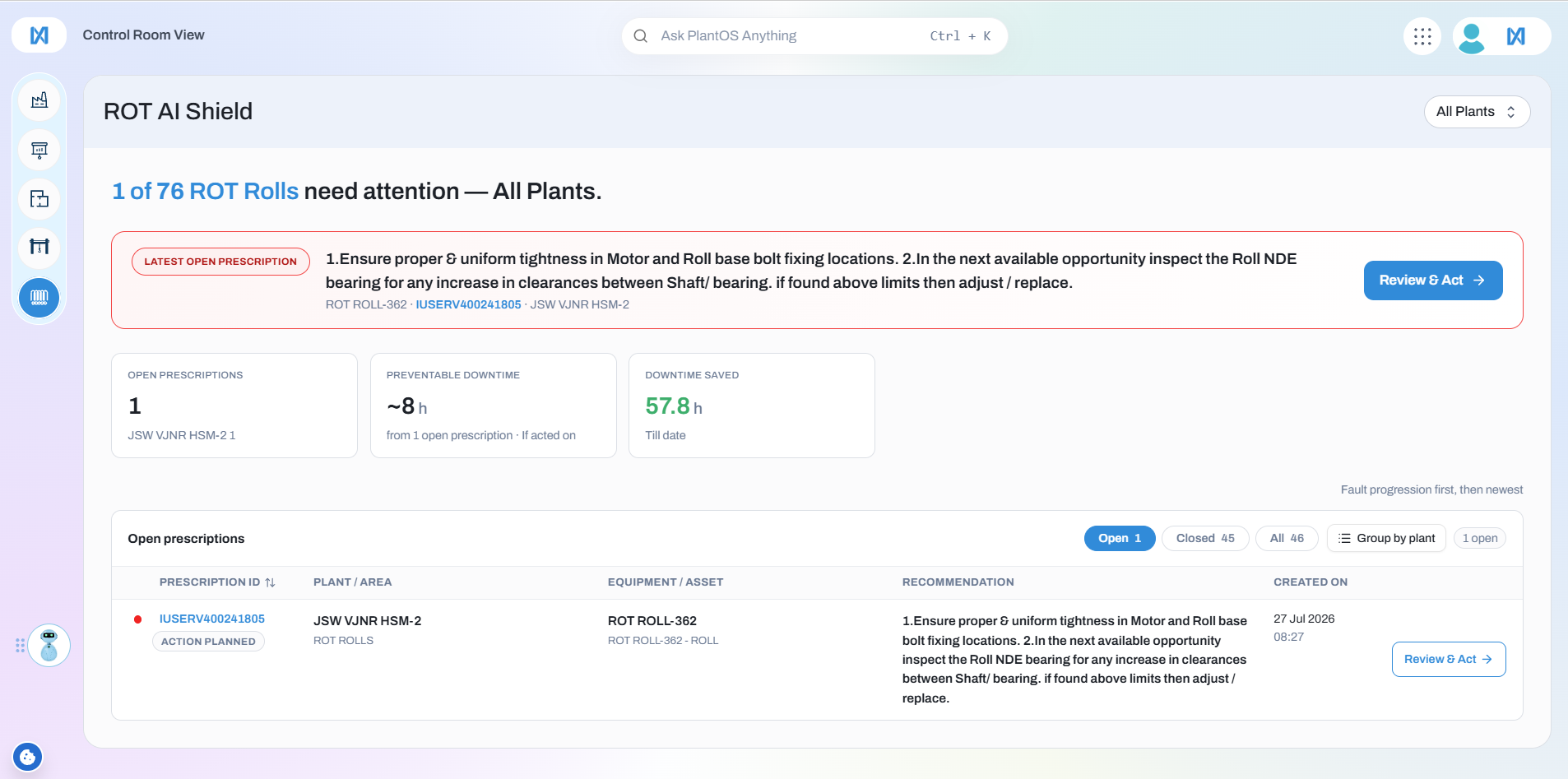
Every detection lands as a prescriptive work order in PlantOS — observation, diagnosis and recommended action, closed out by the plant team.
Your Commercial Benefit

One catch pays for the year

Typical all-in cost of a single ROT roll failure — emergency repair, lost production and collateral damage.

$50K–$200K

One unplanned ROT failure

All-in cost of a single ROT roll failure across repair, lost production and collateral damage.

$10K–$40K

Emergency repair premium

Roller, motor or coupling swap in the runout zone — expedited parts, rigging, overtime.

up to $150K

Cascading damage avoided

Caught early, a $2K bearing fix stays a $2K fix instead of taking the drive line with it.

2–12 hrs of line downtime from one ROT roll failure — repairs in the runout zone, on the clock.

8 of 10 unplanned breakdowns typically eliminated — converted into planned, scheduled work.

© 2026 Infinite Uptime. All rights reserved.